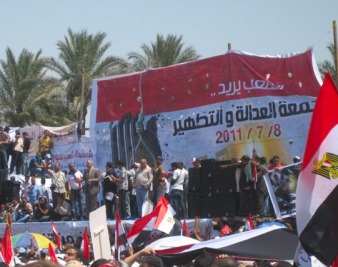
Cairo—By the time I arrived at Tahrir the morning of July 8, the iconic square was already flooded with tens of thousands of activists for what the Egyptian media dubbed “Persistence Friday.” For the first time since the 18 days of protests earlier this year that brought down Hosni Mubarak, nearly every ideological and political group stood next to each other, putting their differences aside to voice their displeasure with the transitional government’s stalled progress on political reform.
Approaching the square, the absence of the military and security forces was surprising. Contrary to Interior Minister Essawy’s claims earlier in the week that 3,000 guards would be protecting the interior ministry building, none were present outside the building that is still charred from being engulfed in flames during the height of the revolution. Mansour Street, the sight of many previous clashes between protesters and police, was practically deserted. Upon closer look, behind the metal gate protecting the facade of the building stood a dozen of Egypt’s notorious central security forces, idly sitting near their military vehicles smoking cigarettes and casually chatting with one another.