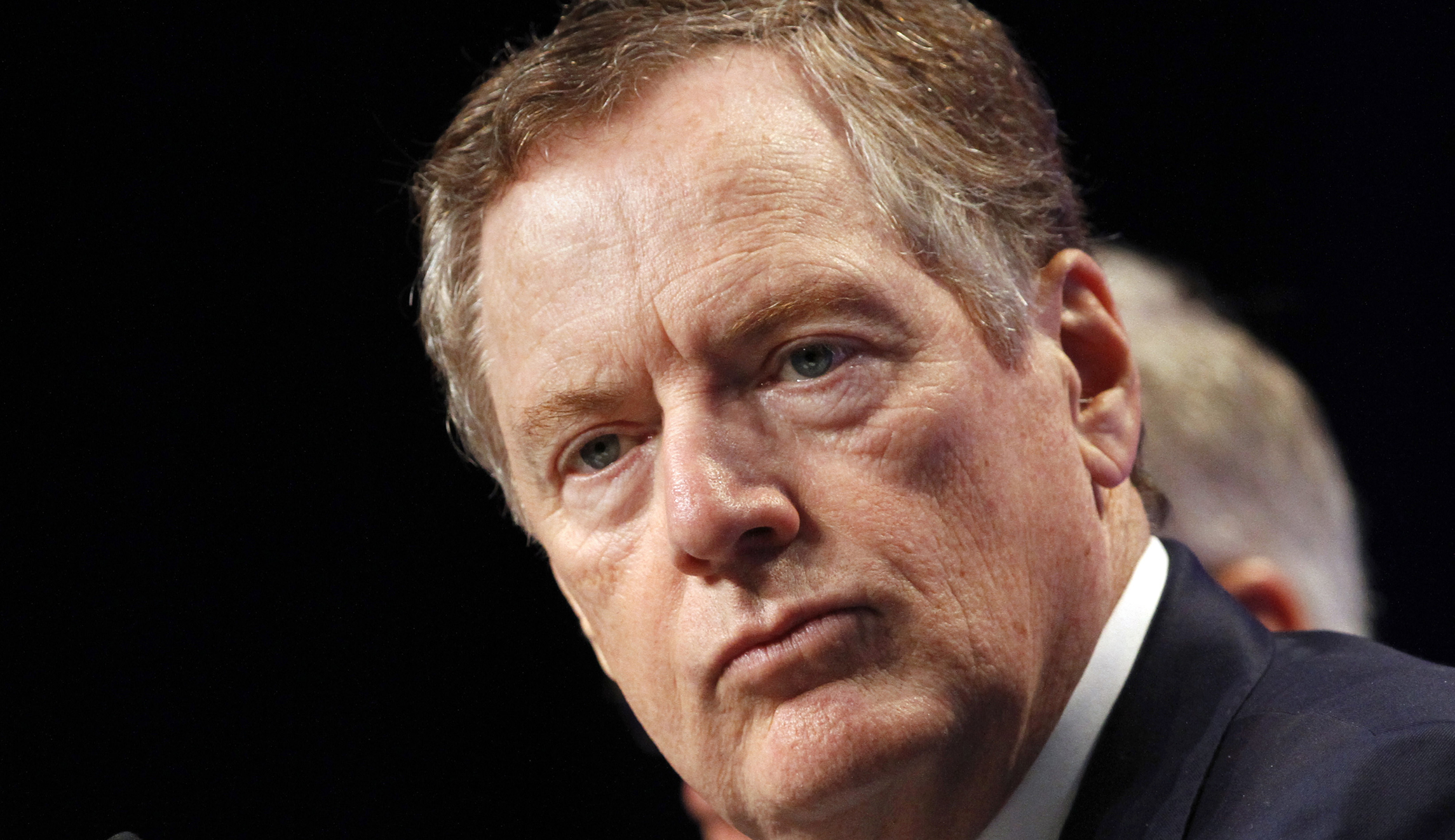
President Trump’s lead trade negotiator on Friday launched an investigation into whether China’s intellectual property practices unfairly restrict U.S. trade with that country.
The move by U.S. Trade Representative Robert Lighthizer came just four days after Trump signed a memo asking him to consider such a step.
Recommended Stories
“On Monday, President Trump instructed me to look into Chinese laws, policies, and practices which may be harming American intellectual property rights, innovation, or technology development,” Lighthizer said. “After consulting with stakeholders and other government agencies, I have determined that these critical issues merit a thorough investigation.”
“I notified the President that today I am beginning an investigation under Section 301 of the Trade Act of 1974,” he added.
The U.S. government for decades has complained about China’s IPR practices, including the production of knock off goods that sometimes find their way back to the U.S. market. Trump’s memo said China’s practices “may inhibit United States exports, deprive United States citizens of fair remuneration for their innovations, divert American jobs to workers in China, contribute to our trade deficit with China, and otherwise undermine American manufacturing, services, and innovation.”
Section 301 is part of the Trade Act of 1974 that serves as a mechanism for the U.S. to determine whether any of its rights in the World Trade Organization have been violated.
