

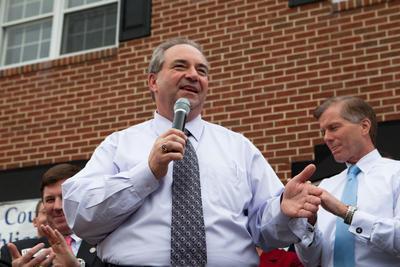
Virginia Democrats gained the bargaining chip they needed to fight Gov. Bob McDonnell’s budget on key school and transportation initiatives after the Republican lieutenant governor backed down from earlier claims of broad constitutional powers. In a memorandum to the General Assembly on Tuesday, Lt. Gov. Bill Bolling reaffirmed that his authority to break ties in a split Senate “applies to every matter that comes before the Senate unless another provision of the Constitution of Virginia has expressly imposed a limit on the Lieutenant Governor’s authority to cast a vote.” According to Bolling, that includes organizing the Senate and committee assignments, but not financial issues, choosing justices and constitutional amendments.
Recommended Stories


“I recognize that Senators on both sides of the aisle may be disappointed with my conclusions, albeit for entirely different reasons,” Bolling said in a statement.
Bolling’s admission gives Senate Democrats some leverage heading into a year in which they’ve lost power at nearly every level, and it means Senate Democrats will have a say in what the final budget looks like, putting a number of McDonnell’s initiatives at risk.
“I think it’s a good thing he has acknowledged he’s not a member of the Senate,” Democratic Caucus Chairman Don McEachin said. “However we still have deep differences on what he can vote on.”
McEachin said McDonnell’s plan to shift a part of the sales tax toward road improvements was “dead on arrival” and his caucus has targeted education funding as an important battle in the upcoming budget wrangling. He later added that “all of our political options are on the table,” including using the budget to negotiate on other issues, though he made it clear his caucus would never leave the state to prevent quorum, a la Wisconsin Democrats.
| Examiner Coverage |
|
|
The Senate has traditionally been the more cordial of the two chambers, but sorting out control of the body became a convoluted affair after Republicans picked up two seats in November to force a 20-20 tie between the parties. The next day, Bolling came out and asserted Republicans would rule as though they have an outright majority, a move Senate Democrats still insist is a “power grab.”
McEachin asked a Richmond court to stop Republicans from organizing the Senate. The judge refused, but the case could gain traction once the legislature convenes Jan. 11.
