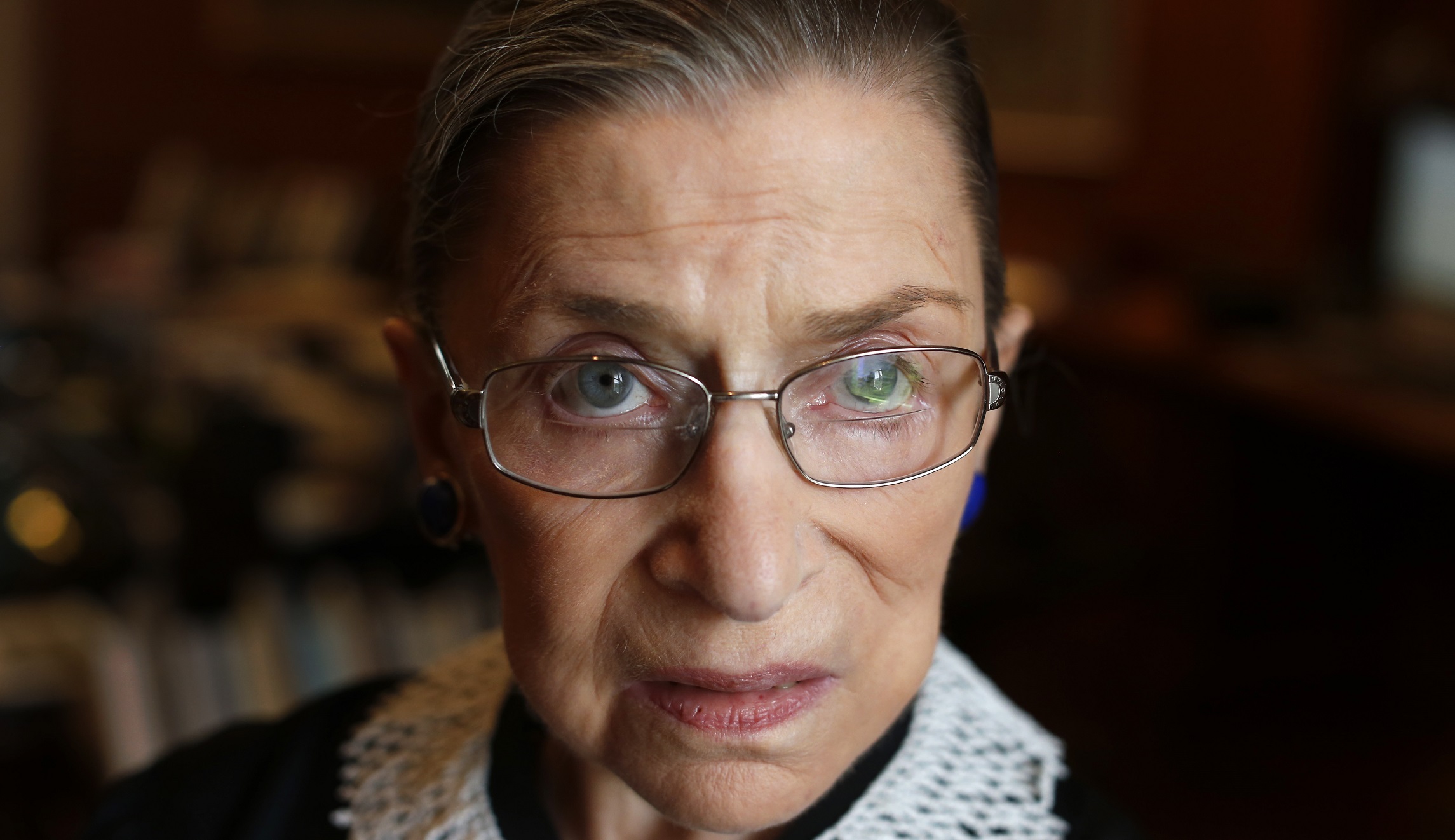
What conservatives and liberals can learn from Ruth Bader Ginsburg

The delicate moment in our history created by the death of Supreme Court Justice Ruth Bader Ginsburg is a time for reflection but also an opportunity to learn. Ginsburg’s life modeled that of a feminist trailblazer whose legal prowess was unprecedented; her death leaves a vacant seat on a powerful court often split by one vote.

Conservatives who disagreed with Ginsburg’s jurisprudence and who desperately want her seat filled with a conservative judge like her late friend Justice Antonin Scalia would do well to pause a moment and consider her legacy. Liberals who have skipped mourning and the perspective it brings and instead gone straight to panic should linger too. Before a divided nation prepares for a nomination battle, the passing of a legend beckons all of us to stop for a moment.

Before Ginsburg became the “Notorious RBG” and served for 27 years on the Supreme Court, she was an incredible trailblazer against gender inequality, unprecedented in her accomplishments. While liberals have distorted and hijacked feminism today, equality always was, especially nearly 50 years ago, a bipartisan issue conservatives supported.

A graduate of Cornell University and Columbia Law School, Ginsburg taught civil procedure at Rutgers University. Demoted in her 20s because she was pregnant and denied a Supreme Court clerkship because of her gender (she even made less than her male peers as a professor at Rutgers, apparently because her husband also had a job), these experiences and her knowledge of the inequity of the law informed and inspired her activism through law.

Ginsburg co-founded the Women’s Rights Project at the American Civil Liberties Union before she turned 40 and later became their general counsel. From that perch, she argued six gender discrimination cases before the Supreme Court, winning all but one. Ginsburg’s wins helped advance women’s rights under the equal protection clause, encouraging lawmakers to treat men and women the same under the law. Ginsburg was so effective that Scalia called her the Thurgood Marshall of women’s rights. Truly, Ginsburg’s battles for equality, and the fights won, demonstrate how few hurdles there are today in terms of true gender inequality under the law.

In 1980, President Jimmy Carter appointed Ginsburg to the U.S. Court of Appeals for the District of Columbia Circuit, where she served until her appointment to the Supreme Court in 1993. Even though she was the second woman on the Supreme Court (after Sandra Day O’Connor), she is rightly remembered for her incredible legal career and her reputation on the Supreme Court for her biting wit, her scathing dissents, and her enduring friendship with her legal opponent, Scalia.

Her fight for equality is something both parties can admire and continue to support. Her decadeslong friendship with Scalia is one of the many things both conservatives and liberals can admire, even if they find it perplexing. In a town where partisan politics is both a passion and a career, and where foes in the workplace are not expected to be friends at the opera, Scalia and Ginsburg, and often their families, traveled together, dined together, went to the opera together, and of course, argued about law together. The purity of their friendship, opposing each other’s views on law yet embracing each other as true kindred spirits in life, should inspire all of us to continue to treat each other with respect and kindness.

Though I didn’t often agree with her legal opinions on the Supreme Court, Ginsburg’s tenacity of spirit to work through bouts of illness, including cancer, well beyond the point a lesser person would have retired is beyond admirable. The verve Ginsburg must have possessed to fight for women’s equality before the Supreme Court, and then serve it for 27 years, is unfathomable. She has paved a path many women in politics, media, business, and law (including 12 women on President Trump’s Supreme Court shortlist) owe her a debt of thanks. Without her work, the law would have been a hurdle to our progress.

Betsy West and Julie Cohen, who directed RBG, the feature-length documentary about her life, said that when they asked Ginsburg how she wanted to be remembered, she humbly replied, “Just as someone who did whatever she could, with whatever limited talent she had, to move society along in the direction I would like it to be for my children and grandchildren.”

Ginsburg has done exactly this.

As a nation mourns and moves forward toward Election Day, now with a Supreme Court vacancy battle, may we all remember politics and law are not everything. A life well-lived, dedication to family, friendships forged, glass ceilings shattered, a vocation of purpose, a faith worth serving — those are things that matter. That is the lesson of Ginsburg’s life to conservatives and liberals alike.

Nicole Russell (@russell_nm) is a contributor to the Washington Examiner’s Beltway Confidential blog. She is a journalist who previously worked in Republican politics in Minnesota.

Related Content
