

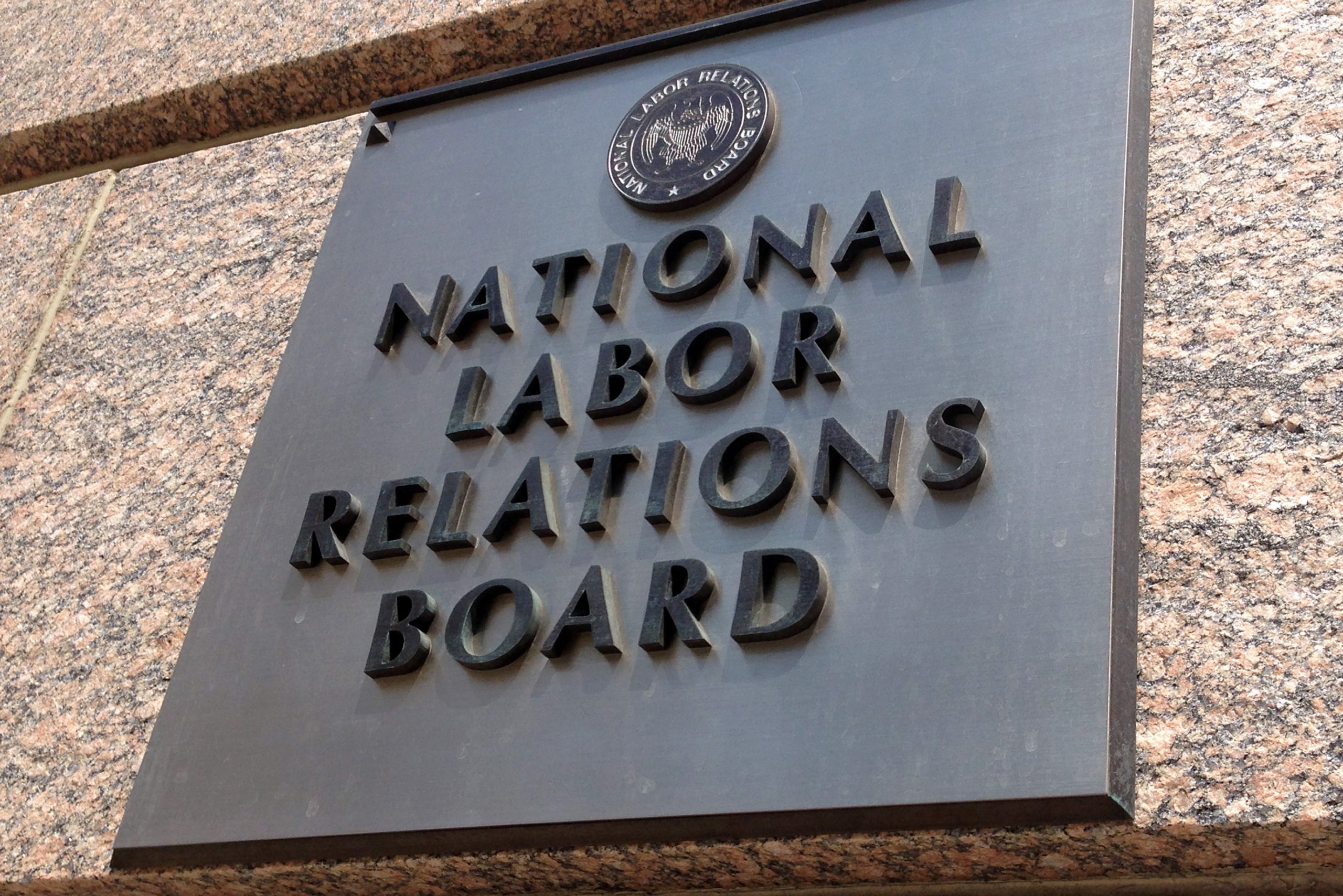
The Trump administration announced late Friday that it intends to nominate private-sector lawyer Peter Robb to be the next general counsel for the National Labor Relations Board, the nation’s top labor law enforcement agency. If confirmed, Robb would replace Richard Griffin, an appointee of former President Barack Obama’s known for his pro-union stance.
The pick had been widely rumored inside Washington policy circles for several weeks.
Recommended Stories


A report last month by the law firm Jackson Lewis noted that Robb has been a critic of the NLRB’s broad reading of legal statutes to find employer policies unlawful. He has also been critical of its efforts to shorten the time from when union elections are authorized to when they are held, which is thought to aid union organizing efforts. “Robb’s nomination and confirmation would set the stage for the Board to reverse many of the pro-labor rulings issued by the Obama [era] Board,” the firm noted.
While the title general counsel implies an advisory role, at the NLRB, the position is closer to that of a chief executive officer. The NLRB is overseen by a five-member board but the general counsel runs the agency’s day-to-day activities of the board and can initiate enforcement activities independent of the board. There are approximately 1,610 people who work for the board, the vast majority of which report directly to the general counsel.
Robb, a Vermont resident, has practiced labor law at the firm Downs Rachlin Martin since 1995, and has represented companies before the NLRB. His website boasts that he has “successfully defended numerous multi-national corporations in complex arbitrations involving work hours, shifts, apprenticeship issues, and work jurisdiction involving complex litigation.”
Prior to that, he served as chief counsel to NLRB member Robert Hunter. Robb earned a B.A. in economics from Georgetown University and a J.D. from the University of Maryland School of Law.
Griffin, formerly a top lawyer with the International Union of Operating Engineers, has been instrumental in pushing the board in a more pro-union direction through inventive re-evaluations of the existing rules and procedures. He had previously been one of Obama’s recess appointees to the board from 2012 to 2013, but his tenure was deemed unconstitutional by the Supreme Court’s 2014 Noel Canning decision.
In November 2013, Griffin was appointed as the board’s general counsel along with five board members as part of a deal between Senate Republicans and the administration to avert the “nuclear option” of ending the Senate filibuster for political appointments. Griffin had originally been nominated for another board term. Republicans balked at that but agreed to approve him as general counsel instead, apparently believing that this constituted a demotion on the board.
