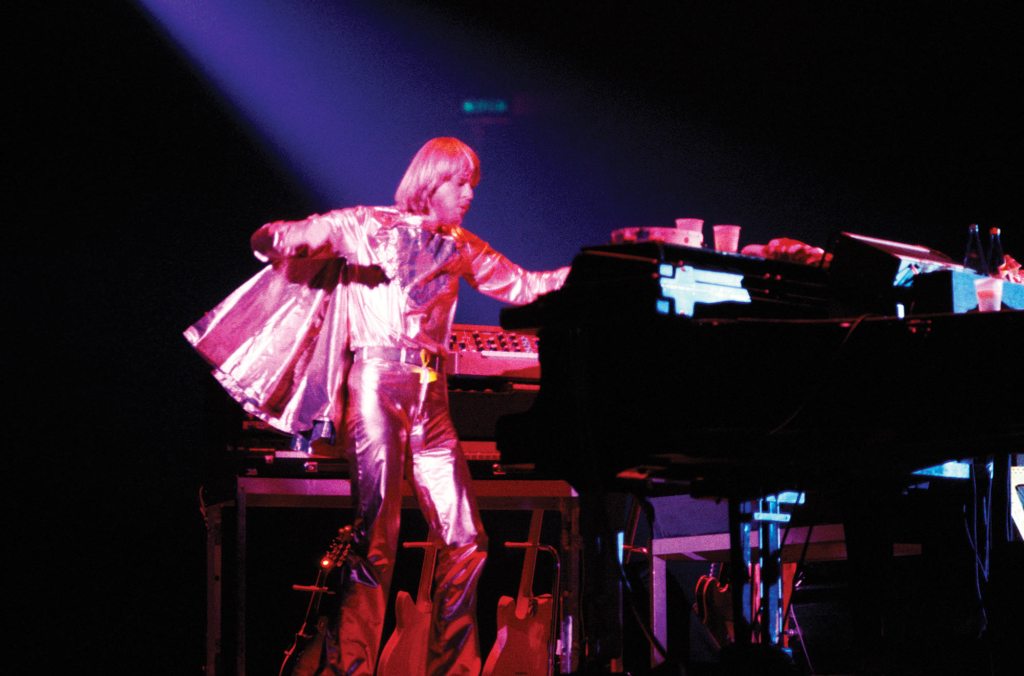
It’s May 1975, and thousands of Britons have Wembley Arena tickets to see Rick Wakeman—keyboardist and singer, until lately of the band Yes—perform his new solo album, The Myths and Legends of King Arthur and the Knights of the Round Table. Wakeman had been planning a spectacle: He assembled an orchestra, choir, and cast of actors. But then he learned that Wembley was set to host a figure-skating show after his concert, and the arena would already be covered in ice. Deciding to take advantage of the situation, he hired skaters to dress as horses and knights, depicting a clash between Sir Lancelot and the Black Knight.
This kind of excessive showmanship was part of what attracted fans to the strange musical movement known as progressive rock. In The Show That Never Ends (named for lyrics from Emerson, Lake & Palmer), Washington Post political reporter David Weigel recounts stories like this from the glory days of “prog” in the 1970s, when bands such as Yes, King Crimson, Pink Floyd, Jethro Tull, and Genesis composed long, erudite, allusive songs about outer space, ancient myths, dreams of the future, and, in the words of Yes singer Jon Anderson, “discovery of the self and connection with the divine.”