

The Republican presidential candidates regularly bemoan big federal spending, but they’re virtually silent on the programs driving much of that spending: Medicare, Medicaid and Social Security.
Recommended Stories


The debate Thursday night was no different, with the contenders virtually ignoring a single question from Fox Business moderators on how they would save the federal safety-net programs from becoming insolvent for future retirees.
Instead, Sens. Marco Rubio and Ted Cruz devolved into a bitter dispute over their separate tax proposals and the merits or downfalls of Cruz’s proposal to replace corporate and payroll taxes with an individual income tax and business flat tax resembling a value-added tax, or VAT.
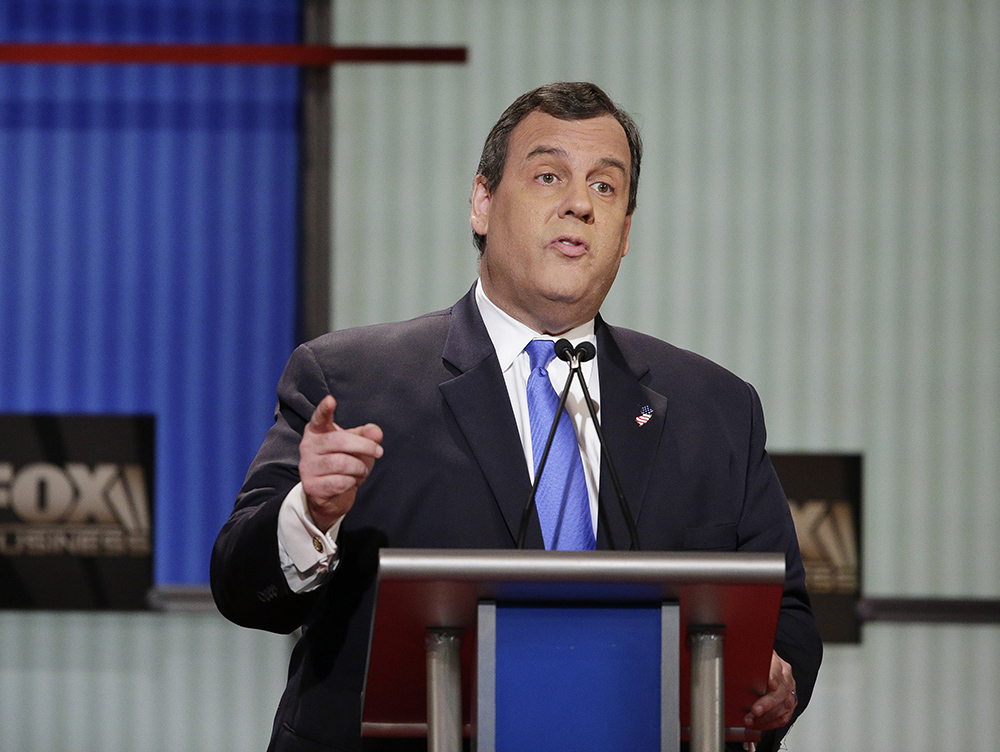
That gave New Jersey Gov. Chris Christie, the only Republican candidate to focus on the issue, a chance to pounce.
“The fact is, the reason no one wants to answer entitlements up here is because it’s hard,” Christie said. “Entitlements are hard.”
Christie has regularly criticized his Republican rivals for neglecting entitlement reform, calling them “sophomoric” in the way they talk about it. At a campaign stop in New Hampshire this week, he expressed hope that Thursday’s debate would include questions about it.
“We’re coming up on our sixth or seventh debate and entitlement reform has only been addressed once,” Christie said. “Both times, the questions came to me because I’m the only one who’s put forth a plan for entitlement reform.”
Christie is the only candidate to propose a specific approach to making Medicare, Medicaid and Social Security fiscally sustainable, announcing details of his proposal in the spring, even before he officially joined the race.
Under the Christie plan, wealthier seniors would cover an increased percentage of their premiums and the eligibility age would increase gradually until reaching 69 by 2064. He also would simplify Medicaid so states receive fixed amounts per enrollee and scale back Social Security to function more like an insurance policy.
“We need to reform Social Security, and mine is the only plan that saves over $1 trillion,” Christie said Thursday night.
Jeb Bush is the only other candidate to touch on entitlement reform in a policy proposal, outlining in his Obamacare replacement plan that he would cap federal spending on Medicaid by turning it into a block grant type of program. On the campaign trail, he also has voiced support for similar Medicare reforms to what Christie wants.
Nearly half the federal budget goes to Social Security, Medicare, Medicaid, the Children’s Health Insurance Program and Obamacare subsidies. Social Security is projected to hit insolvency in 2034, Medicare in 2030.
Those dates recently have been pushed back, easing the urgency to reform the programs, in the minds of some. But entitlement reform received much more attention in 2012, at least during the general election.
Then Budget Committee Chairman Paul Ryan had recently rolled out his plan for Medicare and Medicaid reform, gaining wide acclaim from prominent Republicans in Congress. Mitt Romney’s selection of Ryan as his running-mate elevated the issue as the Obama campaign tried to capitalize on criticizing it.
But this time around, the Republicans typically talk about government regulations or the need for tax reform when asked about how to reduce the federal deficit. Neurosurgeon Ben Carson especially touted that argument Thursday night, saying the government needs to spend less money by rolling back red tape.
“It’s the evil government putting all these regulations on us so we can’t survive,” Carson said.
