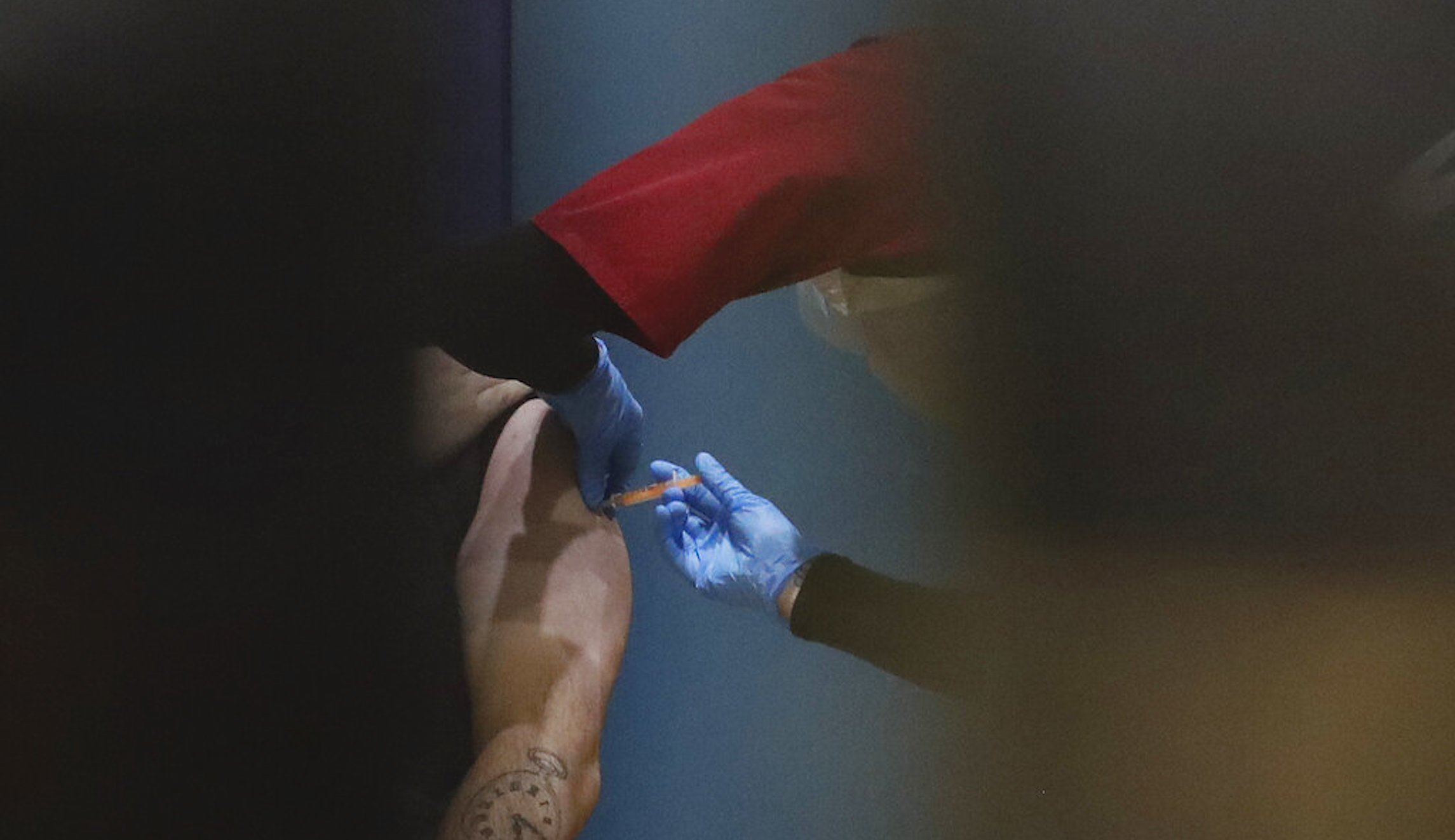
Good enough for Britain. Good enough for the European Union. Not good enough for the United States.
That’s what the U.S. Food and Drug Administration thinks about the evidence for the Oxford-developed, AstraZeneca-made COVID-19 vaccine: the cheap, refrigerator-friendly, easy-to-transport injection that, so far at least, is 100% successful at keeping people with COVID-19 out of the hospital. The Oxford vaccine has been given to more than a million British citizens, and the EU is now scrambling to find as many doses as it can to compensate for its own slow vaccine rollout.
The FDA’s deadly delay should end immediately. It should let Americans get the Oxford vaccine, a vaccine with millions of doses ready to go, manufactured right in Baltimore, Maryland.
So why hasn’t the Oxford vaccine been approved for use in the U.S.? Because the FDA made clear that AstraZeneca needed to finish its lengthy trials in the U.S., above and beyond the trials AstraZeneca had already run in the United Kingdom, Brazil, and South Africa.
Why would the FDA do such a thing, telling a company to hand in the same homework twice, demanding more evidence than even the ultra-cautious European Medicines Agency? It’s hard to know the true motivations of any federal bureaucracy. But the FDA, like most federal agencies, is directly beholden to Congress — the power of the purse and all — and back in October, House Speaker Nancy Pelosi made it clear that the FDA should reject calls to look at British data when trying to deciding if the vaccine was safe and effective.
She told reporters: “We need to be very careful about what happens in the U.K. We have very stringent rules in terms of the Food and Drug Administration here about the number of clinical trials, the timing, the number of people, and all the rest … My concern is that the U.K.’s system for that kind of judgment is not on a par with ours in the United States.”
The FDA apparently got the message: It still hasn’t approved the Oxford vaccine, even months later. Understandably, no federal agency wants to get on the wrong side of the speaker of the House, and the speaker is probably just distilling the views of Congress as a whole, which has always been too willing to emphasize ever-greater drug safety even at the cost of deadly delay.
My colleague at George Mason University, Alex Tabarrok, refers to the “invisible graveyard” — those dead because lifesaving drugs and vaccines were delayed or never invented. Every day we delayed vaccine approval in 2020 was a day that COVID-19 could spread unabated, killing people in the U.S. in the hundreds of thousands. And that deadly delay continues in 2021.
It’s obvious to every serious observer that, by normal standards, the Oxford vaccine is safe and effective. When you look around to see why some still support the (hopefully temporary) Oxford vaccine ban, they’ll point to two facts: First, AstraZeneca accidentally gave half doses to a lot of test subjects. Second, in the main vaccine study, there wasn’t much difference in the infection rates of the elderly between the placebo (water-shot) group and those who received the real vaccine.
Well, the half-dose mistake really turned out to be a blessing in disguise. It looks possible that giving a half dose first and the full dose later might yield an even better immune response than two full doses!
And the only reason the vaccine trial showed that the vaccine didn’t work any better than the placebo among the elderly is that almost none of the elderly were infected with COVID-19, whether they got the placebo or the vaccine! It looks like the elderly people in the AstraZeneca vaccine trial were a mix of lucky and cautious. But simple blood tests made it clear that the Oxford vaccine generated a strong immune response in the elderly, so normal science suggests the elderly who get the Oxford vaccine are going to have a lot of antibodies to fight off serious COVID-19 infection.
Some European countries have decided, in order to be on the safe side, only to recommend the Oxford vaccine to people under 65 — and if the U.S. followed that path, it’d surely be better than continuing the FDA’s 100% ban on the Oxford vaccine.
The FDA should approve the Oxford vaccine immediately. Since it doesn’t require fancy freezers, it will easily reach small towns and local clinics in a way that current COVID-19 vaccines in the U.S. can’t. Full approval would be perfect, and top leaders in Congress should immediately write a joint letter calling on the FDA to approve the Oxford vaccine without delay. But even under-65 approval would be good enough since, as always, we should never make perfect the enemy of the lifesaving.
Garett Jones is associate professor of economics at George Mason University and author, most recently, of 10% Less Democracy: Why You Should Trust Elites a Little More and the Masses a Little Less (Stanford University Press).
