‘Military mission’ and evacuations over in Afghanistan

With less than two weeks before the 20th anniversary of the 9/11 terrorist attacks, the United States has announced the end of its military mission in Afghanistan.

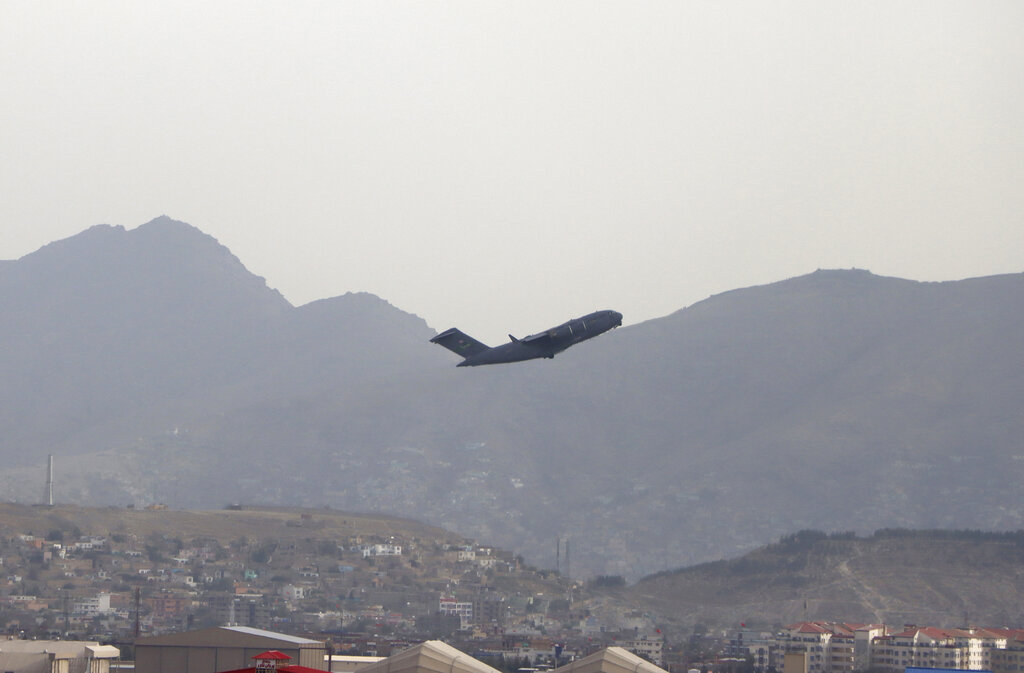
“I’m here to announce the completion of our withdrawal from Afghanistan and the end of the military mission to evacuate American citizens,” Gen. Kenneth F. McKenzie Jr., U.S. CENTCOM commander, announced at a Pentagon briefing on Monday evening. “The last C-17 lifted off from Hamid Karzai International Airport on Aug. 30, this afternoon, at 3:29 p.m. east coast time.”

All of the remaining U.S. troops in Afghanistan, a number that progressively dwindled ahead of the exit date, had left the country shortly after midnight in Kabul, in line with President Joe Biden’s self-imposed withdrawal date, as celebratory gunfire rang out across the capital city.

HAQQANI LEADER SAYS ‘WE ARE THE TALIBAN,’ CONTRARY TO STATE DEPARTMENT CLAIMS

“Tonight’s withdrawal signifies both the end of the military component of the evacuation, but also the end of the nearly 20-year mission that began in Afghanistan shortly after Sept. 11, 2001,” he added. “It’s a mission that brought Osama bin Laden to just end along with many of his al Qaeda co-conspirators, and it was not a cheap mission.”

McKenzie said that some American citizens, likely in “the very low hundreds,” were left behind. He said he believed they would still be able to depart Afghanistan if they so desire.

In the 20 years U.S. forces were in Afghanistan, the Department of Defense spent $837 billion dollars on warfighting while the government spent an additional $145 billion trying to rebuild the country, its security forces, and economy, according to the Special Inspector General for Afghanistan Reconstruction’s August report detailing “lessons from twenty years of Afghanistan reconstruction.”

When the war began in 2001, the U.S. government, led by President George W. Bush, sought to eliminate al Qaeda, the terrorist organization responsible for the 9/11 terrorist attacks, and hurt the Taliban for allowing the group to use the country as a safe haven.

After approximately 3,500 American and allied troops lost their lives in the war, the United States is leaving with the Taliban once again in control of Afghanistan and a terror organization, ISIS-K, posing threats. An ISIS-K orchestrated terrorist attack killed more than 170 people and 13 U.S. service members last Thursday, making it one of one the bloodiest days of the 20-year war, one of its final ones.

The Taliban launched an 11-day military offensive in which they easily defeated the Afghan forces that the U.S. had trained and expected to maintain control of the country for months, if not years. Once the Taliban took control of the country, the U.S. and other Western allies began evacuating their citizens and Afghans who could be targeted under the Taliban regime.

The U.S. has evacuated or facilitated the evacuation of approximately 116,700 people since Aug. 14 and roughly 122,300 during the entire month of August, according to the White House, making it the biggest air evacuation in history.

John Sopko, the Afghan inspector general, found that there were “several areas of improvement” during the U.S.’s time in Afghanistan, specifically citing healthcare, maternal care, and education, though he noted, “Progress has been elusive, and the prospects for sustaining the progress that was made are dubious.”

CLICK HERE TO READ MORE FROM THE WASHINGTON EXAMINER

He also concluded that the U.S. didn’t have a “coherent strategy for what it hoped to achieve,” that they “consistently underestimated the amount of time required to rebuild Afghanistan,” and that many of the institutions built were “not sustainable.”

Biden, who spent eight years as vice president during the war, repeatedly said he was determined to make sure he did not pass the war along to his successor. Four presidents, two Democrats and two Republicans, served during the war.

Related Content
