
The Ayatollahs are not the answer

As a career soldier who served multiple tours of duty in Iraq, I am hopeful yet concerned about American Middle East policy. My hope springs from the Obama administration’s laudable commitment to forming workable partnerships in the region. But my concern is that the administration appears to not have a good sense of the limits of those partnerships. An excessively narrow focus on current threats could well blind us to other long-term dangers.

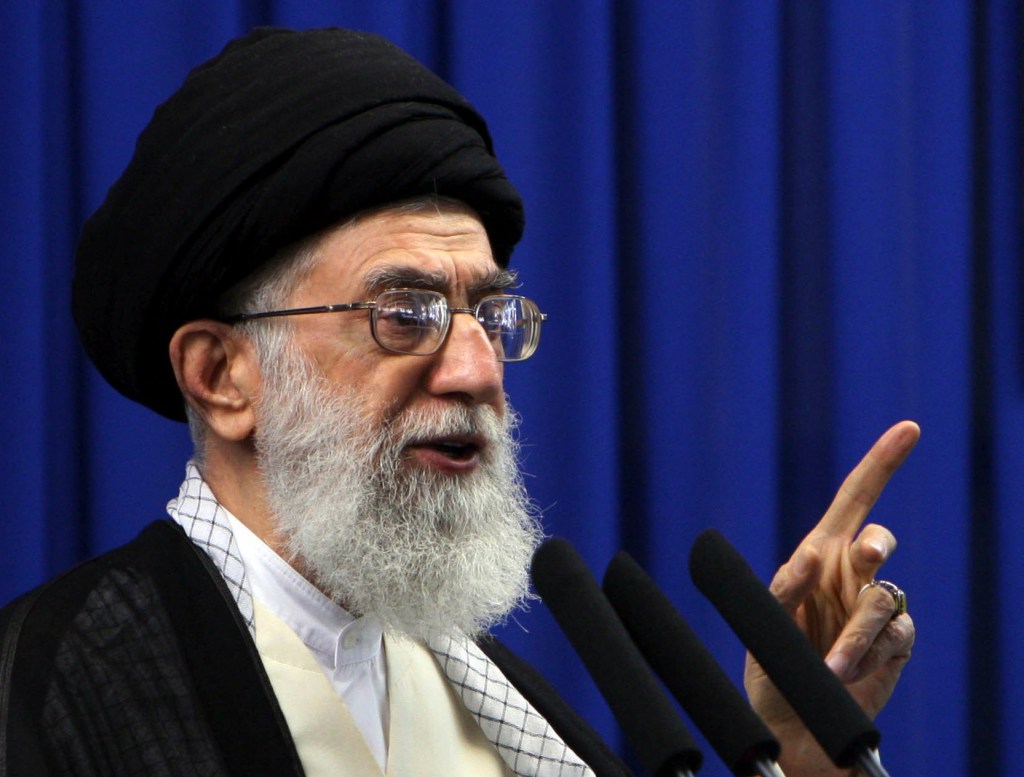
One major question is the potential role of Iran in fighting the Islamic State. The State Department claims that it has no interest in coordinating militarily with Iran, although President Obama had previously suggested this was an option. Supreme Leader Ayatollah Ali Khamenei has been operating on the assumption that the US is desperate for help. Secretary of State John Kerry has failed to adequately dispute this, explicitly keeping the topic open for discussion.

The Obama administration must clearly address this policy and immediately disavow the possibility of coordination with Iran. Furthermore, it must make clear that continued Iranian presence in Iraq will not be tolerated.

A handful of analysts and pundits have continued to argue that Iran is a viable, logical, even necessary partner in the battle against the Islamic State. Most are eager to link this to the November 24 deadline for negotiations on Iran’s nuclear program. They claim that this provides a significant motivation for Iran — that if we give concessions on the nuclear issue, we will ensure Iran’s good faith cooperation against the Islamic State. Such commentators advocate for dangerous favor-trading with the Islamic Republic, and justify it as serving the larger objective.

But such a strategy is not workable and not in our national interest. Iran has never been a partner of the U.S., and we should understand by now that the current crisis does not change that. I understand it because, as the former senior antiterrorism officer for all coalition forces in Iraq, I know that many of the 4,485 American warriors killed in Iraq were from explosive devices manufactured in Iran and provided by Iran to Shiite militias.

Tehran only gives the appearance of cooperating with the West when it suits its own longer-range goals. Currently, Iran is committed to reinforcing the rule of Syria’s brutal dictator Bashar al-Assad, who is responsible for the deaths of at least 200,000 Syrian citizens. The Iranian regime has made it abundantly clear that acceptance of Assad into the international coalition is a prerequisite for Iranian cooperation in the fight.

Working with Iran means throwing away our best chance of working with Sunnis throughout the region. We would be abandoning the Free Syrian Army and other moderate rebel groups that are threatened by both Assad and the Islamic State. Any attempt to include Iran or its proxies in the nascent coalition would endanger the entire project, and help Assad to boot.

In the long run, we cannot and should not ignore Iran. We cannot ignore that its people ought to be active participants in the region. Iran is important, it always has been and always will be. But if regional problems are going to be fixed, teaming with the fundamentalist extremists of the Iranian regime is not the solution. The root of the problem in Syria, Iraq, and inside Iran is the fundamentalist regime in Tehran.

So what to do? There is a viable alternative to the Iran we know today. The principle Iranian opposition movement, spearheaded by Maryam Rajavi, offers a cultural and ideological alternative to the regime’s Islamic fundamentalism. The resistance advocates a democratic, secular, peaceful state. This is a valuable option that would go a long way toward regional stability.

Our leaders have shut out the opposition, acting from an over-eager and misplaced hope that they can befriend the current regime, despite all the obvious indications to the contrary.

To date, this administration has failed to provide timely firepower and effective diplomacy throughout the Middle East. We are now and will continue experiencing a collapsing Middle East until we recognize that the source of the problem is fundamentalist extremism, and that starts with Tehran.

Wesley Martin, a retired colonel in the U.S. Army, served as the senior antiterrorism/force protection officer for all coalition forces in Iraq during Operation Iraqi Freedom. Thinking of submitting an op-ed to the Washington Examiner? Be sure to read our guidelines on submissions for editorials, available at this link.

Related Content