

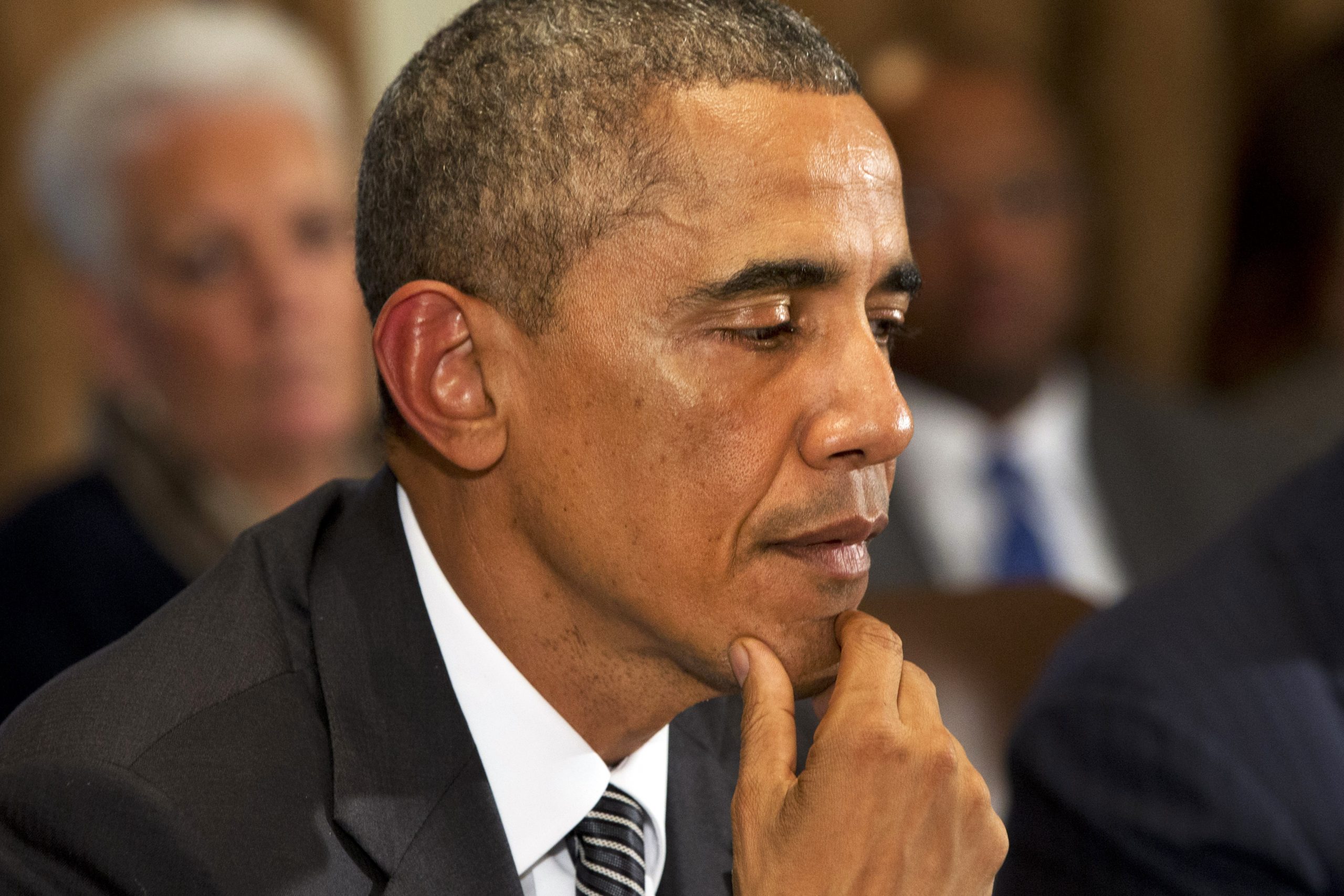
President Obama has put himself in a no-win situation as he tries to handle the Ebola scare, the latest crisis to raise criticism about whether the president waits too long to stop a threat.
Even as his administration takes bigger steps to show that he is on top of the effort to combat the deadly virus, criticism is mounting from both the public and lawmakers about the administration’s bumbling response — less than three weeks away from midterm elections in which Democrats are fighting to keep control of the Senate in an atmosphere where Obama’s ratings were already lacking.
Stay informed.Stay ahead.
Join Washington Examiner for unlimited access to the news, analysis, and commentary that matter most.
Already a member? Log in
Though the likelihood of an Ebola outbreak in the U.S. is extremely low, health experts say, Obama has little time to change public opinion about his reaction to the health threat. The recent cases in the United States and the federal government’s failure to implement basic safeguards have undermined the administration’s insistence it had the disease under control.
Now the president is playing some catch-up.
After days of resisting the idea of an Ebola czar, Obama named Democratic insider and former Joe Biden chief of staff Ron Klain to the post. But by choosing someone with no medical experience — let alone any treating infectious diseases — Obama gave Republicans ammunition to dismiss the move as a political ploy.
And just before the midterm elections, Ebola has become the latest issue on which vulnerable Democrats are being forced to answer for presidential actions that many Americans feel are insufficient.
“Whether the criticism is fair or not, there is a perception that the White House was slow to respond and disorganized,” said Keir Murray, a Texas-based Democratic strategist, pointing to the pair of new Ebola cases in Dallas. “It hasn’t been a great last few months on a lot of different fronts for the president. This is just one more stone weighing Democrats down.”
That Obama took the rare step of suspending two days of campaign travel shows how serious his administration views the Ebola threat, both in terms of public safety and politics.
If Obama chooses to pursue additional actions to fight Ebola, an array of which have already been demanded by critics, they may come too late to change public attitudes about his approach.
To some Democrats’ chagrin, the president avoided the type of primetime address that could have put his stamp on the government’s actions soon after the first U.S. Ebola diagnosis.
More recently, Obama conceded that he had no “philosophical objection” to a travel ban on passengers from West Africa but still would not issue such a prohibition, citing the advice of public health experts.
The muddled answer, conservatives contend, is indicative of Obama’s mishandling of an array of issues that could come back to haunt Democrats Nov. 4.
“There’s no definitive stance or answer on anything — it’s all over the place,” said Republican strategist Hogan Gidley of Obama’s Ebola response. “It shows you the government is dysfunctional. The entire Democratic argument is more government. This will undoubtedly affect Senate Democratic candidates.”
White House insiders insist that political hysteria, much like the national-security panic, is baseless. They say that if the government prevents a widespread outbreak, as promised, voters wouldn’t punish the president or his party simply because of early hiccups.
But the White House is also banking that local hospitals will avoid the types of embarrassing mishaps that plagued their initial response to the Ebola threat and that broader precautions are in place to prevent a future outbreak.
Still, even some White House allies question whether “no-drama” Obama was too passive in diagnosing how the public would react to even just a few cases of Ebola in the United States.
“It’s tough, trying not to scare everybody while not looking disengaged,” said one Democratic official with close ties to the White House. “I don’t think he got that formula quite right in the beginning. He seems to be learning now. But yeah, it might be too late.”
