

While Russia said it was suspending the use of a de-confliction hotline after the U.S. shot down a Syrian fighter jet this week, the U.S. said Friday the communication link is open and in use.
It was unclear if there was ever any interruption in the use of the hotline, but Col. Ryan Dillion, the chief U.S. military spokesman in Iraq, said it has been used over the past two days to ensure the safety of U.S. pilots flying over Syria, and strongly implied that Russia used it to inform the U.S.-led coalition of its firing of six cruise missiles into Syria from ships in the Mediterranean.
Recommended Stories



“We won’t discuss every single detail that is talked about on the de-confliction line,” Dillion said. “I will say that the de-confliction line is in use, and it is in use to make sure that we de-conflict our actions and make sure that our air crews and ground forces are safe.”
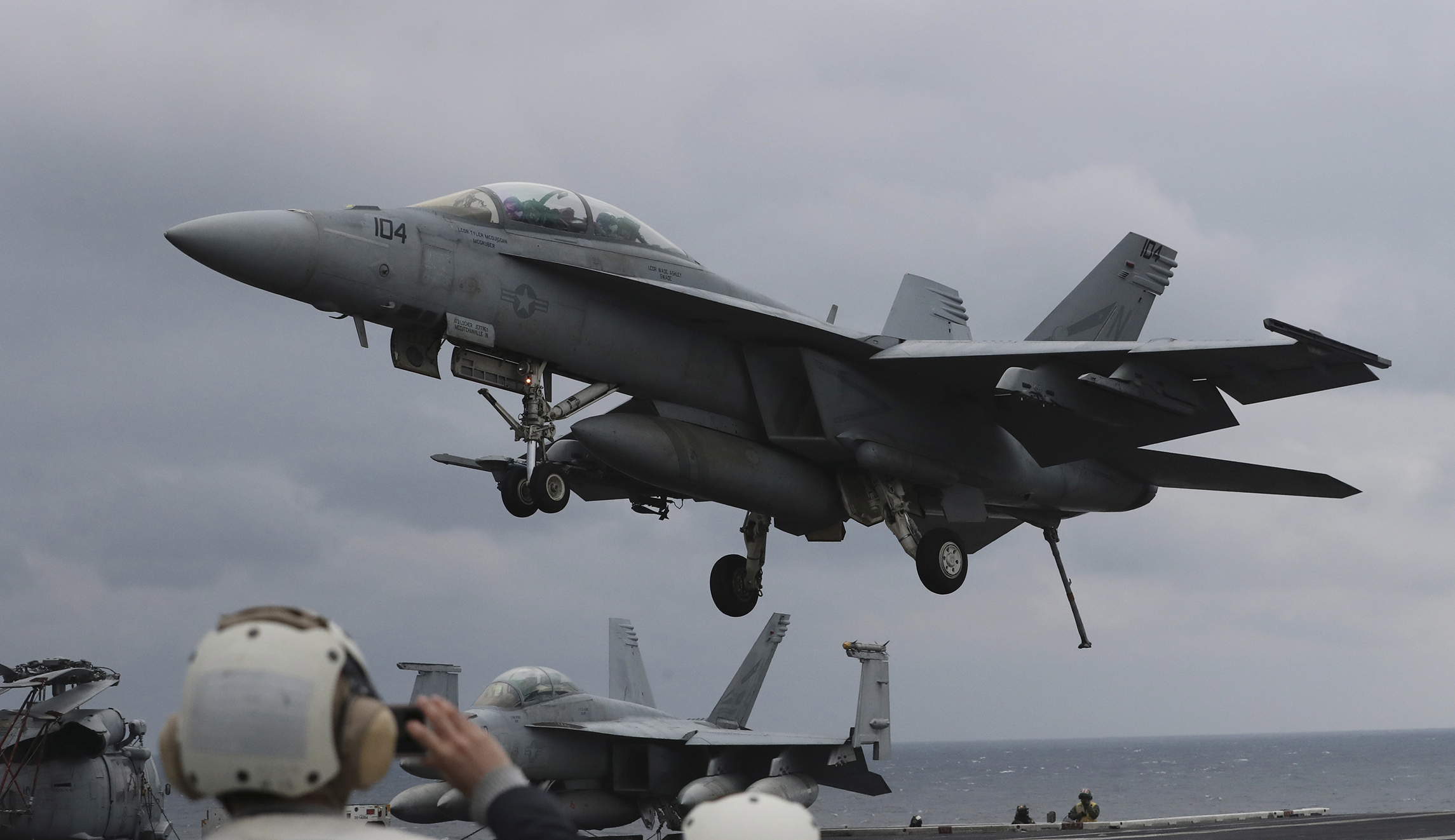
After a U.S. F/A-18 Super Hornet shot down a Syrian Su-22 near Raqqa on June 18, the Russian Defense Ministry issued a statement saying it was stopping “cooperation with the American party within the Memorandum on prevention of incidents and providing of flight security.”
It also said it would track aircraft flying over western Syria as potential targets with its anti-aircraft missile radars.
Dillion could not say if any U.S. planes had been “painted” by with target acquisition radars, but insisted U.S. and collation planes have been able to conduct missions over Syria unimpeded.
“We were able to operate throughout the rest of Syria,” Dillion said. “We will continue to operate in areas, but we are going to make sure our air crews can manage that safely.”
Illuminating aircraft with targeting radars is considered a hostile act, and the U.S. says it has an inherent right of self-defense if a pilot feels he is being threatened by radars for surface-to-air or air-to-air missiles.
Dillion hinted, but did not say explicitly, that the U.S. was equipping planes with radar-seeking missiles that could follow the tracking signal to its source, and destroy enemy radars on the ground.
“If it takes a specific aircraft with a specific capabilities to fly in particular areas, then that is what [the air commander] will do,” Dillon said. “We are not going to get into the details over whether or not certain aircraft were painted. We will take very specific and calculated measures to make sure our air crews can continue to fly safely.”
