North Korea is threatening to shoot down U.S. bombers flying in the vicinity of the Korean Peninsula in response to President Trump’s denunciation of the regime last week.
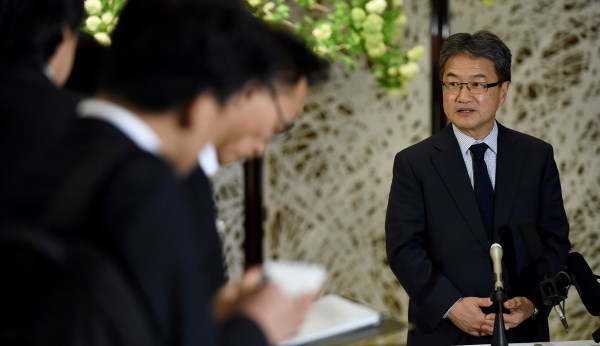
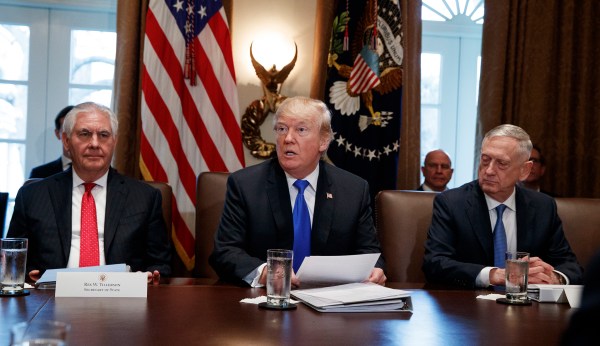
North Korean Foreign Minister Ri Yong Ho justified the threat on Monday by summarizing Trump’s comments at the United Nations, and his ensuing tweet that leaders who threaten the United States “won’t be around much longer” as a “declaration of war.” And Ri called on the U.N. to recognize North Korea’s right to self-defense.
“Since the United States declared war on our country, we will have every right to make counter measures, including the right to shoot down the United States strategic bombers, even when they are not yet inside the airspace border of our country,” Ri told reporters through a translator in New York City. “The question of who won’t be around much longer will be answered then.”
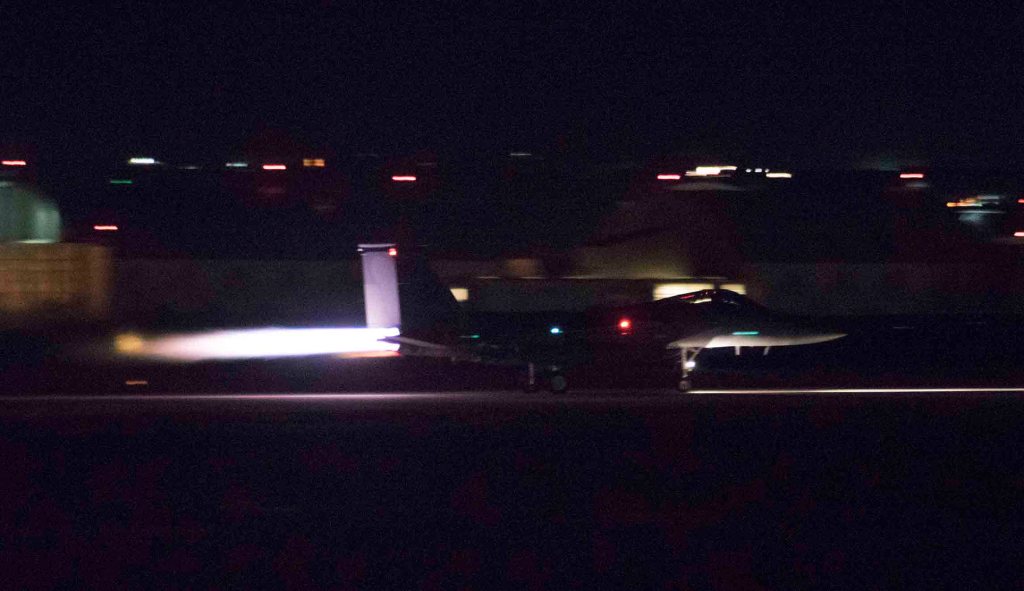
That threat seems tailor-made as a response to a sortie of American bombers and fighter jets, which buzzed the peninsula on Saturday. The planes flew farther north of the demilitarized zone between North Korea and South Korea than any time this century, according to the Defense Department. But they did not fly into North Korean airspace. The flight involved non-nuclear B-1B bombers from Guam and F-15 fighters from Okinawa, Japan.
“This mission is a demonstration of U.S. resolve and a clear message that the president has many military options to defeat any threat,” Pentagon spokeswoman Dana White said Saturday.
Hours after that fly-by, Ri issued a belligerent response to Trump, saying it was increasingly “inevitable” that North Korea would strike the United States mainland. “None other than Trump himself is on a suicide mission,” Ri said. “In case innocent lives of the U.S. are lost because of this suicide attack, Trump will be held totally responsible.”
South Korea’s ruling political party, which has relatively dovish foreign policy views compared to the most recent president, issued an appeal for both sides to drop the threatening rhetoric.
“Under such circumstances, an exchange of excessive verbal threats would only heighten anxiety,” Kang Hoon-sik, a spokesman of the Republic of Korea’s Democratic Party, said in a Saturday statement.
Ri’s latest threat seemed to target such concerns. “For the last few days, the United Nations and the international society sincerely wished that the war of words between the DPRK and the United States does not turn into real actions,” he said. “Trump claimed that our leadership wouldn’t be around much longer and hence at last he declared a war on our country.”
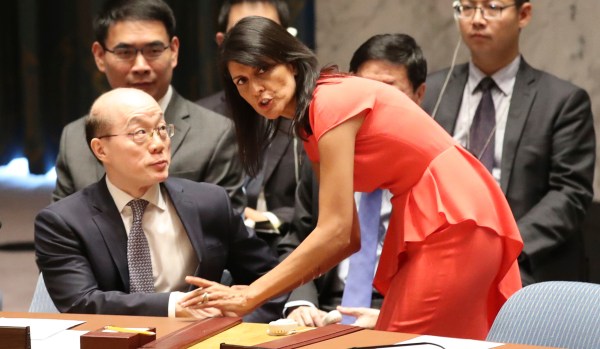
U.S. Ambassador to the U.N. Nikki Haley defended the president’s speech, noting that he threatened conflict in the event that North Korea attacks Americans or U.S. allies.
“We don’t want war. That’s the last thing anyone wants,” Haley told reporters last week. “But at the same time, we’re not going to run scared. If for any reason North Korea attacks the United States or our allies, the U.S. will respond, period.”