Part of the problem with the GOP’s current strategy (or lack thereof) to combat the Left’s “war on women” narrative is that there’s too much talk and not enough action and accountability.
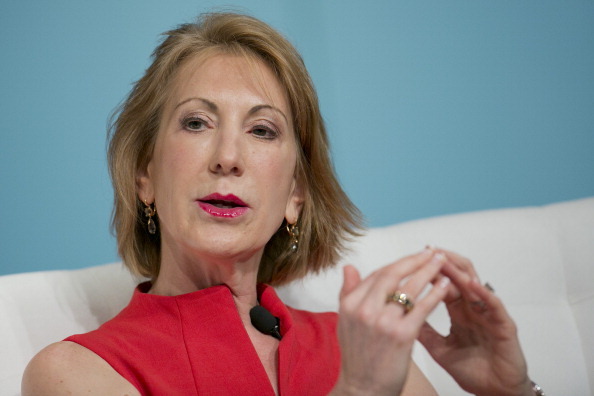
Carly Fiorina, the former CEO of Hewlett-Packard and a former Senate candidate, has a plan she says is based on results instead of speeches and lectures.
“As a business person, results matter to me,” Fiorina said when she spoke to the Washington Examiner. “So words are nice, but in the end words don’t change that much.”
Fiorina came up with the idea for her plan, the Unlocking Potential Project, after she gave a speech at the Conservative Political Action Conference in March 2014. In the speech she took on the “war on women” narrative aggressively, noting that women make up 54 percent of voters.
“We’re not some special interest group and please don’t insult us by saying all we care about is reproductive rights, whether you’re pro-life or pro-choice,” Fiorina said. “I happen to be pro-life. But there’s more to women than that debate, there’s more to women than the debate about birth control.”
To this end, Fiorina has released a new political ad attacking Sen. Mark Udall, D-Colo., for hurting women. The ad focuses on women’s healthcare — not abortion or birth control — and how Udall’s support of Obamacare caused women to lose their health insurance.
Fiorina said that after her speech at CPAC she was approached by women asking for help to carry that message to the women they knew.
“Because women are frustrated,” Fiorina said. “They get into these conversations and they feel like ‘How can we be losing this war on women, it’s just a bunch of lies?’”
Finally, someone who understands that constantly talking about how the GOP needs to do better with women does nothing. But how does Fiorina plan to put her words into action?
“What we’re really doing is equipping women to go out and talk to other women they know in the places where they meet with them.”
Fiorina’s organization trains women on how to talk to their friends and neighbors about issues that are important to them.
“We’re all most persuaded by people we know — if you know someone and you like them and you interact with them on a daily basis, you’re most likely to listen to them,” Fiorina said. “It’s why ads, although important, can’t win the whole game. An ad can motivate someone but they can’t persuade somebody.”
For example, Fiorina discussed the hot topic of equal pay, and said that “the seniority system is the biggest impediment to equal pay for equal work, because the seniority system pays for time and grade.” She also noted Republicans should remind people that it’s the union and Democrats who still support a seniority system.
“So it’s an example of how to equip women to first push back on the propaganda of the war on women, but then to take the conversation a step further — to talk about all the issues that women care about, because women care about more than reproductive rights,” Fiorina said.
UP trains women how to talk to others about issues, provides them material with facts and information, and then sets goals to achieve.
“Go find 10 women you know, talk to them about these issues,” Fiorina said. “So training, support, education and we’re going to measure our results to make sure that we’re making a difference.”
She said UP is currently focused on six states where they know which women are voting Democrat and which women are voting Republican. These six states are Colorado, Iowa, Michigan, New Hampshire, North Carolina and Virginia.
“We’re specifically targeting a grassroots effort aimed at what I will call ‘occasional Republican-leaning voters,’” Fiorina said. “That is, women who tend to vote Republican but don’t always vote.”
She said her group was also targeting “persuadable women” — which she described as “independent voters who can be persuaded but who need to be spoken with about the issues that matter to them, which are all issues: healthcare, the economy, education, foreign policy.”
Fiorina said that winning would be tough in those states, but “if we can move the needle with women, we know it will make a difference.”
The emphasis for Fiorina, in 2014 and when they begin working toward 2016, is on results.
“It’s important that we measure our results so that we know what works and we can repeat it over and over and over in other states and beyond November of 2014.”