

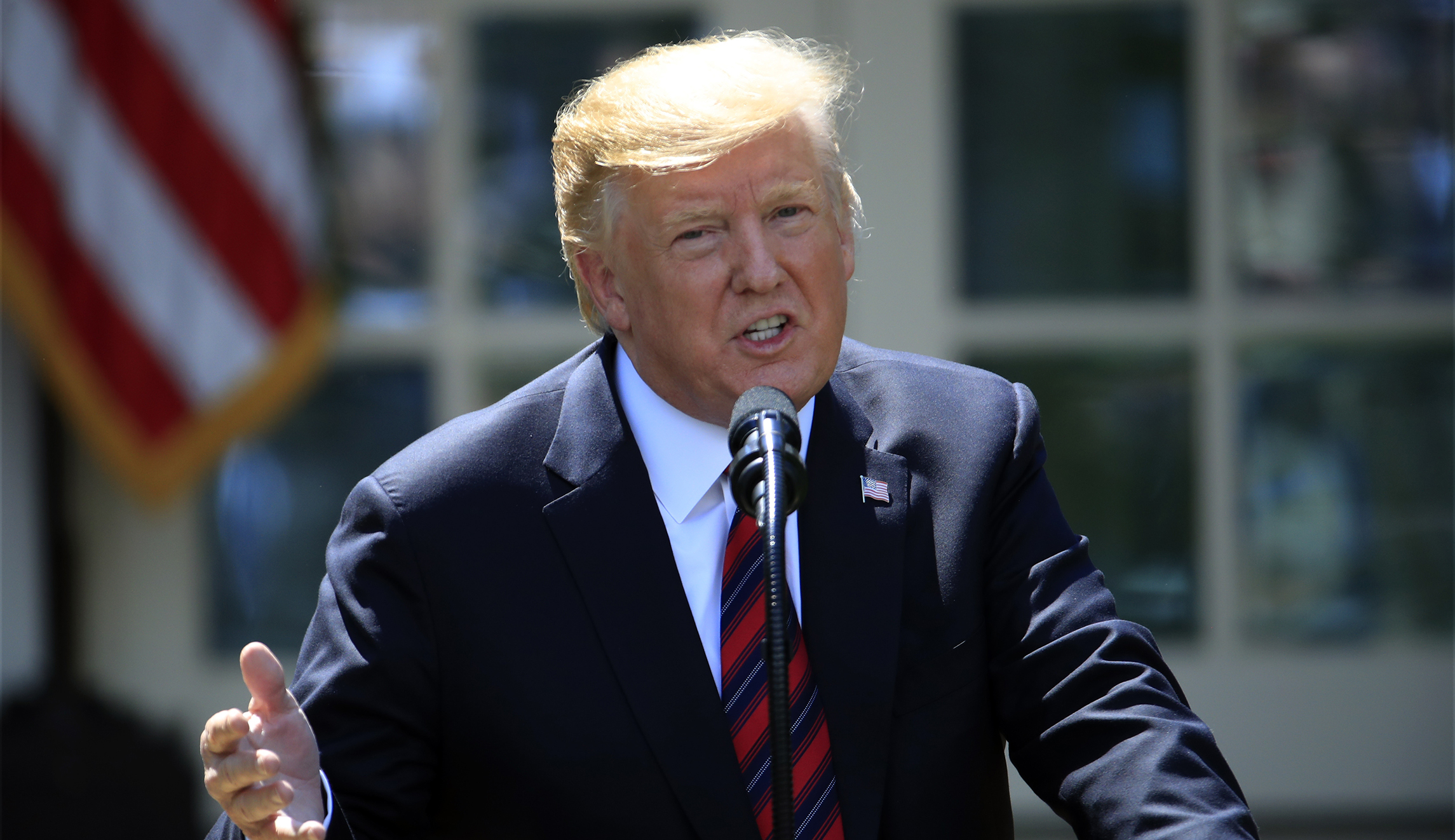
Give President Trump a second term, and he will produce a second economic boom. That is the president’s promise as he encourages states to dig out of their coronavirus quarantines and campaigns for reelection.
Some observers say it is a strategy audacious enough to work.
Recommended Stories


Business closures necessitated by the coronavirus have wrecked the economy, leading to over 30 million jobless claims since mid-March. This has put Trump in the position of citing his pre-coronavirus economic record — characterized by low unemployment and solid growth — to make the case he can deliver these results once again. “We built the greatest economy anywhere in the world,” he said earlier this week. “And we’re going to build it again. We’re going to build it fast.”
Veteran Republican strategist Curt Anderson said the economy can still be a winning issue for Trump.
“It’s often hard to see clearly in the fog of war, but if the question in November is ‘Who is best able to get America’s economy moving again?’ that will certainly benefit the president’s chances of being reelected,” he said.
Trump had received high marks on his handling of the economy, even as his personal favorability ratings lagged behind.
“When everything is fine, and the economy is humming along, voters tend to focus on other issues,” Anderson said. “But right now, it feels like the economy will be front and center this November. Every human knows that this economic mess was caused by events far beyond the control of the president. If the country needs jobs, they will know that President Trump is up to that challenge, and it’s hard to imagine that Joe Biden wants any part of that campaign. A campaign about the economy is a good campaign for President Trump and a bad campaign for Vice President Biden.”
“It was under President Trump’s leadership that the economy reached unprecedented heights in the first place, and he is clearly the one to do it a second time,” said Trump campaign communications director Tim Murtaugh. “Contrast that with Joe Biden, who would raise taxes and strangle employers with the massive regulations of the job-killing Green New Deal, and there’s no contest.”
Trump vows that the third quarter of 2020, for which preliminary numbers will be available just days before the election, will be a “transition quarter” on the way to an “incredibly successful” fourth quarter. “I think next year we’re going to have a phenomenal year, economically,” he said at the White House. But the perceived success of his past economic policies is seen as crucial to selling it.
“I think he gets some credit for that and will get more if the economy bounces back quickly,” said Henry Olsen of the Ethics and Public Policy Center, a D.C.-based think tank. “It doesn’t have to be all the way back by November, but if things are rapidly improving, he will get credit for managing the economic aspect of the pandemic well.”
Barack Obama received credit from voters for making progress from the Great Recession even though growth remained sluggish for large parts of his first term, and the unemployment rate hovered around 9%, still exceeding 7% the day he was reelected.
Some observers anticipate a surge in consumer spending as easing lockdowns releases pent-up demand, though fear of the virus is likely to remain high, and a full recovery is a long way away. And that last part is a big problem for the president.
“I think it is very difficult if not impossible to run a campaign on what life was like a year ago,” said strategist and former Eric Cantor communications director Rory Cooper. “If you don’t have a job, you are not giving politicians credit for the job you used to have. People vote based on their own personal finances rather than the ‘economy’ as a whole, and if people are suffering, that will weigh in when they’re choosing who can best help them moving forward.”
