

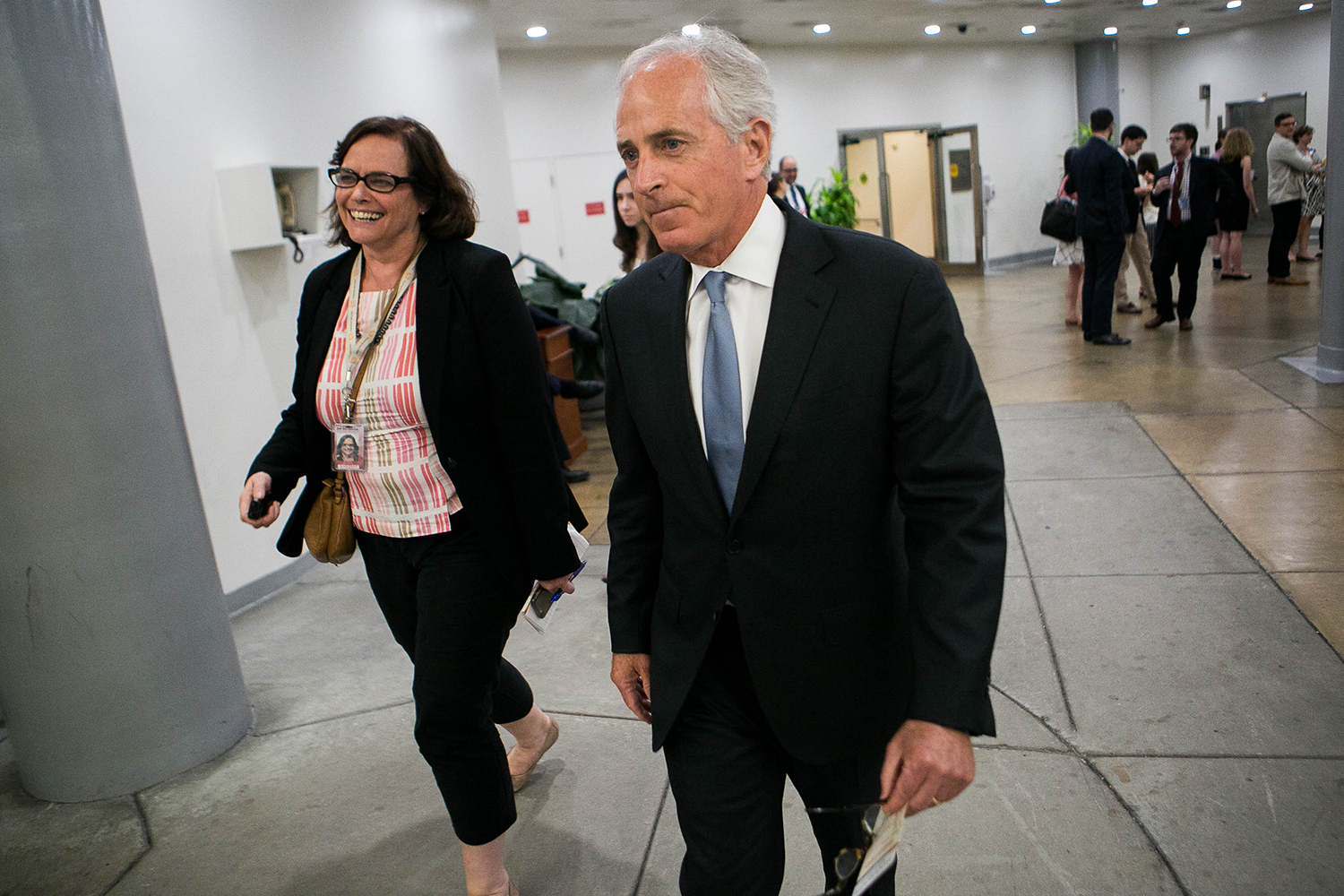
The chairman of the Senate Foreign Relations Committee on Thursday said it’s “more than offensive” that Germany does not spend the recommended 2 percent of gross domestic product on defense.
Recommended Stories



Sen. Bob Corker, R-Tenn., said U.S. officials at next month’s NATO summit in Poland must push Germany to contribute more to the alliance, especially since Germany relies on 40,000 U.S. troops for some of its security.
“We have 40,000 troops in their country, they feel no threat,” Corker said during a Senate Foreign Relations Committee hearing looking at lawmaker’s concerns ahead of the July summit. “They’re living off of us and I just find it offensive. Again, I could see some of the other countries that have had difficulties. Germany, with them being the leading entity in the European Union right now, I just find it more than offensive.
“They are laggards as it relates to NATO,” Corker later added. “And I just don’t think we’re strong enough in our discussion with them.”
Defense Secretary Ash Carter will head to Warsaw in early July, where world leaders will likely discuss which countries have made good on the pledge made at the Wales Summit to contribute 2 percent of GDP to defense, as well as other issues like troop levels in Afghanistan and the fight against the Islamic State.
At a NATO defense ministerial in Brussels last week, Carter said he intended to push members to follow through on the promise and spend more on defense.
“You can bet that a continuing theme here and in Warsaw will be the need for all countries to meet their pledged 2 percent and, of course, ideally more,” Carter told reporters aboard his plane just before landing in Brussels. “Absolutely for sure I will be emphasizing that.”
The U.S., U.K. and Poland are the only three NATO countries that have met the defense spending goal.
Donald Trump has criticized NATO as being “obsolete,” as well as slamming members for allowing the U.S. to pay a disproportionate amount to NATO.
NATO Secretary General Jens Stoltenberg, however, defended the organization that came to the defense of the U.S. after 9/11, saying it’s “as relevant as ever.”
