

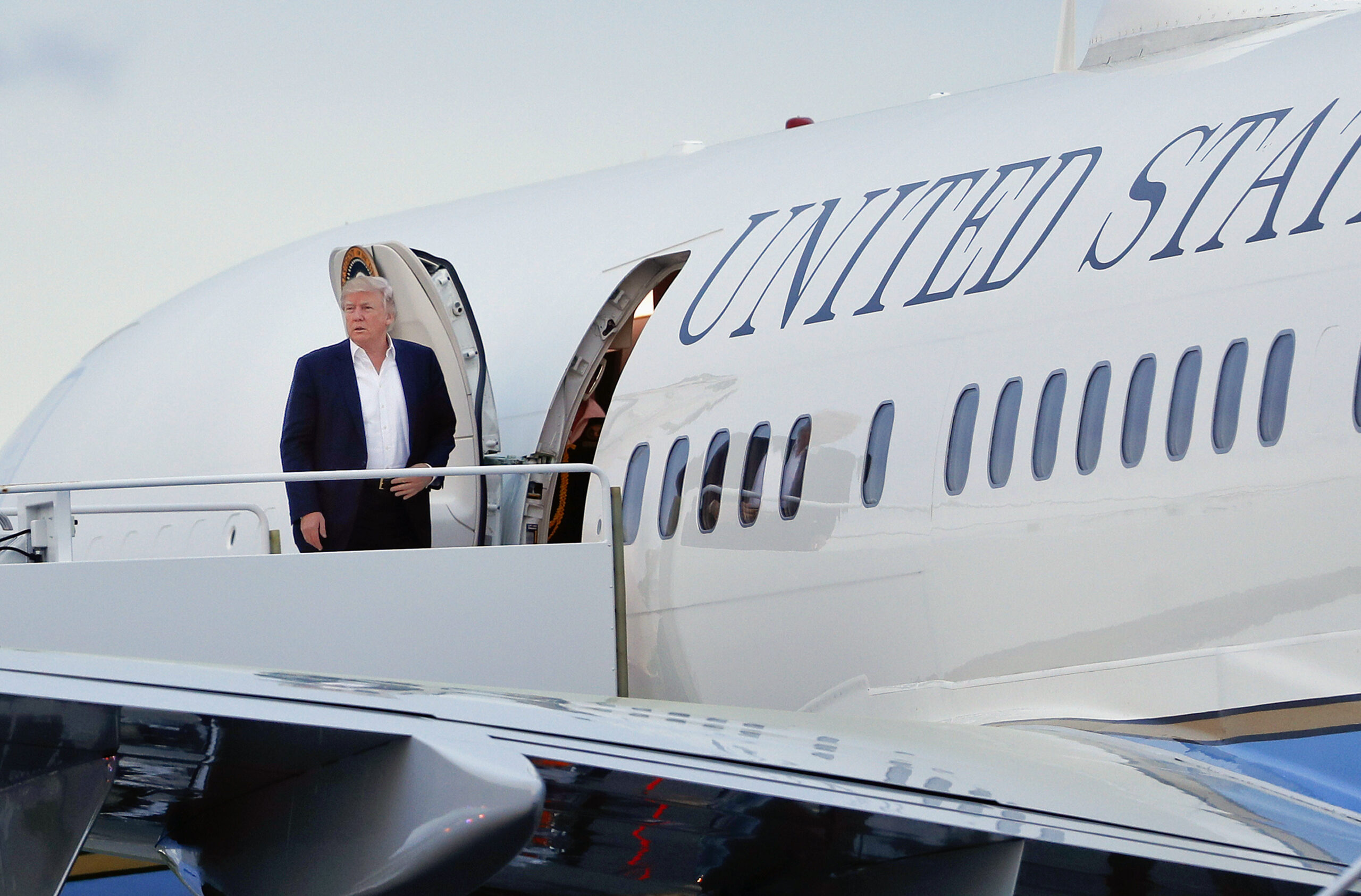
When President Trump departs Washington for Saudi Arabia on May 18, he will kick off a nine-day, two-continent tour that could have the potential to reset his presidency after weeks of turmoil.
Trump’s first trip abroad since taking office will bring him to the heart of two Middle Eastern allies and the steps of the Vatican, and will conclude with his participation in a NATO meeting in Brussels and a G7 summit in Sicily.
Recommended Stories


The whirlwind tour will offer a high-stakes test for Trump, his staff and his emerging foreign policy agenda as the president debuts his diplomatic skills in a series of appearances that world leaders and the American public will watch closely.
Trump has already tried his hand in the art of statecraft. He has met face-to-face with 17 foreign leaders since taking office, hosting them either at the White House, Mar-a-Lago or in New York. Trump’s first bilateral meeting with a foreign head of state came shortly after Inauguration Day, when he appeared alongside British Prime Minister Theresa May and pledged America’s dedication to the “special relationship” it has long enjoyed with the U.K.
A frequent and vocal critic of President Obama’s attempts to reorient the Middle East around Iran, Trump’s visit to Saudi Arabia could signal a shift back to the U.S. policy of empowering its large Muslim ally to wield influence over the region. Saudi Deputy Crown Prince Mohammed bin Salman already paid Trump a visit in March.
His next visit, to Israel, will place him squarely in the middle of what is perhaps the region’s thorniest conflict when he meets with both Israeli Prime Minister Benjamin Netanyahu and, separately, Palestinian Authority President Mahmoud Abbas. Both have already visited Trump in Washington.
David Hopkins, political science professor at Boston College, said Trump’s travel plans mark “a break with tradition” set by previous presidents during their international debuts.
“The tradition, usually, is for the first foreign trip to be either to Canada or to Mexico,” Hopkins said. “And so in this case, it’s a break with tradition to go to three other countries overseas.”
Indeed, Trump’s three most recent predecessors traveled to their northern or southern neighbors early in their presidencies. Barack Obama visited Canada within a month of his inauguration, George W. Bush visited Mexico within that same time frame and Bill Clinton traveled to Canada in April of his first term.
Hopkins noted Trump, who has spent more than a year calling for the renegotiation of the North American Free Trade Agreement, could have faced an icy welcome in the destinations that have been diplomatic bellwethers for other countries.
“It’s probably the case that this White House doesn’t think they would get a very positive reception in either of the neighboring countries and they would like, obviously, the first trip to be one that is successful and generates good publicity,” he said. “So it probably factored into the decision not to follow tradition in this case that both the political leaders and the populations of the two neighboring countries are not too favorably disposed to President Trump.”
For a president who has struggled to shake off controversies and missteps ranging from Russian collusion allegations to a pair of blocked travel bans, a successful maiden voyage abroad could allow his embattled White House to regain its footing.
Press secretary Sean Spicer said Tuesday that Trump’s trip would focus on “American resurgence” and noted that Trump’s national security adviser, H. R. McMaster, is leading preparations.
World leaders will also closely watch Trump’s positioning on the Paris climate agreement, as he is expected to determine whether to pull the U.S. out of the agreement after discussing it during the G7 summit.
