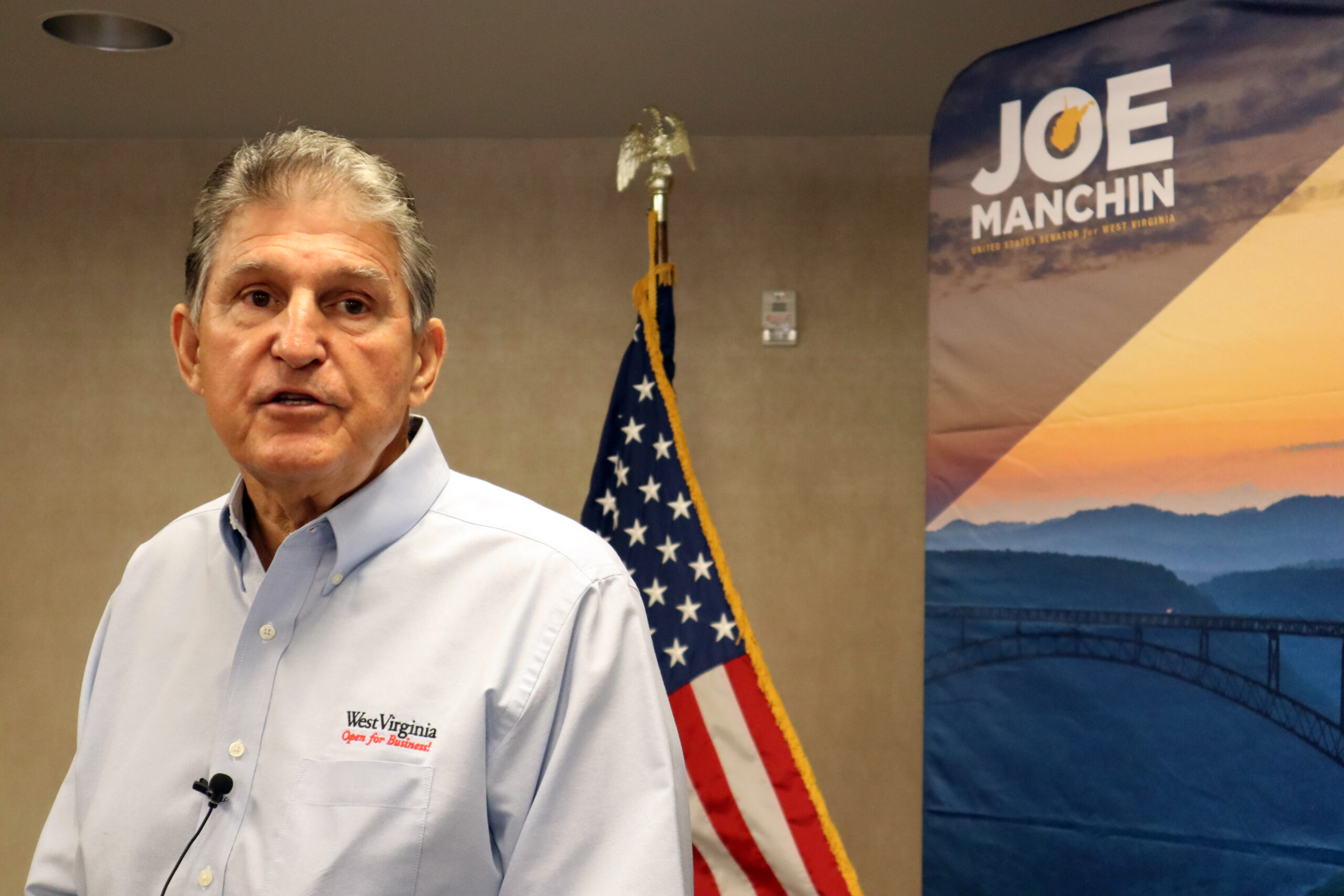
Democrats’ intraparty battle over permitting reform is heating up, with liberals drawing clear lines of opposition to the deal struck between Senate Majority Leader Chuck Schumer (D-NY) and Sen. Joe Manchin (D-WV).
The Manchin-Schumer deal, meant to speed up federal environmental review and permitting processes covering fossil fuel and green energy infrastructure projects, was announced in late July as part of the two Democrats’ larger agreement on the Inflation Reduction Act.
Some Democrats piped up shortly thereafter with concerns that reforms could undermine environmental stewardship and emission reduction goals, and opposition has calcified in the weeks since. More than 70 congressional Democrats are now urging leadership to change course on both the reform provisions themselves and the legislative vehicle planned to bring them to the floor.
NEW ENGLAND FACES A COLD AND EXPENSIVE WINTER THANKS TO LACK OF FUEL SUPPLIES
The Manchin-Schumer deal calls for “comprehensive permitting reform” legislation to be passed before the end of the fiscal year, and Schumer, House Speaker Nancy Pelosi (D-CA), and President Joe Biden all support the effort, according to Manchin’s office.
Although no final legislative language has been made public, a one-pager from Manchin’s office lists provisions that include directing the president to designate a list of at least 25 high-priority infrastructure projects deemed to be of “strategic national importance” for which permitting should be prioritized. That would include both green and legacy fossil fuel projects.
The list also proposes to impose new statutes of limitations on litigation challenging permits and would require agencies to complete permitting for the Mountain Valley Pipeline, a natural gas pipeline that originates in the shale basin of West Virginia.
More than 70 House Democrats, led by House Natural Resources Chairman Raul Grijalva (AZ), sent a letter to Pelosi and Majority Leader Steny Hoyer (MD) on Friday criticizing “anti-environmental and anti-environmental justice provisions” in the deal.
“These permitting ‘reforms’ would weaken other important public health protections, including the Clean Water Act and more,” the letter said.
They also discouraged leadership from tacking the permitting legislation to a “must-pass” continuing resolution to fund the government, which is how Schumer intends to bring it to the floor.
“The inclusion of these provisions in a continuing resolution, or any other must-pass legislation, would silence the voices of frontline and environmental justice communities by insulating them from scrutiny,” the letter said, adding that “such a move would force members to choose between protecting EJ communities from further pollution or funding the government.”
Sen. Bernie Sanders (I-VT) preceded his House colleagues’ letter with a speech against the permitting deal Thursday, saying the Senate “has a fundamental choice to make” between propping up the oil and gas industry and serving the environment and Democrats’ climate change mitigation goals.
The permitting deal has also been widely opposed by environmental groups which, like Sanders, have branded it as a “side deal” that serves Manchin’s interests and those of oil and gas companies.
Evergreen Action, an environmental activist organization, circulated a memo Thursday titled “Four Reasons to Stop the Mountain Valley Pipeline,” one of which is that greenhouse gas emissions tied to the pipeline would contribute to climate change.
Notably, some Democrats, including those who may be described as “climate hawks,” have been warmer to the permitting deal and said reform is needed in order to more swiftly build renewable energy projects.
“I feel very strongly, as I think climate hawks around here do, that it’s incredibly important to hit these emission targets,” Sen. Ron Wyden (D-OR), chairman of the Finance Committee, told Politico. “We’ve got to get every tool focused, throwing everything we possibly can at this, and we can’t have these delays in permitting.”
Still, firm “no” votes from Democrats could mean Republicans would have to get on board with the permitting language for the Manchin-Schumer deal to pass. In the Senate, that would mean 11 Republicans would have to sign on, assuming Sanders is the only Democratic defector.
Republicans overwhelmingly support speedier permitting. All present Senate Republicans voted last month in favor of a Congressional Review Act resolution canceling a Biden administration rule governing environmental reviews for infrastructure projects. The “yes” votes argued the rule made permitting more onerous, holding up construction.
Some Senate Republicans have indicated they support at least parts of the Manchin-Schumer permitting proposal.
“I’m an incrementalist. If we can get an increment that’s in the right direction, I’m good — I’m happy,” Sen. Kevin Cramer (R-ND) said Wednesday.
But it could fail to win support from enough Republicans for reasons similar to why some Democrats have soured on the proposal: They don’t care to help serve the “side deal,” and they don’t like the provisions.
CLICK HERE TO READ MORE FROM THE WASHINGTON EXAMINER
“Sen. Manchin, if you think you’re going to get 60 votes to get the sweeteners that can’t be done in reconciliation, you need to think long and hard about what you’re doing,” Republican Sen. Lindsey Graham (SC) said during a press conference on Aug. 5 before the Senate took up and passed the Inflation Reduction Act.
One Senate Republican staffer said the chances that Schumer can get at least 11 GOP votes for the plan as it currently is are slim, although the person qualified that there’s no legislative language yet.
“I have a hard time seeing the [Republican] support materialize to pass this,” the person said, adding, “We don’t believe from what we’ve seen that this comes anywhere close to constituting comprehensive permitting reform. We’re not convinced it’d have any material impact at all on the permitting process.”
