Inslee faces daunting 2020 challenge: To ‘get Americans excited’ about climate change

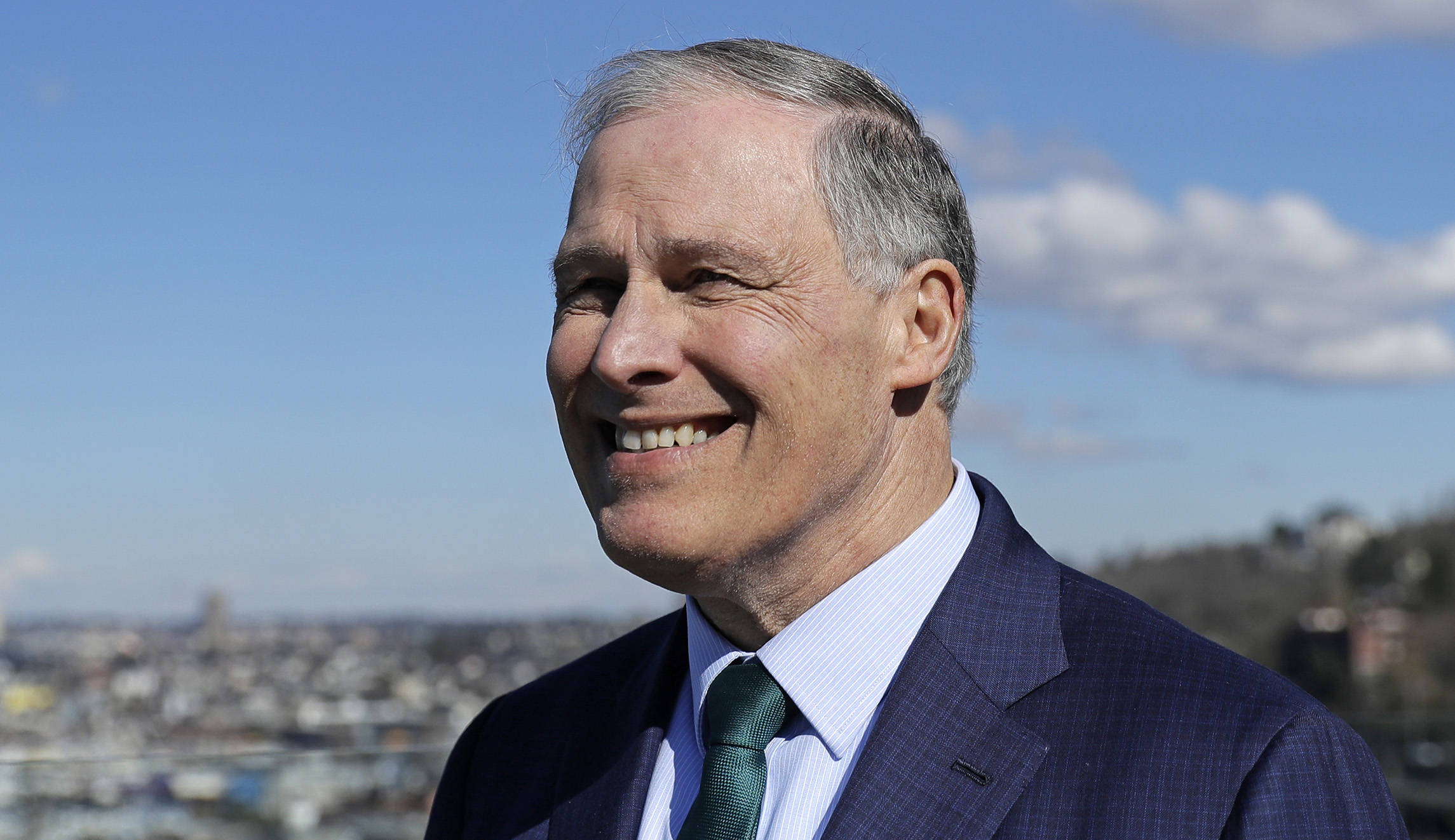
Washington Gov. Jay Inslee launched a 2020 run for president Friday making a bet untested in American politics: that a single-issue platform of fighting climate change can win.

He kicked off his campaign with a launch video in which he warned, in emotional terms, that the effects of the climate “crisis” are “being felt everywhere,” as video footage flashed of blazing wildfires and waste-deep floods. He also promised “millions of good paying jobs” in a clean energy economy.

But while polls show Americans of both parties acknowledge climate change and increasingly worry that it is driving extreme weather events, political and polling experts say most voters aren’t ready to cast their vote based on climate change politics.

“He has picked one of most difficult public policies issues to focus on,” said Travis N. Ridout, a professor of government and public policy at Washington State University who studies political ads and has closely watched Inslee’s career. “It’s a really, really tough thing to handle. It’s really hard to get Americans excited about climate change.”

Climate change ranked behind the economy, healthcare, terrorism, and immigration as an issue people consider to be “extremely important,” according to a January poll of 1,202 adults conducted by the Associated Press and the Energy Policy Institute at the University of Chicago.

Even just among Democrats, climate change is not necessarily a dominant issue. Democrat voters prioritize it after healthcare, women’s rights, guns, and inequality, according to Gallup polling.

“What that tells you is people are seeing what goes around them with climate change, and it has an affect on them,” said Sam Ori, executive director of the Energy Policy Institute at the University of Chicago, who helped conduct the AP-University of Chicago survey. “But it’s a mistake to extrapolate that to say climate change is an important issue to people. It’s not the same thing.”

Nevertheless, it is true that a record share of people, 73 percent, according to a January poll from Yale’s Program on Climate Change Communication, say that global warming is happening. And progressives like Rep. Alexandria Ocasio-Cortez, D-N.Y., and proponents of a “Green New Deal” have helped elevate the case for sweeping government action to lower emissions. Those factors could help turn an emissions-reduction platform from a liability to a benefit in a presidential campaign.

“Political discourse can elevate this issue in a way nothing else can,” Ori said.

Inslee is more lukewarm about the Green New Deal itself than his competitors because of its emphasis on eliminating fossil fuels by 2030 — a timeline most energy experts consider unrealistic.

Inslee argues he can present himself as an experienced pragmatist and the Green New Deal endorsed by his primary opponents as unrealistic, while well-intended.

“Inslee has real credibility on climate issues, and he is smart to emphasize the cost of climate change impacts in money and lives, because that’s how most Americans view the issue,” said Paul Bledsoe, a former climate change adviser to President Bill Clinton. “The other Democratic candidates have done a poor job in articulating why climate is so important. Most of the Democratic candidates are hiding behind a Green New Deal fig leaf.”

Yet Inslee, as governor of one of the greenest and most progressive states, has twice failed in his most high-profile goal: Imposing the nation’s first voter-approved carbon tax — an illustration of the difficulty of climate change politics.

Ridout said Inslee had trouble selling his ideas to voters, especially in rural parts of Washington, and passing legislation through the state legislature, which was run by divided government for most of his term until recently.

“Despite it being a fairly progressive state, these messages didn’t work,” Ridout said. “The downside for him he doesn’t have many successes to point to.”

Inslee is hoping his fortunes will change with Democrats now having stronger control of the legislature. He introduced a plan in December for his state to use 100 percent carbon-free electricity by 2045, with proposals to boost electric vehicle use, build energy-efficient buildings, and phase out hydrofluorocarbons, potent greenhouse gases used in refrigeration.

Still, Inslee faces risks in emphasizing his carbon pricing agenda. He struggled with it in blue Washington. Congressional Democrats faced backlash after they tried to pass cap-and-trade at the national level in 2007. French president Emmanuel Macron’s fuel taxes helped generate major protests.

“Leading with taxes is never a good political idea,” Bledsoe said. “There are many other policies that can address climate change.”

On the other hand, Inslee’s failed efforts to sell a carbon tax could prove good practice for a national climate-centric campaign.

“In some ways, his Washington State experience has prepared him to make the national case more compellingly,” Bledsoe said. “Inslee is uniquely positioned to prove that not acting on climate change will cost more than acting on it.”

But voters have not proved they care enough about the long-term costs of climate change to prioritize it ahead of more tangible issues such as healthcare and jobs. And the consequences of climate change, such as flooding from sea level rise or extreme heat, are being felt only in portions of the country and not necessarily in states that will determine the Democratic primary and the presidential election.

“Humans have a hard time changing their behavior now to stave off issues in the future,” Ori said. “That is what makes climate change policy hard.”

Related Content
