

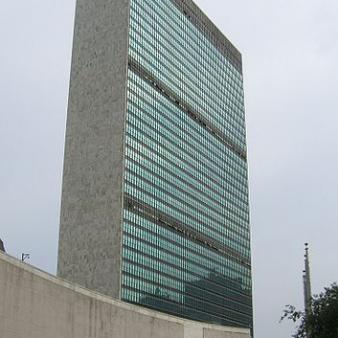
Not so long ago, the acronym ‘R2P’ was all the rage in foreign policy circles. It stood for the ‘responsibility to protect’: Sovereign nations, the UN declared in 2005, have a responsibility to protect their populations “from genocide, war crimes, crimes against humanity, and ethnic cleansing.” When a state fails in this responsibility, the UN continued, the burden falls to the “international community” to stop the crimes and save the people. The idea was championed by some of the few liberal hawks who remained in captivity, such as former French foreign minister Bernard Kouchner and National Security Council staffer Samantha Power. You can learn more about R2P here.
What sounds intriguing in theory has never been put into practice. There was a brief discussion of the Responsibility to Protect in the aftermath of Cyclone Nargis, when the Burmese junta denied foreign assistance to its devastated population. But that faded away. And now, in February 2011, when the Libyan tyrant orders bombing runs against his own people and pledges to fight to the death, there’s hardly anyone who mentions R2P doctrine. Indeed, hardly anyone in the U.S. government mentions any positive actions the free world might take to aid the Libyan people as they attempt to overthrow a murderous dictator.
Real journalism.Trusted by millions.
Unlimited access to in-depth reporting, expert analysis, and the stories that shape our country.
Already a member? Log in
