

Iraqi Christians to Trump: Don’t forget us
Michigan’s Middle East Christians helped propel Donald Trump to the presidency. They could help make him a one-term president if he lets them down.
MACOMB COUNTY, Mich. — If you are looking for early clues about whether President Trump will win re-election in 2020, you’d do well to look to an immigration detention facility in Youngstown, Ohio, where nearly 200 Iraqi Christians are imprisoned. Their fate will profoundly influence how Trump is perceived by one of his most loyal voting blocks, and thus help determine whether he wins re-election in 2020. Most of the detained are Chaldeans, who practice Eastern Rite Catholicism, from the Detroit metro area.Tens of thousands of Iraqi Christians have resettled in the United States in recent decades, first to flee the chaos of the Iran-Iraq War of the 1980s, then to avoid the genocidal intentions of the Islamic State and other jihadist Islamic groups.About 120,000 Chaldeans live in southeast Michigan, the largest concentration of Chaldeans anywhere in the U.S. They have erected churches, started businesses, and become pillars of their communities.Chaldeans have also become reliable supporters of Republican political candidates, including, last year, of Donald Trump. Many Chaldeans liked Trump’s pro-life views and generally conservative policy positions.But most were persuaded to vote for him after he promised to protect them.On June 11, Immigration and Customs Enforcement agents arrested and detained 114 Detroit-area Chaldeans in immigration raids. Another 85 Iraqis from other parts of the country have also been incarcerated. Most of the men (and a couple of women) came to the U.S. legally and acquired green cards, which were revoked after they were convicted of crimes. But these men and women weren’t deported because Iraq refused to take them.That changed in February, when the Iraqi government agreed to accept these immigrants in exchange for being dropped from the list of countries on Trump’s travel ban. The immigrants were taken to a detention center in Youngstown, Ohio, where they now await deportation.Some of the detained immigrants committed murder and rape. But most committed lesser, non-violent crimes, paid their debt to society, formed families, and began contributing to their communities.Hadeel Khalasawi falls into the latter category. I learned of Hadeel’s story when my brother, Jordan, and I visited his family at Kabob And More, their restaurant in Hazel Park, Mich.
The recent influx of Syrian refugees in Erie speaks to the length of the process. The Syrian civil war broke out in 2011, but it’s only been in the last couple years that Syrian refugees have been resettling here in significant numbers.Haas and his team meet refugees at the airport and set up their housing, health screenings and school enrollment for their kids.Perhaps the most important part of the resettlement process is helping to find work for the refugees. Haas said refugees must be economically self-sufficient at eight months. “From day one we’re trying to get them ready to find a job, get into a job,” he said. “For a lot of them, it means they’re taking a job below their training or their expertise, but they need to get a job.”Employers are very happy with the refugees, Haas said. They work hard, show up on time and are respectful. They also don’t have problems with drugs, a challenge many employers face when hiring native-born residents.At the Catholic Charities office in Erie, my brother Jordan and I met Abdul Sitar, a recent refugee from Syria. Sitar, his wife and two children had been in the U.S. only seven months after spending three years in a refugee camp in Istanbul. Sitar, who lost his arm after getting shot by a sniper at a checkpoint in Damascus in 2013, said he was surprised by how welcoming people were in Erie, especially when compared to the treatment they’d received in Turkey, where refugees have few rights and access to few services.
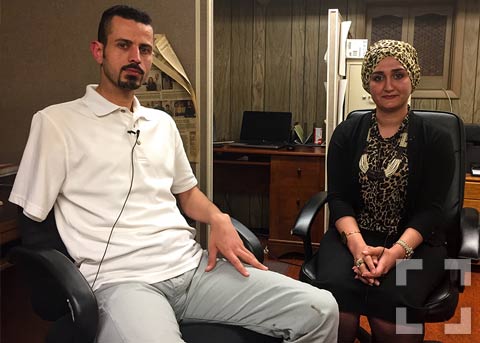
Click the image above to expand.We also met sisters Hiba Alsabonge and Jasmine Alsabunji. Later, they told us their stories over a delicious homemade dinner of dolma, tepsi baytinijan, fattoush salad and other Iraqi dishes.Hiba has lived in the U.S. since 2014, and Jasmine since 2012. They were granted asylum because their male family members had worked as interpreters and in logistics with the U.S. military, which made them targets of the jihadists.At one point, an Islamic State sniper was terrorizing their Baghdad neighborhood by shooting at civilians from a nearby abandoned building. Hiba said they jury-rigged a metal plate to place in their car window whenever they passed the street where the sniper was hiding to deflect any bullets he shot at them. Their father was shot in the stomach and injured in 2007, prompting them to apply for refugee status, a process that took about a year.Hiba has a degree in laser engineering, but her initial job in the U.S. was as a cashier at Walmart. She enjoyed it, and made such an impression on her co-workers that some of them cried when they learned that she would be leaving to take a job as a case manager at Catholic Charities, where she has worked since 2016.
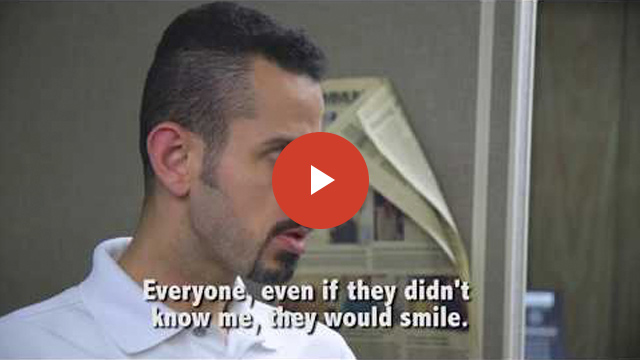
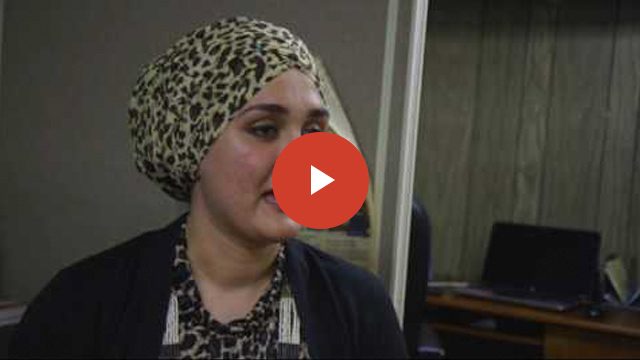
Click the image above to watch the video.Like Abdul, upon arriving in Erie, Hiba and Jasmine were struck by how friendly, polite and law-abiding Americans are. “This is amazing,” Hiba said. “Honestly I get a lot of support, the people here in United States they’re so friendly, so helpful and they are accepting each other, it doesn’t matter who you are. They don’t treat you based on your race or your background. That’s my experience by living here in Unites States.”“I have a friend who lives in D.C., and I tell him I live in Erie,” Jasmine said. “He say, ‘This is redneck area where nobody likes refugees.’ This is not right. I said, ‘I live there four years and people are so nice, so caring. Really…I [haven’t] met anyone who was against me or didn’t like me.”Jasmine recounted being invited to give a talk at a Catholic church in Erie. She was nervous because her English wasn’t great and because she’s a Muslim who wears a hijab. She was surprised by the response she received. “Oh my God, the reaction I got after that, like I was looking at their faces, they were crying. Like many women when I was done, they just came and hugged me and said, ‘[We’re] so proud of you, God bless you, if you need anything, [let us know].’ This is amazing.”

Click the image above to expand.Jasmine said she understood why Americans are skeptical of some immigrants. She knows some who are ungrateful or feel entitled, she said. But “[coming to America] is like heaven for me, so you have to appreciate it, you have to work hard for it. And you just have to prove it … You have to prove yourself to the society.”More than anything, the sisters said, they appreciated that America is the land of unrivaled opportunity. “Here, if you work hard, you see the results,” Hiba said.Jasmine said that though she wasn’t eligible to vote in the 2016 election, if she had been, she might have voted for Trump. She saw the president’s travel ban as a reasonable measure but thinks countries with terrible human rights records, such as Saudi Arabia and Pakistan, should have been included.
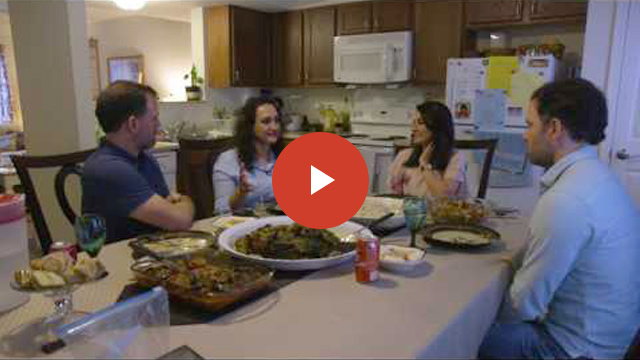
Click the image above to watch the video.Some people may find it strange that an Iraqi Muslim woman refugee would demonstrate anything other than utter contempt for President Trump. Some may also find it strange that a county that voted for Trump would be so welcoming to refugees, the fear of whom Trump constantly invoked during the presidential campaign. These are just two apparent ironies for a people and place that defy easy categorization.Hiba offered this advice to those who feel threatened by resettled refugees: “Don’t judge them until you know them.”The same could be said of places such as Erie, which helped put Trump in the White House and are welcoming refugees by the thousands.
Read More: Erie County Blogs
Click to read the next story in the series, or share the article on social media.
Read Next Article
Share on Facebook
Share on Twitter
The post TEST POST: Iraqi Christians to Trump: Don’t forget us appeared first on THE RACE TO 2020.
