
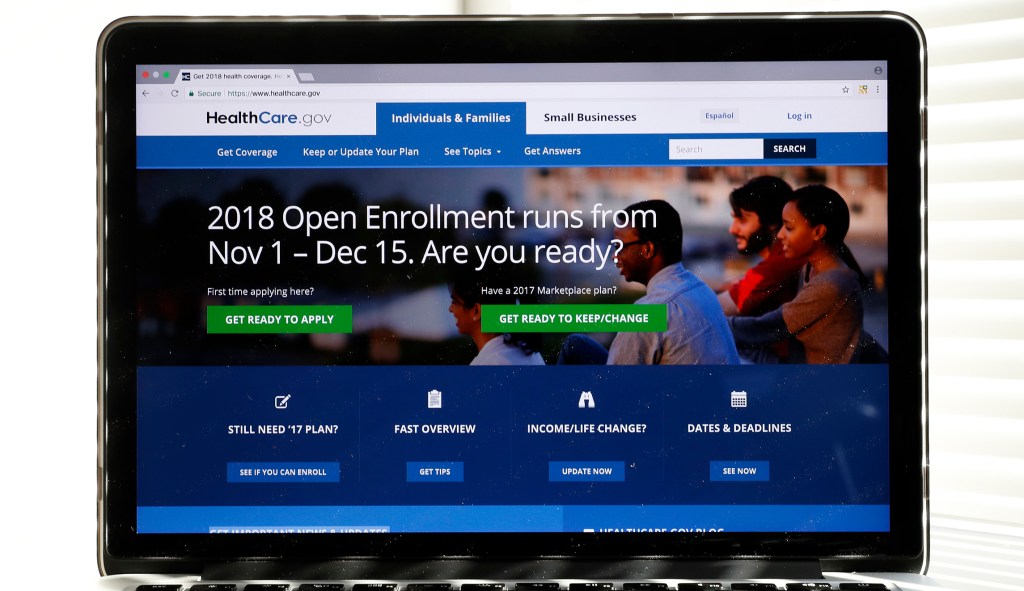
Obamacare’s fifth open enrollment starts Wednesday, with a different president running it for the first time.
Obamacare has been the subject of repeated attempts at repeal by the Republican-controlled Congress and several moves by the Trump administration that critics claim are attempts to sabotage and undermine the law.
Here are the top seven things you need to know about open enrollment, which applies only to Obamacare customers who do not receive health insurance through a government program or work.
1. Obamacare is still the law
Republican efforts to repeal Obamacare were stymied this year after the Senate voted down multiple repeal bills by narrow margins. However, President Trump said last month that “Obamacare is dead” and that it is gone, even though it still exists as the law of the land, much to the GOP’s chagrin.
But advocates for the law say that Trump’s pronouncements, plus repeated attempts to kill the law, have caused rampant confusion among consumers over whether they can still buy Obamacare plans on Nov. 1.
“The administration keeps rolling back their outreach efforts, isn’t helping people get the facts about open enrollment, and instead argues that ‘people are aware of Obamacare and the exchanges, they are aware they can sign up’ and that ‘Obamacare is dead,’” said former Obama administration official Lori Lodes. Lodes is co-founder of the enrollment group Get America Covered.
Lodes was referring to the Trump administration’s decision to abruptly cut advertising funding for Obamacare by 90 percent for 2018 to $10 million from the $100 million spent in 2017.
The fine for not having health insurance still applies to people the government deems can afford it, meaning to those for whom the lowest-cost bronze plan would cost 8.05 percent of their income. For 2018, that means someone who is uninsured will pay 2.5 percent of their income in a tax penalty or $695, whichever is higher.
2. Enrollment projections are uncertain
The Trump administration has not set a target for how many people it expects to enroll in Obamacare plans.
Forecasts by S&P Global Ratings show that 10.6 million to 11.4 million people will sign up for Obamacare plans, meaning signups could fall by as little as 7 percent or as much as 12 percent.
Another analysis by the left-leaning Center for American Progress estimates that without changes the Trump administration is making to insurer payments as well as to advertising and outreach, 12.2 million would be projected to sign up.
3. Open enrollment is shorter in most states
The federal open enrollment for healthcare.gov is six weeks shorter this year, running from Nov. 1 to Dec. 15.
Some states, however, have special enrollment periods because of hurricane recovery efforts. Those include Florida, Georgia, and Texas. Residents in those states can sign up for coverage until Dec. 31.
The District of Columbia and some states that run their own exchanges, such as California and New York, have later deadlines that run until Jan. 31.
4. Healthcare.gov is heading offline for maintenance
Healthcare.gov is expected to be taken offline for as many as 12 hours during all but one Sunday over the open enrollment period.
The Department of Health and Human Services is planning website outages for a timeline that could last from midnight to noon every Sunday except Dec. 10. The agency is also planning to take the exchange offline overnight during the first day of open enrollment, on Nov. 1.
5. Consumers will have fewer health insurers to buy coverage from
According to a federal report, 55 percent of Obamacare customers will have just one or two health insurance options, up from 43 percent last year. Twenty-nine percent of total enrollees will have one health insurance company to buy coverage from, an increase from 2 percent of customers in 2016. Eight states will have one insurer offering coverage across the entire state. In total, 132 health insurers are selling Obamacare plans across the country, down from 237 insurers two years ago.
Having fewer insurers can limit the doctors and hospitals patients they can see under the plans.
6. Prices are increasing and will be felt by Obamacare’s unsubsidized customers
The price of Obamacare’s premiums are expected to rise by an average of 34 percent nationally.
About 80 percent of Obamacare customers, or 8.7 million people, receive subsidies from the federal government that helps them afford coverage and shields them from premium increases. Unsubsidized customers, however, are largely hit by these premium increases.
These customers, estimated at roughly 6.7 million people in 2017, according to Kaiser Family Foundation data, make more than the Obamacare cutoff of $48,240 a year for an individual or $94,400 for a family of four and are not eligible for subsidies because Obamacare cuts off assistance at 400 percent of the federal poverty level.
Some customers may not know they qualify for subsidies. Karen Pollitz, senior fellow at the Kaiser Family Foundation who previously worked for the Obama administration, estimated in a webinar on open enrollment that about 20 percent of the 27 million uninsured would qualify for tax credits that lower the cost of health insurance but have not signed up.
7. Some subsidized customers will pay less for health insurance
Trump decided last month to abruptly end payments to Obamacare insurers starting on Oct. 18. The payments reimburse Obamacare insurers for following the law’s requirement to lower copays and deductibles for low-income Obamacare customers.
Many states and insurers saw the writing on the wall this year that Trump would not make the insurer cost-sharing reduction payments. As a result, the states told insurers to load all of the costs for the CSRs onto premiums for silver plans, the middle of Obamacare’s three metal tiers. Experts have called the method “silver loading.”
About 80 percent of enrollees who buy coverage through healthcare.gov will be able to buy a health insurance plan for $75 or less a month, according to a report by the Department of Health and Human Services. The same report found that the average tax credit offered to people to cut the price of their insurance will rise in 2018 to $555, up 45 percent from this year’s average credit of $382.
Obamacare’s tax credits are tied to the second-cheapest silver plan, so if the cost of silver plans rise considerably in a certain state, that means tax credits go up also rise overall. This means consumers may find cheaper options among bronze, gold or platinum plans because they do not have the silver surcharge, said David Anderson, a research associate at Duke University’s Margolis Center for Health Policy. For instance, a Kaiser Family Foundation study found that in 1,540 counties a hypothetical 40-year-old making $25,000 a year can get a bronze plan at no cost under Obamacare.
Some states called for insurers to load up all the costs onto silver plans only sold on Obamacare’s exchanges and told insurers to sell a similar silver plan off the exchange without the surcharge. Healthcare blogger Charles Gaba of acasignups.net calls the process the “silver switcheroo.” Twenty states have chosen that approach.
Gaba estimates that 18 states are instructing Obamacare insurers to “silver load” the CSR costs. Five other states are increasing costs across all plans to make up for the CSRs, and two states and the District of Columbia are assuming the CSRs will be paid, according to Gaba’s estimates.
