Madison, Wisc.
Wisconsin Republicans have heard it all before.
“There’s a lot of hate going on in Wisconsin, and I think it’s bad.”
“There’s a $2.2 billion deficit, and the schools were going begging.”
“He didn’t want to raise taxes ’cause he was going to run for president.”
“So instead of raising taxes, he cut back on schools, he cut back on highways, he cut back on a lot of things.”
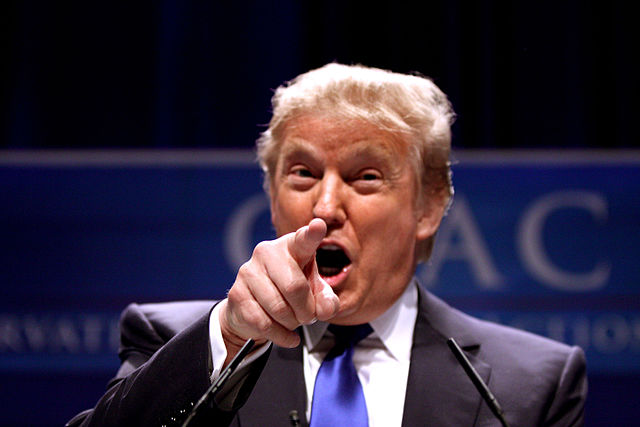
In several pitched electoral battles over the last five years, Democratic lawmakers have lobbed these talking points at Scott Walker, so it’s not clear what Donald Trump thought he would accomplish when he spoke these words in Wisconsin this week.
In the last five years, Wisconsin voters have seen Walker’s reforms work. Republicans have discussed these issues with their neighbors, and they already know that Trump’s talking points are deeply misleading. Both of Walker’s Democratic challengers couldn’t name a single public school that had been hurt. If Wisconsin Republicans wanted to raise taxes instead of cut spending, you’d think they would have turned on Walker by now. But 80 percent of GOP primary voters approve of his job performance.
Trump’s attack on Walker was essentially an attack on everything Wisconsin Republicans have fought for (or at least approved) over the last five years. But attacking Walker for not raising taxes was hardly the most foolish thing Trump did heading into the crucial April 5 Wisconsin primary.
Trump’s tweets last week threatening Ted Cruz’s wife, Heidi, and disparaging her looks set the tone for the entire Wisconsin campaign. Prominent Trump booster Newt Gingrich felt compelled to call Trump’s actions “utterly stupid.” Trump endorser Ann Coulter called her man “mental.” Trump refused repeatedly to apologize to Heidi Cruz in an interview with Wisconsin radio host Charlie Sykes that gained a lot of attention. That was Monday.
Then on Tuesday, Trump’s campaign manager Corey Lewandowski was charged with battery by Florida prosecutors for grabbing former Breitbart reporter Michelle Fields so hard she said she was left with bruises. Lewandowski claimed Fields was “delusional” and said he never touched her; video evidence showed that he did. Trump defended Lewandowski in a multi-platform meltdown: first on Twitter, then in a stump speech in Janesville, and again at a CNN townhall meeting with Anderson Cooper in Milwaukee. “Touch — I don’t know what touch means,” Trump told Cooper. “She was grabbing me,” Trump claimed falsely. He later suggested Secret Service was concerned that the reporter “had a pen in her hand” because it could have been “a little bomb.”
On Wednesday, Trump told MSNBC’s Chris Matthews at a townhall event that women who undergo abortions must face criminal penalties. After the damage was done, Trump quickly reversed his position when pro-life leaders pointed out that laws that existed prior to Roe v. Wade, as well as existing abortion restrictions and laws they hope to pass in the future, penalize the abortionist and not the mother.
“Once again Donald Trump has demonstrated that he hasn’t seriously thought through the issues, and he’ll say anything just to get attention,” Ted Cruz said in a statement. Hours earlier he had finished showing off a softer side at a “Women for Cruz” event with his wife, his mother, and Carly Fiorina. “I just talked to the gal who used to babysit my kids, and she had originally supported Trump,” Judy Wenger of Madison told me after the event concluded. But she’d dropped Trump because of “his behavior and attitudes.”
How much will Trump’s comments hurt him? “I have no idea,” Wenger replied. “There are some people who just thrive on controversy. They’re not thoughtful, they don’t think, they don’t really understand government and the way it’s structured and ought to be run.”
Most, but not all, of the Trump supporters I talked to at his Janesville rally on Tuesday said they didn’t like Trump’s personal attacks. “I think he needs to know when to keep his mouth shut,” Jeff Voss of Beloit told me when asked if there’s anything he didn’t like about Trump. “I think that gets a little offensive.” Voss said he had been undecided between Trump and Kasich because it takes “executive knowledge” to be president. “I’ll probably end up voting for Trump because Kasich doesn’t have a chance,” Voss said.
Before Voss had a chance to comment on what he thought about Trump’s disparaging Heidi Cruz, a man sitting in front of us interjected. “I liked it,” he said. “It was funny.”
The man, Matt Petersen of southern Wisconsin, was a lot like the typical hardcore Trump supporter you see online. He was well-versed in the latest (completely unsubstantiated) theories that Cruz was behind the Facebook ad attacking Trump’s wife and said his main sources of news are “Drudge, Infowars, Savage, Salon. I’ll go on Salon, even though they’re left.”
“The story you guys should be doing is the Cruz affair,” Peterson said, referring to a baseless National Enquirer report.
Did it bother him that Trump had admitted to affairs? “Ah, he wasn’t in the public eye,” Petersen replied.
“I’m a big Ron Paul fan, huge,” Petersen said. “I think they’re very close in their politics.”
“We’ve got to end the wars,” he added. “The 9/11 stuff needs to be investigated.”
What did he think of Trump’s suggestion we needed 20,000 to 30,000 U.S. ground troops in the Middle East to fight ISIS? “I’d like to see it done through the air, but if you’ve got to send them in, send them in and get it over with.”
Voss and Petersen were representative of the two kinds of Trump supporters: Those who can criticize him and those who can see him do no wrong. Just how many of Trump’s supporters make up his hardcore base involves some guesswork, but a recent poll suggested that slightly more than half of Trump’s backers would vote for him no matter what. A poll released last week by the Washington Free Beacon asked Wisconsin primary voters what they would do if they “became convinced that Donald Trump would lose to Hillary Clinton and that Ted Cruz had a good chance to defeat Hillary Clinton.” Fifty-five percent said they’d still vote for Trump, but 38 percent would switch to Cruz.
It seems that the main effect in Wisconsin of Trump’s month of bad behavior is that it kept a lid on his support. Back in February, Trump was polling in first place at 30 percent in the Marquette poll. In the final Marquette poll released this week, Trump was still stuck at 30 percent, now 10 points behind Cruz, despite six weeks of Trump winning the most states and the most delegates. But during that time Trump also invigorated the opposition by, among other things, refusing to condemn David Duke and the KKK in an interview, encouraging violence against non-violent protesters at his rallies, talking about the size of his hands and the rest of his anatomy, and attacking Heidi Cruz.
The latest polls showing Cruz jumping out to a lead over Trump suggest that Trump made another mistake in declining future debates. Debates would have given Trump a chance to attack Cruz and push some Cruz backers over to Kasich. Instead, Kasich has been mostly out of the public eye while conservatives rallied to Cruz in Wisconsin.
If Cruz pulls off a victory on April 5, it would help clear the path for him to win the nomination at a contested convention. Trump could rack up big wins in New York and the East Coast in late April, but Cruz could deny Trump the nomination with victories in Indiana and Nebraska in early May and victories in South Dakota, Montana, and California on June 7.
But first Cruz needs to win Wisconsin.
