

Free agent Republican bundlers are prioritizing foreign policy and national security as they ponder where to park their money and lucrative Rolodexes in 2016.
In hindsight, Republican rainmakers have concluded that Mitt Romney’s near-singular focus on domestic issues squandered an opportunity to expose President Obama three years ago. They don’t want the next Republican nominee to make the same mistake against Hillary Clinton, the likely Democratic standard-bearer who as secretary of state was Obama’s chief foreign policy lieutenant.
Recommended Stories
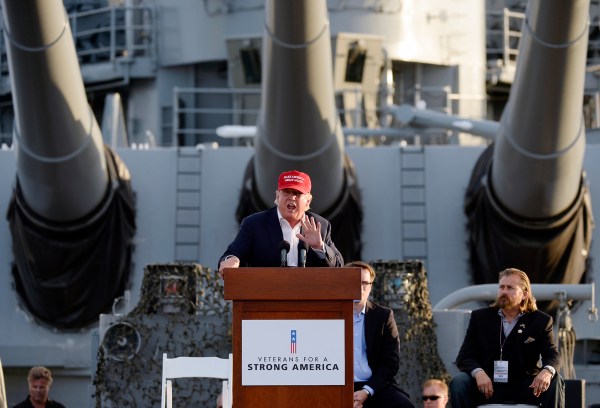
On this topic, at least, coveted Republican donors happen to be in tune with other likely GOP primary voters and the conservative grassroots. They are alarmed by events abroad and determined to nominate a candidate who will re-assert aggressive U.S. global leadership that gets tough with America’s enemies and reassures traditional allies.
“I think there’s a belief on the part of donors and operatives that there’s a real opening. The world’s only gotten more dangerous since the last election,” Robert C. O’Brien, a Los Angeles attorney and staunch financial supporter of Romney, said in a telephone interview with the Washington Examiner. O’Brien has yet to pick a horse in the 2016 primary.
Republican bundlers are a small group relative to the universe of GOP activists who play in the presidential arena every four years. Most have backgrounds in business and finance, law and government service; although some earned money through non-traditional means or inherited their wealth. While they’re a lucrative source of big checks for political organizations that can accept unlimited contributions, like super PACs, their value to presidential campaigns are their social and business networks.
Federal law limits individual contributions to official presidential campaign committees to $5,400, with $2,700 available for the primary and an equal amount for the general election. The real prize for a White House hopeful is the political moneyman who can convince family, friends and business associates to open their wallets — and their own circle of acquaintances — to his chosen candidate.
Their motivations can be diverse. Many want to back a winner; a few are ideologically driven; others have parochial issues to push, and they want a candidate who will listen.
In many respects, the 2016 contest for donors — the donor primary — is unfolding along familiar lines. As usual, Republican donors are focused on the prospective candidates’ positions on domestic issues like economic growth, job creation, and this time around, how to address income inequality, just to name a few concerns. But there also are some distinct differences separating the 2016 primary from recent contests, say active GOP donors and bundlers.
Specifically, GOP moneymen want to know where the candidates stand on foreign policy and national security, and they have pursued these questions in their initial conversations with the Republicans who want to succeed Obama in the Oval Office. Christine Toretti, a GOP donor from Pittsburgh, said contributors in her circle are particularly concerned about the candidates’ foreign policy fluency and capability to lead the West through a diverse array of challenges.
“People are starting to say, especially with the actions of our current president, that we are more than an island unto ourselves. Things going on around the world affect us and unless we have a leader who understands not only our actions but those abroad, we are not going to prevail as a leading nation,” said Toretti, who has yet to choose a candidate. “In the last cycle, it was all about domestic issues — jobs and the economy.”
The model for Republicans remains Ronald Reagan. The conservative hero served in a much different era but is widely appreciated across the GOP spectrum for strong leadership in the face of adversity and a willingness both to stand behind threatened U.S. allies and talk tough to belligerent adversaries.
With Vladimir Putin’s resurgent Russia threatening borders in Eastern Europe; a rising China unilaterally redefining sovereign territory in Asia; and chaos in the Middle East sparked by the rise of the Islamic State and Iran’s demand for nuclear weapons capability, anxiety ridden GOP donors are looking to a new stalwart to bring certainty to a rapidly evolving global order and preserve the U.S. as the world’s unchallenged super power and guarantor of security.
For Republicans, at least, this could mark the first presidential contest since 2004, possibly the first election of any kind since 2004, in which foreign policy plays a leading role in determining the outcome of the campaign. Some GOP insiders predict that 2016 could be impacted by national security like no election since 1980, when Reagan unseated President Jimmy Carter amid aggressive Soviet posturing and the Iranian hostage crisis.
“Recent events have raised alarm bells, meaning [the Islamic State], Iran, Russia, Ukraine, a real unease that the wheels are coming off and that America’s not involved,” said Ari Fleischer, who serves on the board of directors of the Republican Jewish Coalition and was press secretary to President George W. Bush during the Sept. 11, 2001 terrorist attacks. “It has pushed foreign policy and anti-terror policies to the forefront in a way they haven’t been arguably since 2004.”
The interest in foreign policy also is motivated by what might have been in 2012 had Romney paid more attention to national security in his campaign to oust Obama.
Loyal Romney financiers who would have supported a third White House bid by the former Massachusetts governor still chafe at the fact that the 2012 nominee was mocked by Obama — and in the press — for his warnings about Russia, the continuing threat of terrorism, and other dangers, before ultimately being proven quite prescient. They don’t want to leave the issue on the table again, especially in a race against Clinton.
Even at this early stage of the shadow primary, the field of potential 2016 candidates appears to have gotten the message.
Former Texas Gov. Rick Perry has been studying global issues with Heritage Foundation experts for at least a year. On Wednesday, former Florida governor Jeb Bush delivered his first major foreign policy address to the Chicago Council on Global Affairs. Govs. Chris Christie of New Jersey and Scott Walker of Wisconsin have traveled to the United Kingdom this year to burnish their overseas credentials. Former Arkansas Gov. Mike Huckabee, who won the Iowa caucuses in 2008, is currently in the middle of a 10-day trip to Israel.
The Republican senators in the field, Ted Cruz of Texas; Rand Paul of Kentucky; and Marco Rubio of Florida are all making the most of their proximity to foreign affairs through their work on Capitol Hill. The GOP donor class is looking for a combination of national security know-how and demonstrated executive leadership, giving the governors and senators in the race a chance to make their case.
“It really does matter to a substantial number of people I’ve known who are donors or active in contributing financial support to candidates,” said Alec Poitevint, a Republican bundler in Georgia. “The next nominee of our party needs to be head and shoulders above whomever the Democrats might nominate.”