

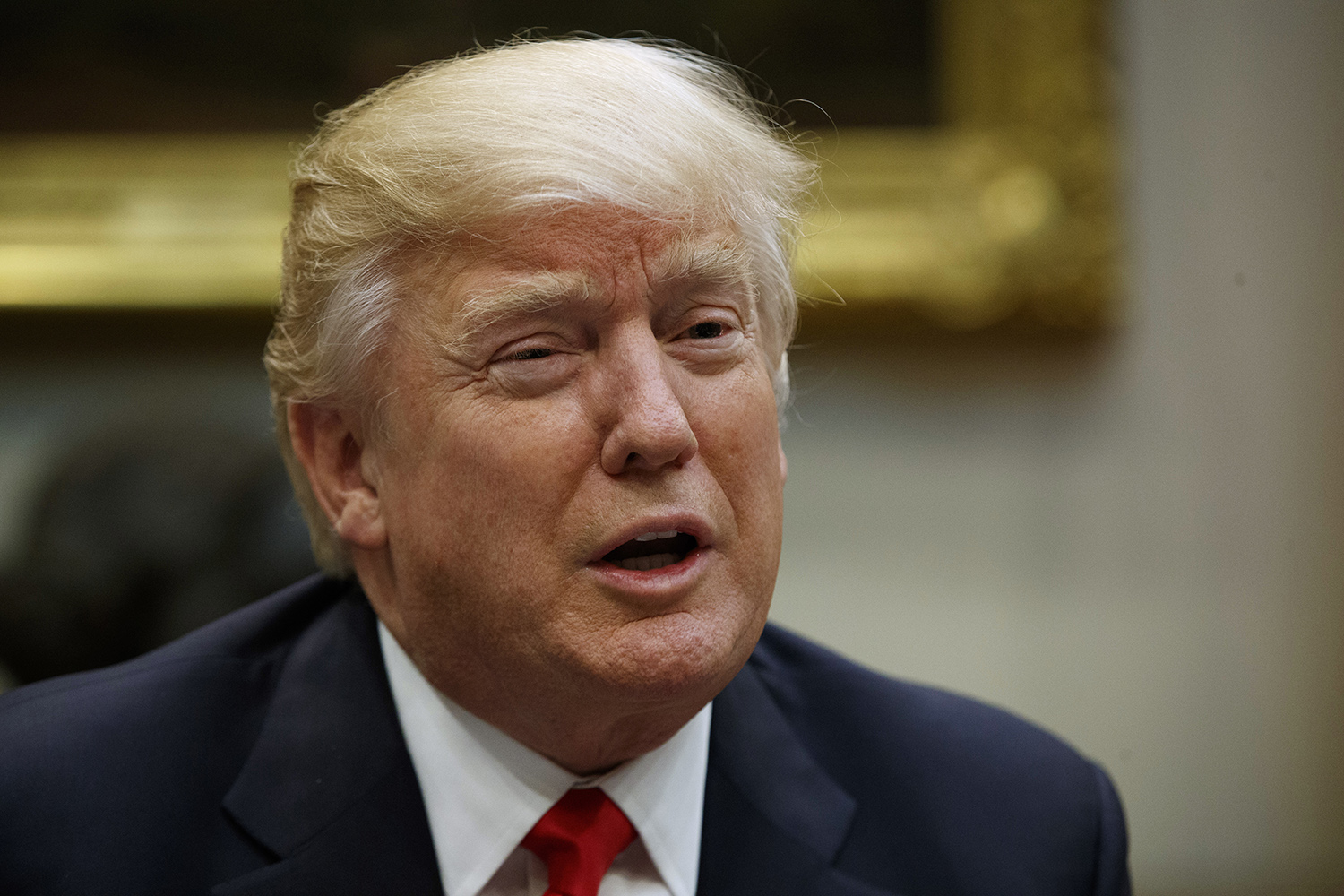
President Trump is set to sign a pair of executive orders Friday intended to bolster the U.S. position on trade.
One order calls on the Commerce Department to identify which foreign practices are contributing the most to the trade deficit, while the other instructs the department to more vigorously collect duties and tariffs the U.S. government is owed.
Recommended Stories


The orders signal a shift toward a more confrontational posture on trade matters, which Trump repeatedly has called for. At a meeting Friday with the National Association of Manufacturers, he said the “very powerful orders” were needed because “the field has not been a level field. Jobs have been leaving our country, going to China, going to Mexico, to other places.” The orders are scheduled to be signed around 3:30 pm Friday.
Commerce Secretary Wilbur Ross told CNBC Thursday that the study will be “product by product and country by country.” In some cases, the reasons for the trade deficits may be legitimate, he said, citing crude oil as an example, since the U.S. does not produce as much of it as other countries.
But in other cases, he expected the report to find that U.S. trading partners are using “unfair subsidies” or “currency misalignment” to gain the upper hand.
“What’s driving it is that the U.S. has the lowest tariff rates and the lowest non-tariff barriers of any developed country. While other countries talk about free trade, they actually are far more protectionist than we are,” Ross said. The department must complete the study in 90 days.
Ross said he was “horrified” to learn after he became commerce secretary that the government was failing to collect an estimated $3 billion in existing trade tariffs and duties. Several countries have used “strawman importers” as intermediaries as a legal buffer should the U.S. pursue unfair trade cases, he said. Often when the U.S. won, it couldn’t collect because the intermediaries went bankrupt.
The second executive order will give the Commerce Department the power to set insurance company bonds when it pursues a case “so that when we do eventually win there is somebody there who can pay,” Ross said.
A trade deficit happens when a country imports more than it exports. Such deficits are not inherently bad, economists have long noted. Consumers can benefit, for example, because a trade deficit means products cost less. The deficits mostly hurt domestic manufacturers since they face increased competition.
Labor unions applauded Trump’s orders. “It is long past time that our government prioritize the study of the massive, persistent U.S. trade deficit. Not only is the deficit a drag on job and wage growth for working families, it’s a risk to our future growth and security,” said Richard Trumka, president of the AFL-CIO, the nation’s largest labor federation. Trumka said the report “could finally give us the tools to begin addressing the very real changes our economy needs to create high quality, family-wage jobs here and abroad.”
