

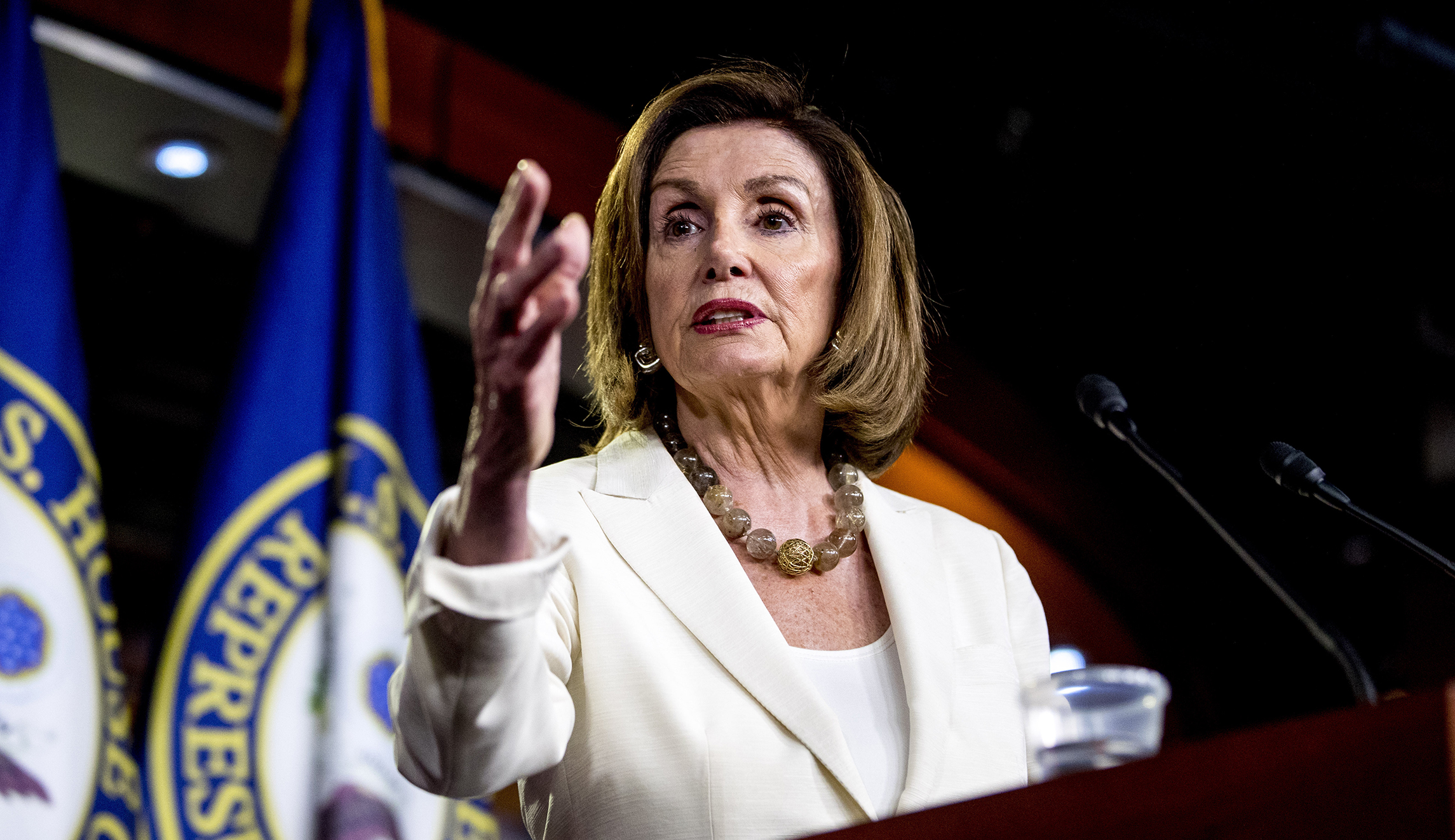
The government would be allowed to directly negotiate the prices for some of the most expensive prescription drugs under a policy proposal from House Speaker Nancy Pelosi that aligns much closer to to liberal goals than expected.
A six-page draft summary of the proposal that is circulating among lobbyists was obtained Monday by the Washington Examiner. The plan would lift the current prohibition preventing the secretary of the Department of Health and Human Services from negotiating drug prices, meaning that it’s likely to be a non-starter from Republicans and face fierce industry opposition.
Recommended Stories


While the plan wouldn’t allow for the government to negotiate the prices of all drugs, it would allow for the secretary to directly negotiate the top 250 most expensive brand-name drugs, as long as they lack at least two generic alternatives.
According to the speaker’s office document, that would mean that about half of Medicare spending on drugs picked up at the pharmacy would be subject to government regulation, and private health insurers would also get to pay the lower price that the government negotiated. Insulin, a needed drug for people with diabetes, would be included among the medicines that are set to get negotiated.
The government would determine the price of a drug by looking at what other countries pay. It would set a price at no more than 1.2 times the average of what Australia, Canada, France, Germany, Japan, and the United Kingdom pay. The secretary would take other factors into consideration, including the cost of development and sales information.
If drug companies refuse to negotiate or do not arrive at a price agreement with the government, then they would be fined the equivalent of 75% of the gross sales obtained the previous year from the drug in question.
“This steep, retroactive penalty creates a powerful financial incentive for drug manufacturers to negotiate and abide by the final price, while ensuring that patients maintain uninterrupted access to the medicines they need,” the summary says.
If a pharmaceutical company charges Medicare more than the negotiated price, or doesn’t offer the price to private health insurers, then the company would be subject to a monetary penalty equal to 10 times the difference.
The House Progressive Caucus had written to Democratic leaders during the August recess to express their concerns that a Democratic bill in the works for months wouldn’t adequately crack down on the pharmaceutical industry. While Democrats have long said they want to allow Medicare to negotiate drug prices, they have differed over the years about the mechanics of such a proposal.
Several months ago, liberals blasted Democratic leaders over an idea then in consideration to let an outside third party set the price of a drug if the government and the pharmaceutical company couldn’t agree.
The summary released Monday goes further than outsiders expected by ditching that plan and giving the government more power on both pricing and penalizing drug companies. In addition to the negotiation tactic, the plan would penalize drug companies if they raise the prices of drugs provided at the pharmacy, in a doctor’s office, or in a hospital, above the price of inflation.
The savings from lower Medicare spending would go toward funding medical research. If the savings are particularly significant, then Democrats want to expand Medicare to cover dental and vision care. Those benefits aren’t offered under traditional Medicare but are sometimes covered under Medicare Advantage, which is administered by private plans.
Under current law, the secretary of HHS is prohibited from directly stepping in to set drug prices. Instead, drug pricing is negotiated by private health insurers.
The Congressional Budget Office has projected that drug prices wouldn’t go down significantly if the government were to step in and set prices, unless it had enough leverage to either have patients use less expensive drugs first or walk away from the negotiating table, making certain medicines unavailable to the public. The tactic is used by other countries in which the government has a greater role in paying for and administering healthcare. Government scorekeepers haven’t analyzed the specific penalty tactic described in the draft.
