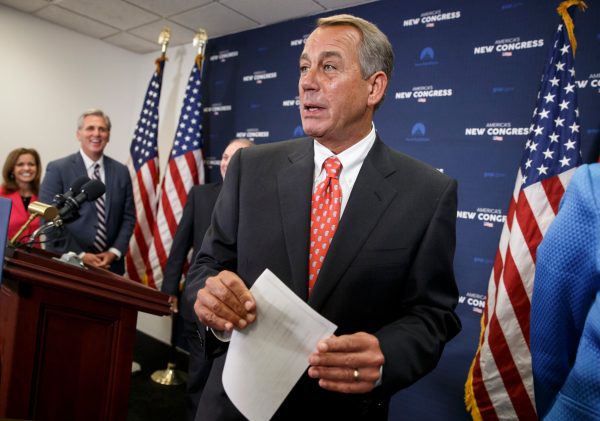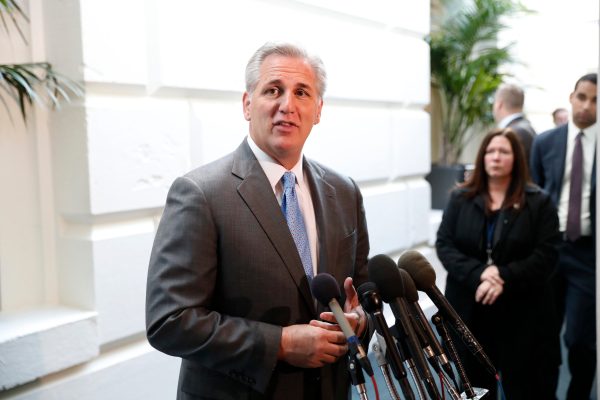
Last week, the House Republican Conference erupted in chaos when Majority Leader Kevin McCarthy, R-Calif., withdrew his candidacy for speaker of the House.
Journalists produced many scalding hot-takes on this occurrence — including the silly idea that one candidate’s withdrawal indicates the GOP is collapsing. In reality, Republicans still find themselves in a far better position than they were two years ago, when they were in the middle of a government shutdown that seriously harmed the party’s brand. If they recovered from that, they can certainly recover from this inside-baseball controversy.
But for all that, there remains a troubling underlying reality for the congressional GOP going forward. There is simply no consensus about what aims Republicans should be pursuing in Congress during the remainder of the Obama era. All sides need to sit down now and outline a common set of goals that broadly unite the GOP — and simply accept that it will not be a list that all sides are completely happy with.
The Republican House accomplished certain things in the Boehner era. Chiefly, it put an end to President Obama’s divisive legislative agenda.
In past ages, legislative majorities in divided government viewed their job mainly as preparation for more useful lawmaking during the next period of unified government. They would force tough votes on the opposing party with elections in mind, win small victories where possible, and prepare legislative solutions for the future.
Many of today’s Republicans, perhaps lacking the patience for this or the endurance for the hard work it involves, have abandoned this strategy. The moderates are trying to undo the small conservative victories of the Boehner era. The conservatives are threatening to burn the house down with symbolic legislative action that accomplishes nothing and harms prospects for their own agenda in the long run.
Under current conditions, with a liberal Democratic president and a Senate minority capable of blocking just about anything that might embarrass him, the House is limited in what it can accomplish. The conservative bloc is going to have to accept this reality if there is to be any rapprochement within the House GOP and any future for the conservative agenda. That doesn’t mean the Freedom Caucus should abandon its principles or stop fighting the moderates for what wins can be had. It does require that they show more long-term thinking as they ponder how to use the party majority.
Conservatives often justify their rancor and distrust of congressional leadership by citing the failure of GOP majorities during the Bush era. They are correct to do so, but they are missing an important lesson from that period. The true test of a GOP majority’s principles comes not when most legislative activity is futile, but in periods of unified party government, when a Republican president is in the White House. If conservatives do their jobs properly — if they raise money for and win primaries and elect party leaders they trust — then the next Republican Congress will change the world instead of serving as a craven lackey for the next Republican president.
But before any of that can happen, that president and that Congress must first be elected. All wings of the House Republican Conference must sit down this week and set goals that further that end — a process that will require some unpleasant trade-offs and compromises.