

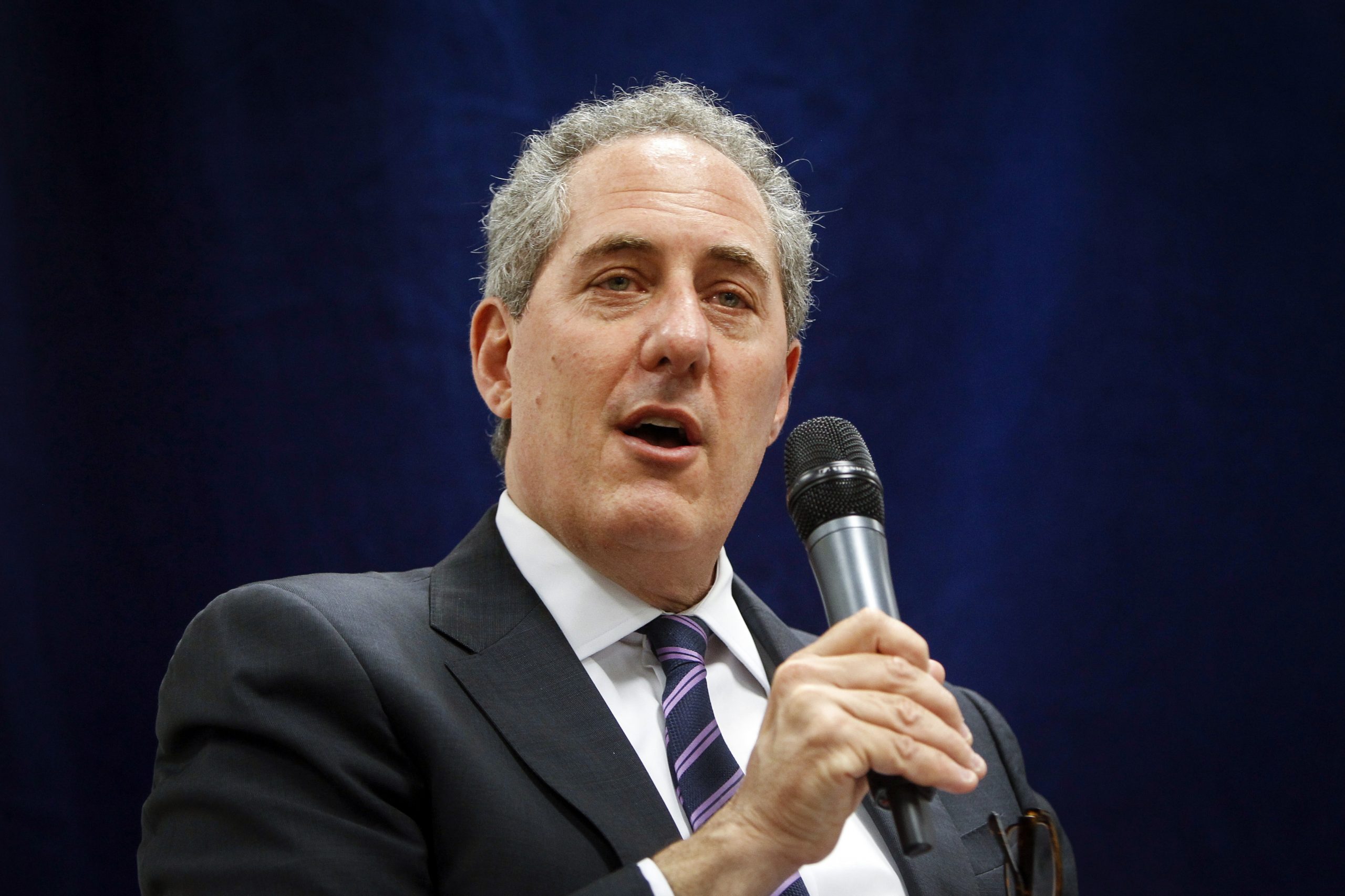
U.S. Trade Representative Michael Froman said he was “confident” that Congress would approve the Trans-Pacific Partnership but gave no timeline for the passage, stating that they were still working on selling the deal to reluctant would-be allies in Congress and business groups.
“We’re going to work with the congressional leadership and the committee leadership on the precise timetable,” Froman told reporters in a conference call hosted Thursday by the Council on Foreign Relations. “It’s too early to tell right now exactly what the pathway will be.”
Stay informed.Stay ahead.
Join Washington Examiner for unlimited access to the news, analysis, and commentary that matter most.
Already a member? Log in
Froman added that officials hadn’t completed the text of the deal and were still haggling with other stakeholders over the precise wording of the various translations.
The deal would lower taxes on imported goods and other barriers to trade with 12 Pacific Rim countries — the U.S., Australia, New Zealand, Canada, Japan, Vietnam, Mexico, Chile, Brunei, Malaysia, Singapore and Peru. It also would offer legal protections for people investing in those countries, creating common standards for trade rules.
Under the recently passed Trade Promotion Authority legislation, the Obama administration must give 90 days notice before the agreement is signed, release the text publicly 60 days before it is signed and give Congress 60 days to review the deal.
Passage will be difficult. While President Obama wants the deal, there is a strong anti-trade mood among congressional Democrats and Republican leaders have sounded skeptical notes as well. Trade Promotion Authority passed the House by a narrow margin of 218-208 in June and in the Senate by a 60-37 vote a few days later. That legislation’s passage was widely seen as crucial to the trade pact’s chances.
Froman said Obama admnistration officials were giving lawmakers the hard sell, making the case by highlighting the specific industries in their home states that would benefit under the deal.
“We’ve been briefing stakeholders, briefing Congress and briefing the public on what the ultimate resolution of key issues were in the agreement so that there is a full understanding and we can have a full and open debate about the agreement whatever the timetable is, ultimately, for approval,” Froman said.
The main problem, he said, was they don’t have to the text to show, so they cannot point skeptics to the precise details “in black and white.”
Froman argued the deal was about more than economics. It has “broad strategic implications” for the U.S.’s role in the world, too. If the U.S. does not take part, it risks ceding power in the region to China, which is not part of the deal. That will be a key part of the administration’s pitch to reluctant members of Congress, he said.
“The rest of the world is not standing still. Our competitors are not standing still,” he said.
