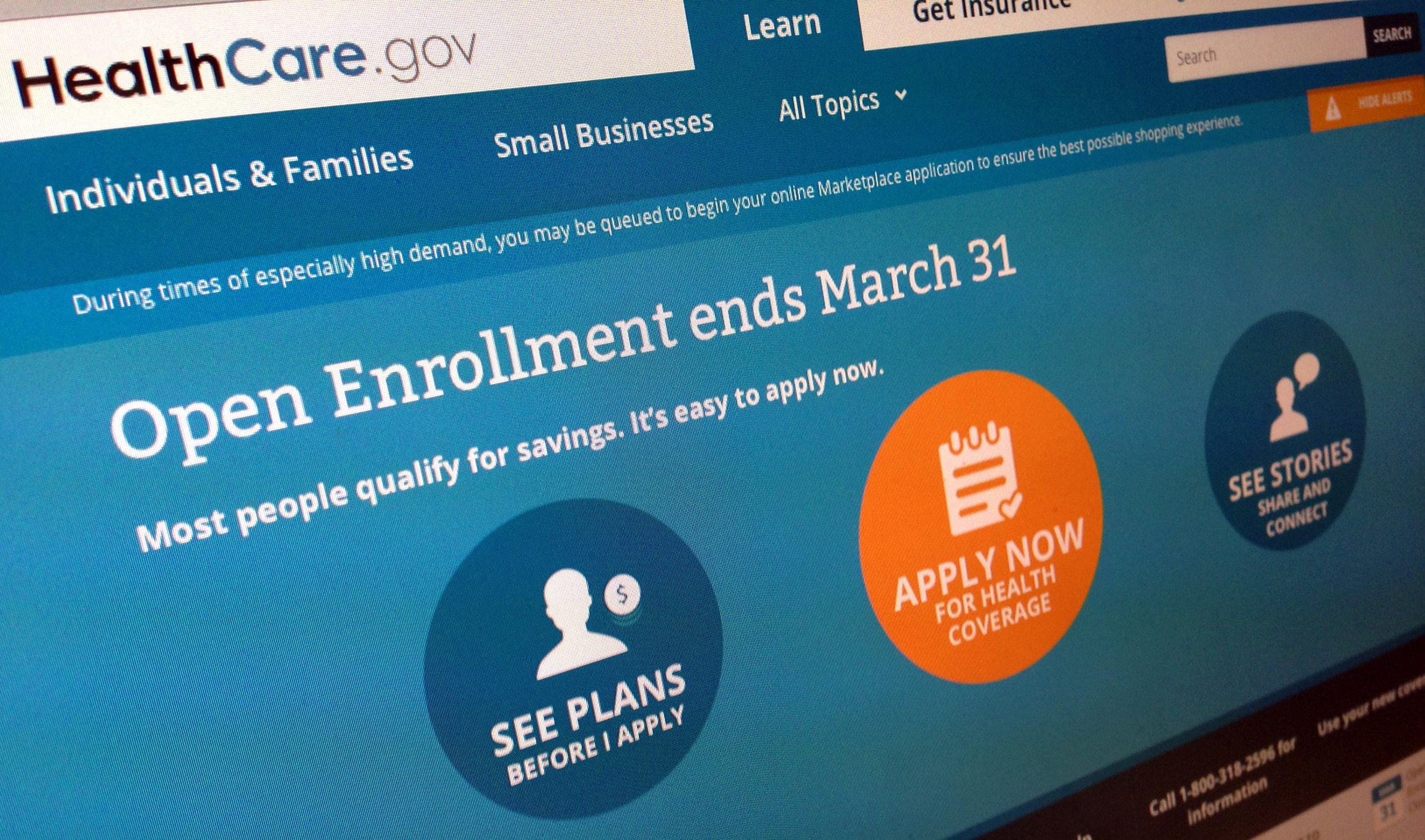
States face an Obamacare double whammy

States with some of the worst Obamacare news this year also have the biggest need for people to sign up, presenting a major challenge to advocates for the healthcare law.

Of the six states where insurers have proposed the steepest price increases affecting the most people, five have among the highest uninsured rates in the country, according to data compiled by independent analyst Charles Gaba.

In Tennessee, where 11 percent of residents remain uninsured, average monthly premiums could rise by 56 percent next year if insurers follow through with the prices they have proposed.

In Arizona and Oklahoma, where insurers are seeking to raise prices by more than 50 percent, 13 percent of residents lack insurance. Insurers also are seeking higher-than-average rate hikes in Montana and Alabama, states where the uninsured rate is about 10 percent.


And it’s not just big price hikes that are standing in the way of enrollment efforts. Five states have confirmed that just one insurer will sell plans in their marketplace next year, forcing many consumers to find a new plan and leaving all shoppers with a single carrier option. Four of those states — Alaska, Alabama, Oklahoma and South Carolina — have above average uninsured rates.

Advocates in those states worry that the flood of negative headlines mean consumers won’t explore their options for getting coverage. And if enrollment doesn’t improve in states with big rate increases and insurer exits, that could aggravate the problem as plans assess their losses from Obamacare customers and consider whether to keep selling on the marketplaces.

“[People] hear rate increase and they’re thinking, oh, we have a 20 percent premium increase and so my premiums are going up 20 percent,” said Jacob Flowers, Tennessee state director for Enroll America. “That’s not necessarily the case.”

While the rate increases vary widely by region — and not all insurers are raising rates — the upward trajectory has put the Obama administration on the defensive in the lead-up to the Affordable Care Act’s fourth enrollment season beginning Nov. 1.

Officials with the Department of Health and Human Services have been stressing the availability of income-based insurance subsidies, which the vast majority of marketplace shoppers qualify for.

Over the next month, HHS is announcing a series of efforts to spread the news about Affordable Care Act coverage, including online targeted outreach to young people through the gaming website Twitch. The agency hasn’t said where it’s focusing geographically, but spokeswoman Marjorie Connelly said more details will be released soon.

The subsidies are a major consideration for most Obamacare shoppers, who don’t have jobs with employer-sponsored coverage and tend to have meager incomes. But whether that selling point will be enough to bring in new shoppers despite higher prices and fewer choices is not clear.

Convincing Obamacare customers to continue their coverage is, in some ways, harder than bringing new customers in, according to Agee Baldwin, who works in central Alabama for AIDS Alabama, a group with a navigator grant to publicize the law.

Baldwin said that’s because many current enrollees are seeing their monthly premium costs rise significantly, without any corresponding improvement in coverage.

“They’re seeing a price increase year-by-year and so it’s hard for them, because they’re not really seeing changes in their insurance coverage so much as seeing changes in the price,” Baldwin told the Washington Examiner.

But the challenge with new enrollees is that they often don’t understand the value of health insurance, he said. Many have never had coverage, instead visiting the emergency room for dire healthcare needs.

“We get to help them conceptualize healthcare as a benefit and walk them down that path,” Baldwin said.

The challenges are compounded in the states that haven’t accepted the healthcare law’s Medicaid expansion. Lawmakers in Tennessee, Oklahoma, Alabama, South Carolina and 15 other states haven’t expanded the program for the lowest-income residents.

That makes things extra confusing for low-income people, who can qualify for marketplace subsidies if they earn between 100 and 400 percent of the federal poverty level, but often don’t know it. A study published this week in the journal Health Affairs found that marketplace enrollment was better in states that expanded Medicaid than in states that didn’t.

“People hear ‘there’s no Medicaid expansion, so I’m not eligible,'” said Chris Coleman, executive director of the Tennessee Justice Center.

Advocates for the law hope that, in time, Obamacare’s bumps will smooth out, as insurers learn how to price their products and more people enroll. But they agree the challenges are real and pressing, as about 28 million Americans remain without coverage and average premiums grow by double digits next year.

“What makes it difficult is the prices are going up year by year,” Baldwin said.

Related Content
