

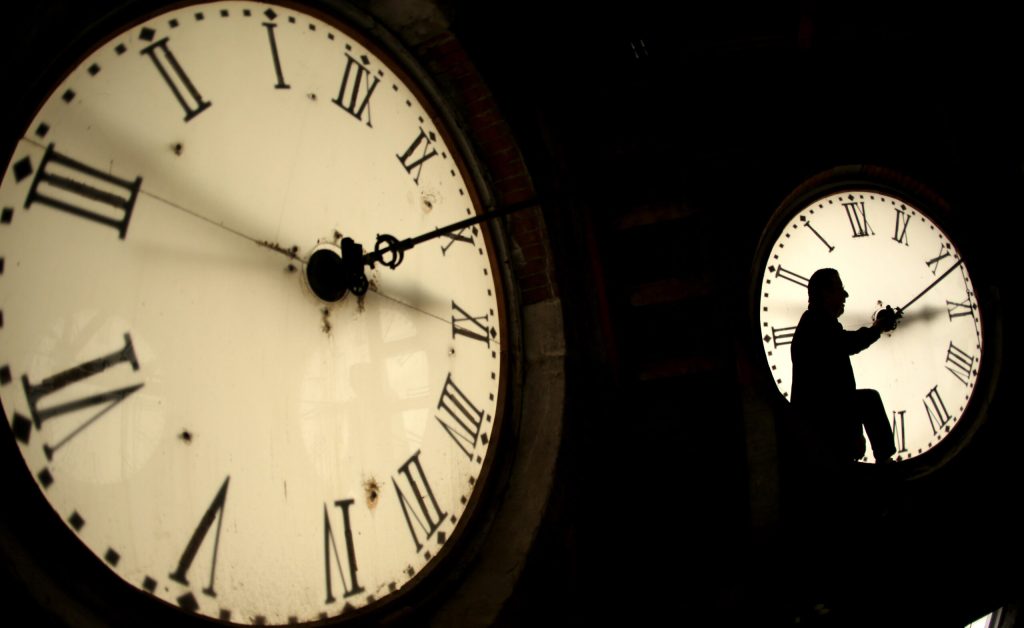
Daylight saving time is revered in the fall and reviled in the spring due to its effects on the nation’s sleep schedule. Although Americans enjoyed an extra hour of sleep on Sunday morning, the end of daylight saving time may mean more crime in the evening hours.
A new paper says robbery rates fall an average of 7 percent on the first days after daylight saving time begins in the spring. When Congress extended daylight saving time by four weeks in 2007, the resulting reduction in robberies meant $59 million a year saved in social costs. Even though the shift meant more darkness in the morning, early-day robbery rates did not rise.
Recommended Stories


“Effects are largest during the hours directly affected by the shift in daylight,” the paper says. It was authored by Jennifer Doleac, a visiting fellow at the Brookings Institution, and Nicholas Sanders, with Cornell University. Compared to the 7 percent daily drop in the spring, crime drops 27 percent in the evening hour with extra sunlight.
“It’s easy to imagine why light might have a deterrent effect on crime: Offenders know they’re more likely to be recognized and get caught if they’re fully visible,” Doleac and Sanders write on the Brookings Institution’s blog.
The study was published by The Review of Economics and Statistics, which is edited at Harvard but published by MIT Press.
There are plenty of downsides to switching to and from daylight saving time: more traffic injuries, workplace injuries and heart attacks in the days following the change. Members of Congress have claimed daylight saving time reduces energy consumption, but research doesn’t agree. To get the benefits of crime reduction without the problems of shifting clocks, Doleac and Sanders suggest a radical solution.
“We could easily avoid [the problems] by moving to year-round DST — that is, permanently shifting that hour of daylight to the evening, and then leaving our clocks alone. Our research suggests that we’d be safer for it.”
Jason Russell is a commentary writer for the Washington Examiner.
