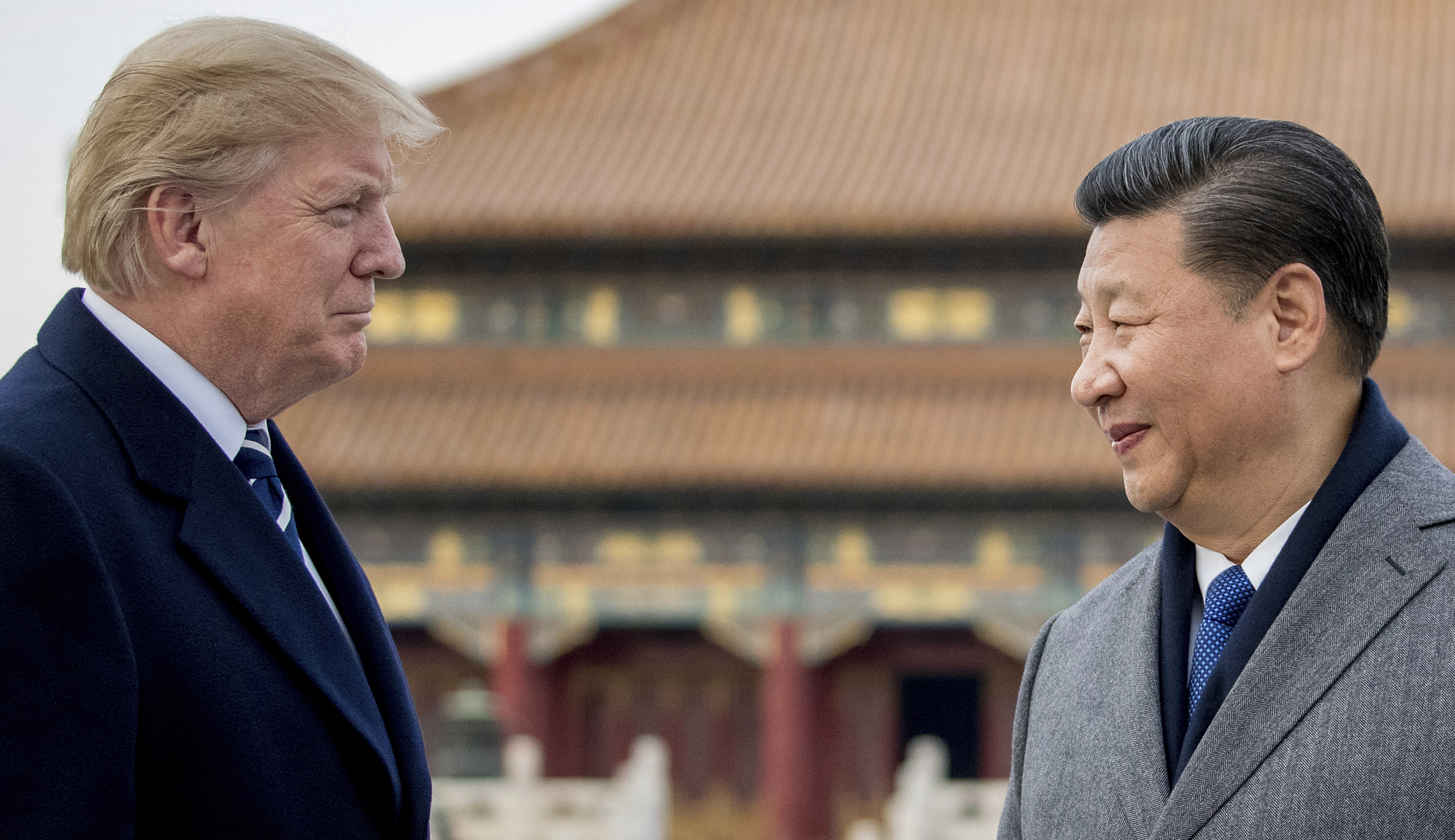
Pentagon vows to ‘confront and compete’ with China

President Trump’s administration will “confront and compete” with China throughout the Indo-Pacific region, a senior Pentagon official pledged Tuesday in a message directed the Communist regime’s leadership.

“We seek a positive, results-oriented military and security relationship with Beijing,” Randall Schriver, the assistant secretary of defense for Asian and Pacific Security Affairs, told the American Enterprise Institute. “But Chairman Xi Jinping and the [Communist Party of China] need to understand that, while we seek cooperation where our interests align, we will confront and compete where we must.”

Schriver’s warning buttresses a week of diplomacy conducted by Secretary of State Mike Pompeo, who has been outlining a plan for enhanced western investment in the Indo-Pacific, attending a diplomatic summit in Singapore, and meeting with leaders throughout southeast Asia. Schriver echoed State Department denunciations of China’s “predatory” funding of strategically-significant infrastructure projects in poor countries, who risk losing sovereignty over the project when they default on the loans.

“China has a strategy, and, to think we’re going to accomplish a major rollback and change of behavior, I think, would be pretty optimistic,” he acknowledged. “But, I think, in the near-term, [the goal is] really to blunt any erosion of an individual countries sovereignty, blunt the coercion and influence operations, and to continue to promote the free and open Indo-Pacific in a way that generates a positive response.”

Xi’s so-called Belt and Road Initiative is a centerpiece of his foreign policy, as China provides billions of dollars in loans to poorer neighbors. Such a deal allowed China to gain control of a valuable port in Sri Lanka, just off the coast of India, when the island government defaulted on the debt. And China has devoted billions to railways and gas pipelines in Malaysia, in southeast Asia, which contributed to the defeat of the Malaysian ruling party in the most recent elections.

Regional diplomacy looms large in Schriver’s vision, even from his Pentagon perch, of how to counter China in Malaysia and elsewhere.

“Our position can be to remind Malaysia that they have leverage here, too, if they can expose some of these corrupt deals and how China uses these predatory practices to gain influence in ways that run against the interests of the domestic population,” he said.

Southeast Asia is one of the most significant regions in the world, from a strategic perspective.

“In short, Southeast Asia has been geopolitically important due to the sea lanes that pass through it, its proximity to and abutment of India and China, and the resources which it hosts,” as a new report from the American Enterprise Institute observed in a report accompanying Schriver’s address. “Those truths have driven developments in and competition over the region for several hundred years.”

Trump’s team hopes to convince countries in that region to cooperate with the United States across a range of issues, rather than China.

“I think China’s interest will ultimately lie in a free and open Indo-Pacific that they can benefit from as well,” he said. “I think the measures [of success] will be countries wanting to partner with us, partner with us in more comprehensive ways.”

Related Content
