

President Trump has surprised everyone again and again; when he ran for the White House, when he won the Republican primary and when he won the White House, to name only the three most obvious occasions. Nearly every week during the past 18 months, he has produced a statement or action that sends shock waves across the nation and around the world.
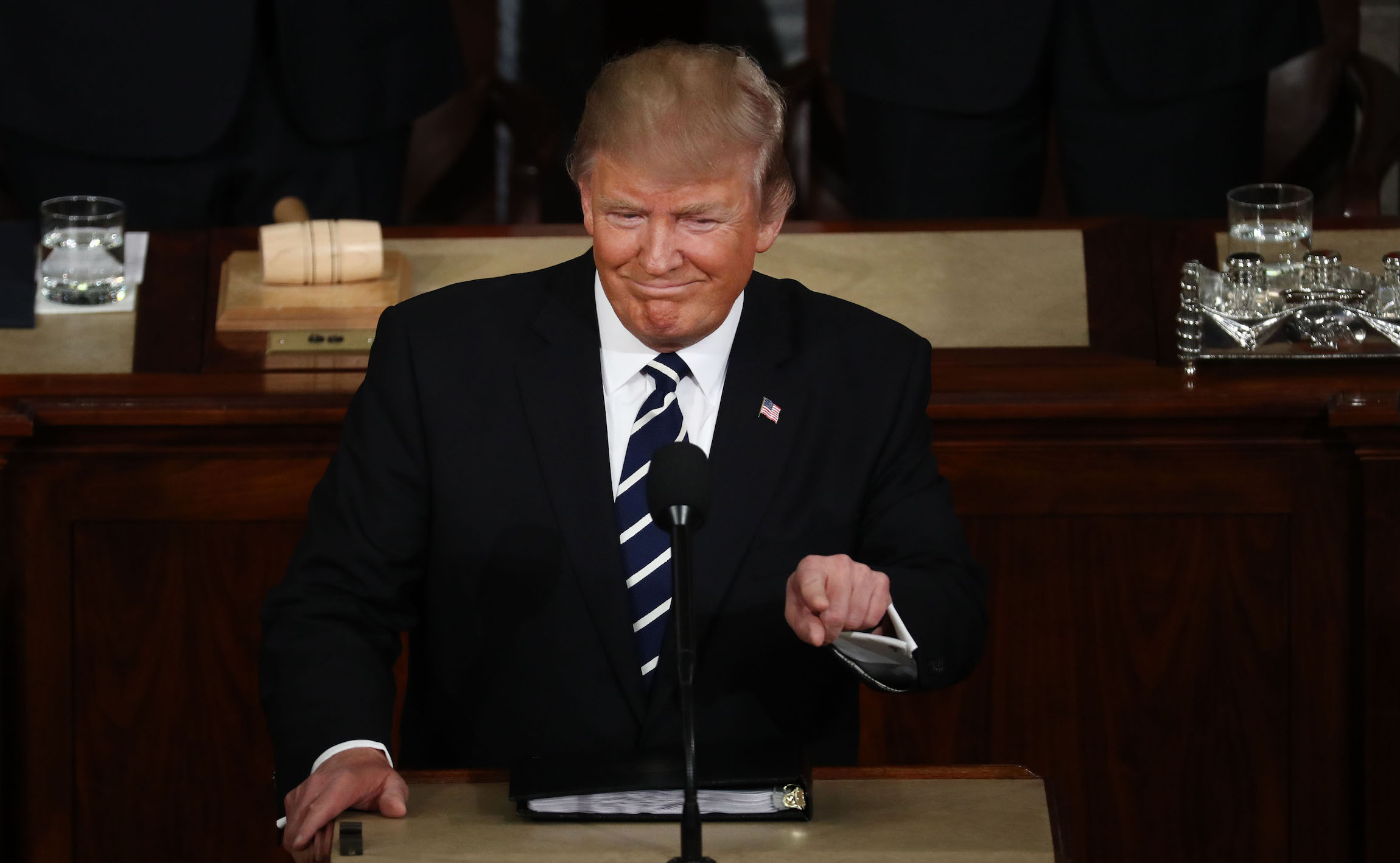
He did it again Tuesday night when he delivered the best speech of his political career, and presumably of his life. There were moments of genuinely fine oratory in his address to a joint session of Congress, and none of the meandering diversions with which he has ruined speeches before (notably his convention acceptance speech). He was, perhaps for the first time, truly and impressively presidential.
Recommended Stories


His success was not simply because he avoided blunders and was dignified and frequently powerful. It was also because he steered skillfully between the Scylla of vacuous platitudes and the Charybdis of wonkish detail that even many of his more experienced predecessors have failed to avoid.
Trump delved into policy without going through a boring laundry list, as President Clinton sometimes did. He spent time on the most important topics of replacing Obamacare, repairing our broken immigration system and reforming taxes. He offered specific directions for these reforms to take, mostly within the guidelines of orthodox Republican thinking.
Trump offered plenty of the sober conservatism that has been absent from many of his speeches. Importantly, he sang the praises and touted his nomination of Judge Neil Gorsuch to the U.S. Supreme Court. This is a matter dear to conservatives but which he excluded from his nomination speech in July and his CPAC speech last week.
Conservatives have plenty to grouse about. Trump’s healthcare policies are expensive as are his infrastructure ideas, and the president proposed no way to pay for these other than by massively improved economic growth. We hope this arrives, but Trump cannot guarantee its delivery. He attacked free trade, citing President Lincoln of all people, as his mentor on protectionism.
But on balance there was much more conservatism than big-government Trumpism.
His nationalist populism probably showed its best face ever, as he presented immigration reform as the way to protect the wages of low-income Americans.
“Free nations are the best vehicle for expressing the will of the people,” said the president, in an important nod to an oft-ignored bit of wisdom. “My job is not to represent the world. My job is to represent the United States of America.”
In war, in commerce and in immigration, this is a crucial point that Western elites often forget. If Trump continues to say it, and if Democrats and commentators continue to balk at it, Trump’s popularity will grow.
He also adapted his nationalist message with a more welcoming tone. “We are one people, with one destiny,” Trump said near the end of his speech. “We all bleed the same blood. We all salute the same flag. And we are all made by the same God.”
This speech, full of themes that will appeal across the political spectrum, was Trump’s strongest effort yet to foster unity. Unity is a tall order, not least because of the president’s own combative nature, but also because of the poisoned well of partisan politics and a newly militant media. But however fruitless, presidents are still supposed to try to bind the nation together. Trump tried on Tuesday, and perhaps began to succeed, or at least started to oblige more of his opponents to accept that he really is the president. He certainly behaved as the president.
The most powerful moment of the evening was Trump’s tribute to Navy SEAL Ryan Owens, who died in a recent raid in Yemen, and a four-minute standing ovation for Owens’ widow, who sat with the Trump family in the gallery of the House.
But the patriotic pride with which those minutes were saturated was not confined to that tribute and ovation. It was a steady undertone of the entire speech, which we suspect will have appealed strongly to those with open minds across the country.
There were several particular policies Trump embraced but which we reject, and we regret some of his omissions, such as spending restraint. But it was uplifting and a relief to see the country’s new president rise to the occasion, and give a speech that was both fitting to the office and bears comparison with the orations of his predecessors.
