

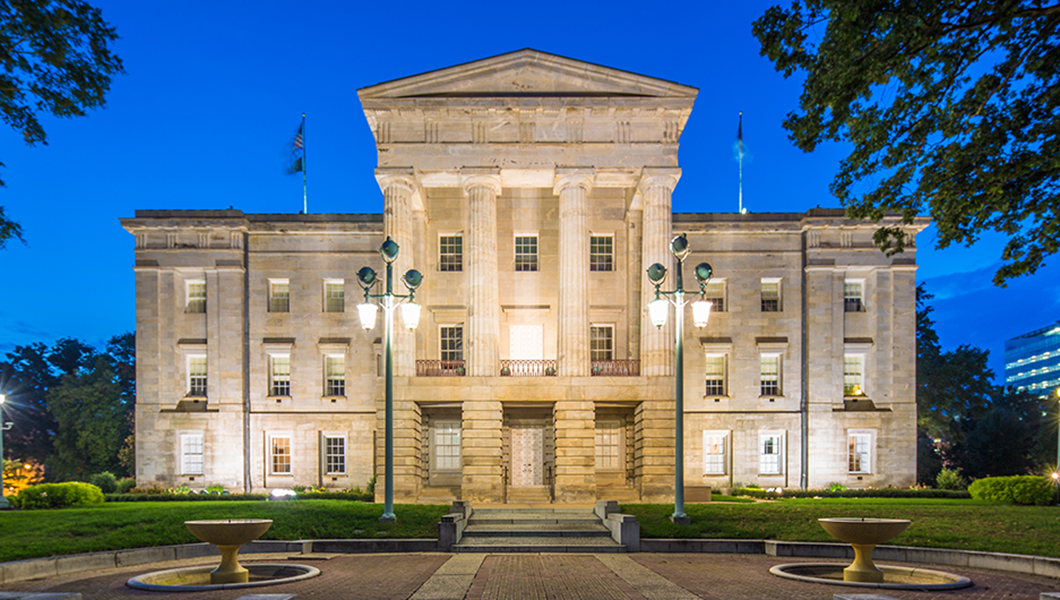
North Carolina lawmakers will take their fight against COVID-19 to the state capitol armed with a series of bills as the General Assembly convenes Tuesday.
Lawmakers are expected to review proposals that address the pandemic’s impact on the economy, education and health care. Part of their work will be deciding how to spend the balance of more than $4 billion in federal coronavirus relief funding.
Recommended Stories


About $500 million of the federal aid is allotted to Charlotte and Mecklenburg, Guilford and Wake counties, which leaves $3.5 billion for the state and smaller local governments, House Speaker Tim Moore, R-Cleveland, said Monday.
Members of the House and Senate met ahead of the three-day session to identify the areas of critical need in the state. Lawmakers have until Dec. 31 to spend the money earmarked for COVID-19 relief efforts.
“So, we’re working our darnedest right now to make sure that money is spent wisely, but that’s a lot of money to be told you got to spend by the end of the year, or it reverts back to the federal government,” Berger said during a virtual forum with the John Locke Foundation.
The House Select Committee on COVID-19 drafted a bill that details spending $480 million in federal aid on testing, research, personal protective equipment and support for hospitals and underserved communities. Gov. Roy Cooper released a proposed budget Friday that directs $1.4 billion of the federal aid to public safety, education, local governments and small businesses.
While in committee, House members approved a proposal to allocate $75 million to a bridge loan program to help small businesses, which Cooper has backed.
Senate Democrats plan to push for funds for cleaning supplies, personal protective equipment and emergency assistance for local governments. They are considering proposals to finance broadband internet and other technology for local governments to hold remote meetings.
Lawmakers also have drafted proposals that would expand Medicaid coverage for COVID-19 tests and, temporarily, to more uninsured North Carolinians. The House wants to conduct a study on how health care was delivered during the pandemic or develop a plan for future crises.
“Committees will meet [Tuesday] and the next day, and then we’ll be voting on some bills more than likely on Thursday in the House to get some of these funds out,” Berger said. “But it’s a lot of money, it looks like right now, maybe around $1.7 billion of the $3.5 [billion] that we’ve sourced where that money would go, maybe as much as $1.9 billion.”
The General Assembly is scheduled to be in session until Thursday. There have been talks, but no concrete plans, to reconvene in late July and early August for a longer session.
