
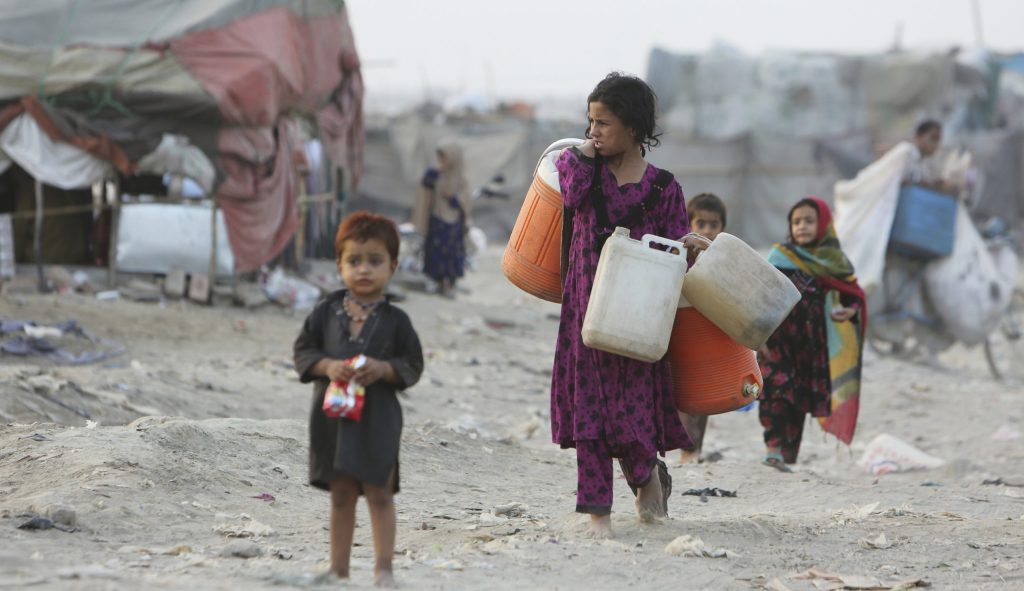
Biden accelerates refugee process while stalling on promised admission cap hike

President Joe Biden took emergency action Friday to speed up the process by which refugees can be admitted to the United States, but he held off on raising the annual refugee cap as he had promised.

In the meantime, the White House is overhauling the allocation of refugee slots to resolve what advisers said was the leading reason that refugee admissions were limited, according to the Associated Press. As a result, the U.S. will accept more applicants from countries in Africa, Central America, and the Middle East.

Seven thousand openings were made available in the emergency declaration to be immediately filled by people from specific regions, including 1,000 for East Asia, 1,500 for Europe and Central Asia, 3,000 from Latin America and the Caribbean, 1,600 for the Near East and South Asia, and 1,000 additional slots.

The number of refugees allowed into the U.S. remains at 15,000, a historic low that was implemented under the Trump administration.

Just 2,000 refugees have been resettled in the U.S. this year. Biden has dragged his feet on amending that number in the three months since he took office as more than 172,000 migrants have come across the southern border in that time, many of whom may seek asylum.

Asylum-seekers are refugees that travel to the U.S. to seek admission at ports of entry or after illegally coming across the border, whereas refugees apply while they are outside the country.

BORDER AGENTS PERFORMING FEWER DNA TESTS TO CATCH FAKE FAMILIES UNDER BIDEN

The move comes a day after House Speaker Nancy Pelosi, a Democrat, urged Biden to increase refugee admissions immediately. Liberal House Democrats Ilhan Omar of Minnesota, Pramila Jayapal of Washington state, and Jan Schakowsky of Illinois sent Biden a letter this week on behalf of 40 of their colleagues, asking that he move quickly on the emergency presidential determination or “our refugee policy remains unacceptably draconian and discriminatory.”

The International Rescue Committee, a humanitarian aid organization, criticized Biden’s move, calling it a “disturbing and unjustified retreat” from the 62,500 level that Biden announced in February.

“It is deeply disappointing that President Biden has chosen to maintain for the moment the record-low refugee admissions cap of 15,000 set by his predecessor,” IRC President and CEO David Miliband said in a statement. “The cap announced today does not take proper account of the fact that over 35,000 refugees have already been vetted and cleared for arrival, and over 100,000 are in the pipeline often waiting years to be reunited with their loved ones.”

Biden vowed in February to accept 125,000 refugees in fiscal 2022, which will begin Oct. 1. He also said he would make a “down payment” by allowing more in during this year than the 15,000 former President Donald Trump capped it at.

On Friday, White House press secretary Jen Psaki defended the delay, adding that “it took us some time to see and evaluate how ineffective or how trashed, in some ways, the refugee processing system had become, and so we had to rebuild some of those muscles and put it back in place.”

Biden’s fiscal 2022 budget proposal released in early April gave the Department of Health and Human Services Office of Refugee Resettlement $4.3 billion to rebuild the country’s refugee resettlement infrastructure in a way that can support 125,000 people in the coming government year. The proposed amount was an indication that the White House did intend to keep the president’s promise as a candidate to increase the number of people fleeing persecution dramatically or dire circumstances after the number was pushed down under Trump.

Ten billion dollars was made available for vulnerable people abroad, including refugees, and it would “revitalize leadership in Central America” as part of a long-term strategy to resolve the root causes of why hundreds of thousands of people in the region flee to the U.S. annually.

CLICK HERE TO READ MORE FROM THE WASHINGTON EXAMINER

The White House also allocated $345 million to the U.S. Citizenship and Immigration Services, which adjudicates asylum claims, and $891 million to the Justice Department’s immigration office. Immigration courts have 1.2 million outstanding cases waiting to be decided. The 21% increase in annual funding would allow it to hire an additional 100 judges and office personnel.

Related Content