

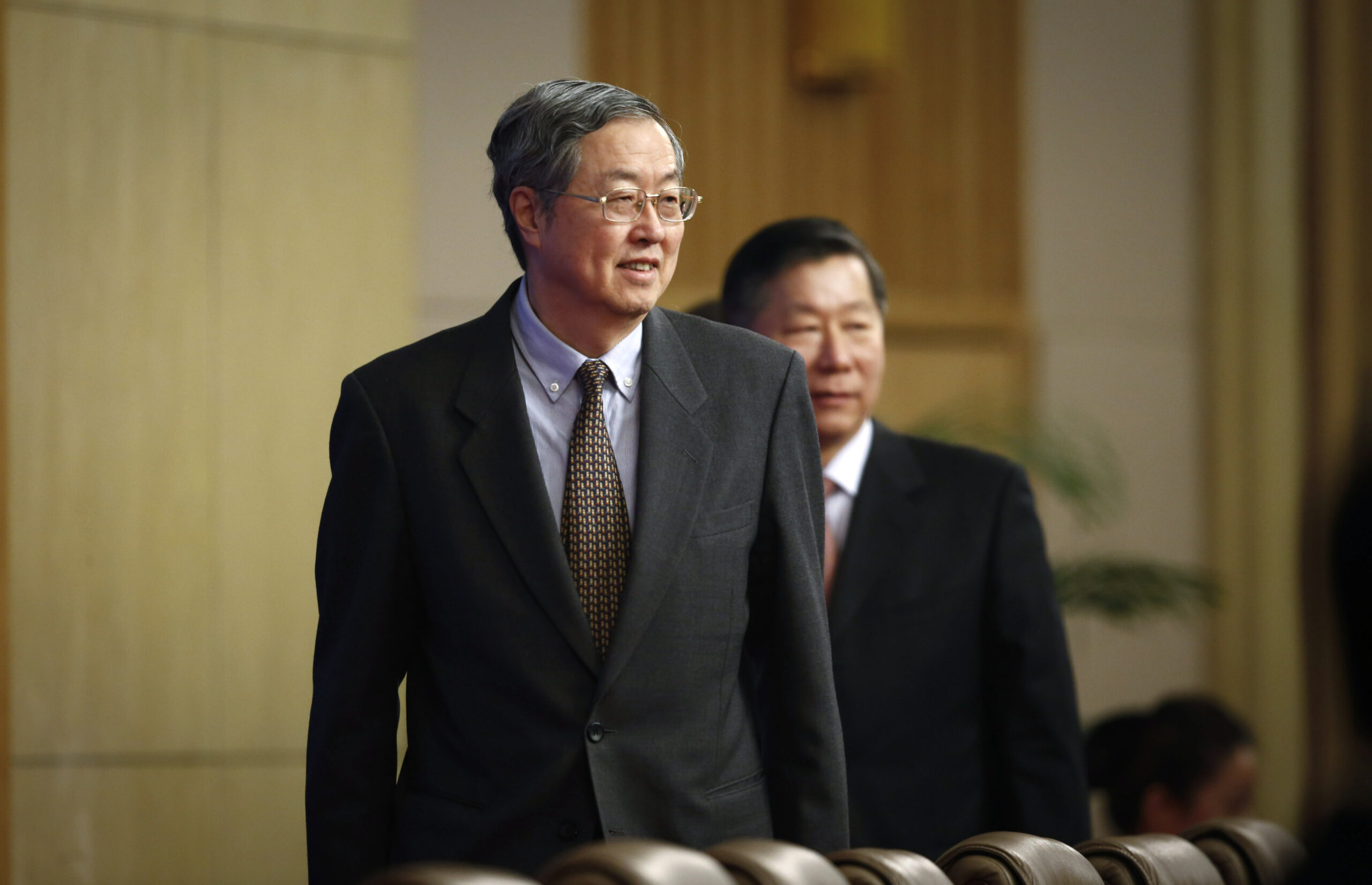
Financial leaders met at the G-20 Summit in Turkey on Saturday to discuss ways to promote growth among the world’s sluggish economies. It comes in the wake of turbulence in Chinese markets, which leaders fear may continue as its previously high growth rates decline.
The group’s communiqué suggests that the United States should lead in ending the suppression of interest rates for the sake of growth, stating, “Monetary policies will continue to support economic activity consistent with central banks’ mandates, but monetary policy alone cannot lead to balanced growth.
Recommended Stories



“We note that in line with the improving economic outlook, monetary policy tightening is more likely in some advanced economies,” the communiqué said, an implied reference to the U.S. The Federal Reserve is presently considering whether to raise interest rates for the first time in nine years.
In terminology directed at China, the group reiterated a “commitment to move toward more market-determined exchange rate systems and exchange rate flexibility” that it said would “reflect underlying fundamentals” and prevent “persistent exchange rate misalignments.”
China has kept its currency artificially devalued by as much as 40 percent in order to boost exports, a policy that has worn thin on its trading partners and U.S. lawmakers. U.S. Treasury Secretary Jack Lew weighed in on the prospect of changing the policy, saying that the call for China to move “toward a more market-determined exchange rate” is “in the context of doing so in an orderly way with clearly articulated policies.”
During the meeting on Saturday, the governor of China’s central bank, Zhou Xiaochuan, reportedly said that a bubble had “burst” to describe China’s recent market troubles, according to a Japanese finance ministry official quoted by Bloomberg. The report suggested that Zhou emphasized the term repeatedly. Observers are concerned that the volatility could be symptomatic of more long-term problems.
According to Zhou’s prepared remarks, he told the delegation that bubble had grown “continuously” before June but had ended. He added that the “correction in the stock market is already mostly over” and said that “financial markets show hope for stabilizing.”
China has worked meticulously to maintain opacity and convince observers that its economic outlook remains positive. The country has arrested approximately 200 journalists and stock brokers for spreading “rumors” that the economy is weak, and the China Securities Depository and Clearing Corporation has reportedly stopped publishing certain market data.
