

People of faith in the United States have been told since the outbreak of the coronavirus pandemic that they cannot congregate in their churches, mosques, temples, or synagogues until the threat of the virus has passed.
It is simply too dangerous, our leaders say, for believers to meet as a body for worship and communal prayer. Churches were closed, barring Christians from celebrating Easter services as a community; mosques were shuttered, denying Muslims a gathering place for Ramadan; and Jewish prayer services, which require a quorum, “were broken up by city governments or banned by state executive orders,” as noted recently in the Wall Street Journal by author Abigail Shrier.
Recommended Stories


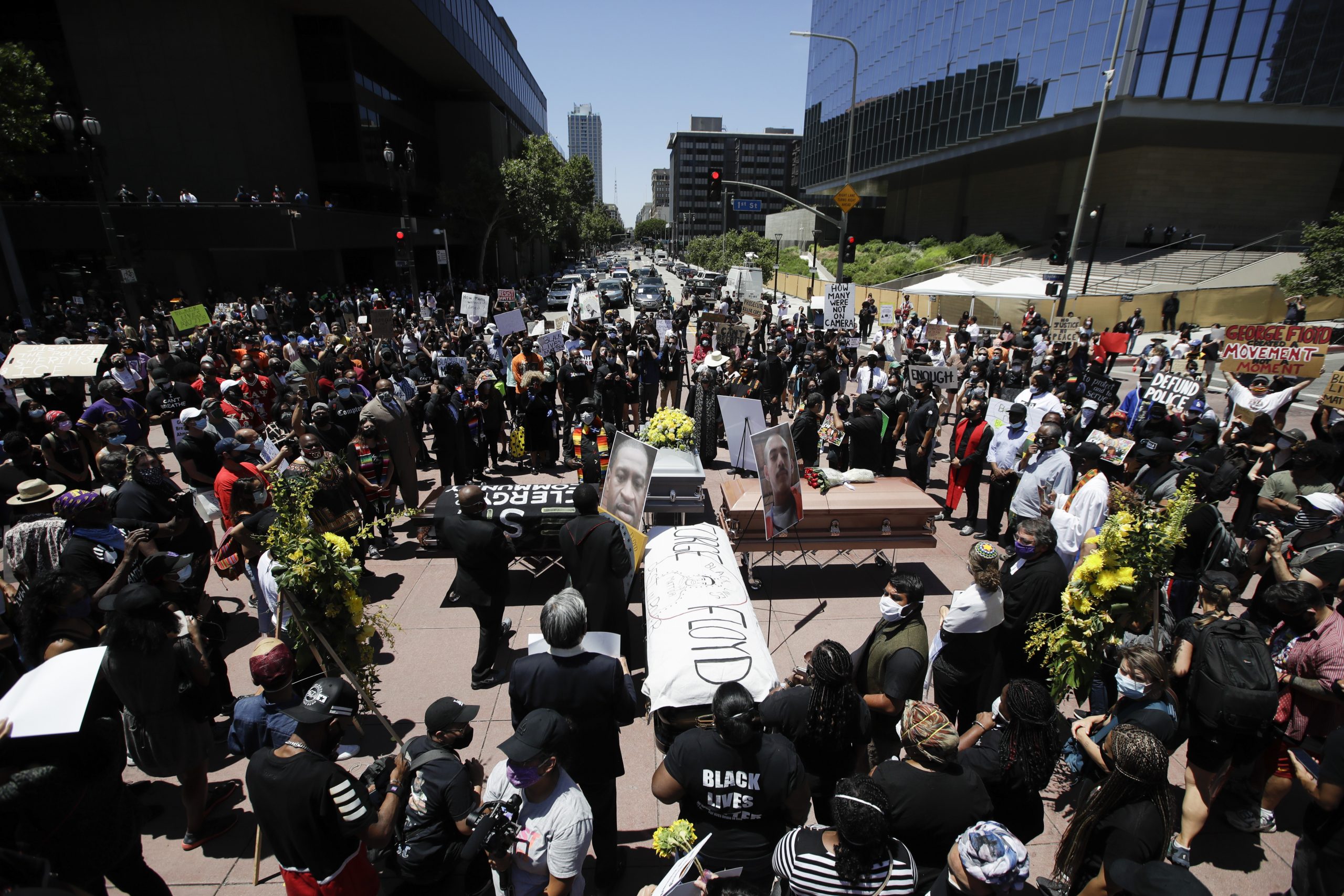
Yet many of the same leaders who ordered the closure of houses of worship now support the massive, crowded protests that have sprung up in response to the wrongful death of George Floyd. It is impossible to miss the double standard, especially since these elected officials told us specifically that it is a matter of life and death that we socially distance ourselves.
Los Angeles Mayor Eric Garcetti, for example, joined a recent Floyd protest in his city, participating proudly in a demonstration that saw attendees doing very little to adhere to those social distancing guidelines we were told would save lives. But it was not so long ago that Garcetti, whose public appearance last week saw him forgo the all-important face mask, said that it was essential that churches, synagogues, and mosques remain closed. For public health reasons.
Washington Mayor Muriel Bowser, whose restrictions on houses of prayer are still in place, has similarly marched with large crowds in the nation’s capital.
The coronavirus double standard on display now, the one that says it is good and right for hundreds of demonstrators to march through the streets while churches, mosques, and synagogues remain shuttered by decree of the state, has not been lost on some.
“Are we in a pandemic or not?” a reporter for Hamodia, an Orthodox Jewish news outlet, asked New York City Mayor Bill de Blasio. “And do we have one set of rules for protesters and another for everyone else?”
The mayor responded: “When you see a nation, an entire nation, simultaneously grappling with an extraordinary crisis seeded in 400 years of American racism … I’m sorry, that is not the same question as the understandably aggrieved store owner or devout religious person who wants to go back to services.”
De Blasio’s response here is only slightly less terrible than when he announced on social media that he had instructed the police to round up any Jews caught defying city hall’s social distancing orders. His response also betrays what he and the other public officials who have embraced the Floyd protests even after imposing strict lockdown orders likely really believe about the matter of shuttered places of worship, which is that faith is of no more importance to them than an individual’s personal hobby. Protesting racial injustice is important to de Blasio and Garcetti, so those previous social distancing rules, the ones we were told were life-saving, go right out the window immediately. These protests are vital. Faith and worship, though? Those are nice and all, but they are not a high priority. Those things can wait.
But the opposite is true. It is especially important right now as the country reels from Floyd’s wrongful death that people of faith be allowed to meet as a body to pray for healing.
Leaders such as de Blasio and Garcetti have done a good job of ensuring the protesters’ right to free speech and assembly. But the sudden loosening of coronavirus restrictions for some has exposed a double standard that suggests our leaders think of faith as of no more consequence than bowling or bird-watching. This is both wrong and unjust.
The freedoms of the protester are every bit as important as the freedoms of the believer, whose rights to practice his religion openly and freely are guaranteed by the Constitution. If justice and equality are the goals of the marches, and men such as de Blasio and Garcetti genuinely wish to see these things achieved, then they must ensure the protected rights of all and not just those whom they believe deserve it most at the moment.
