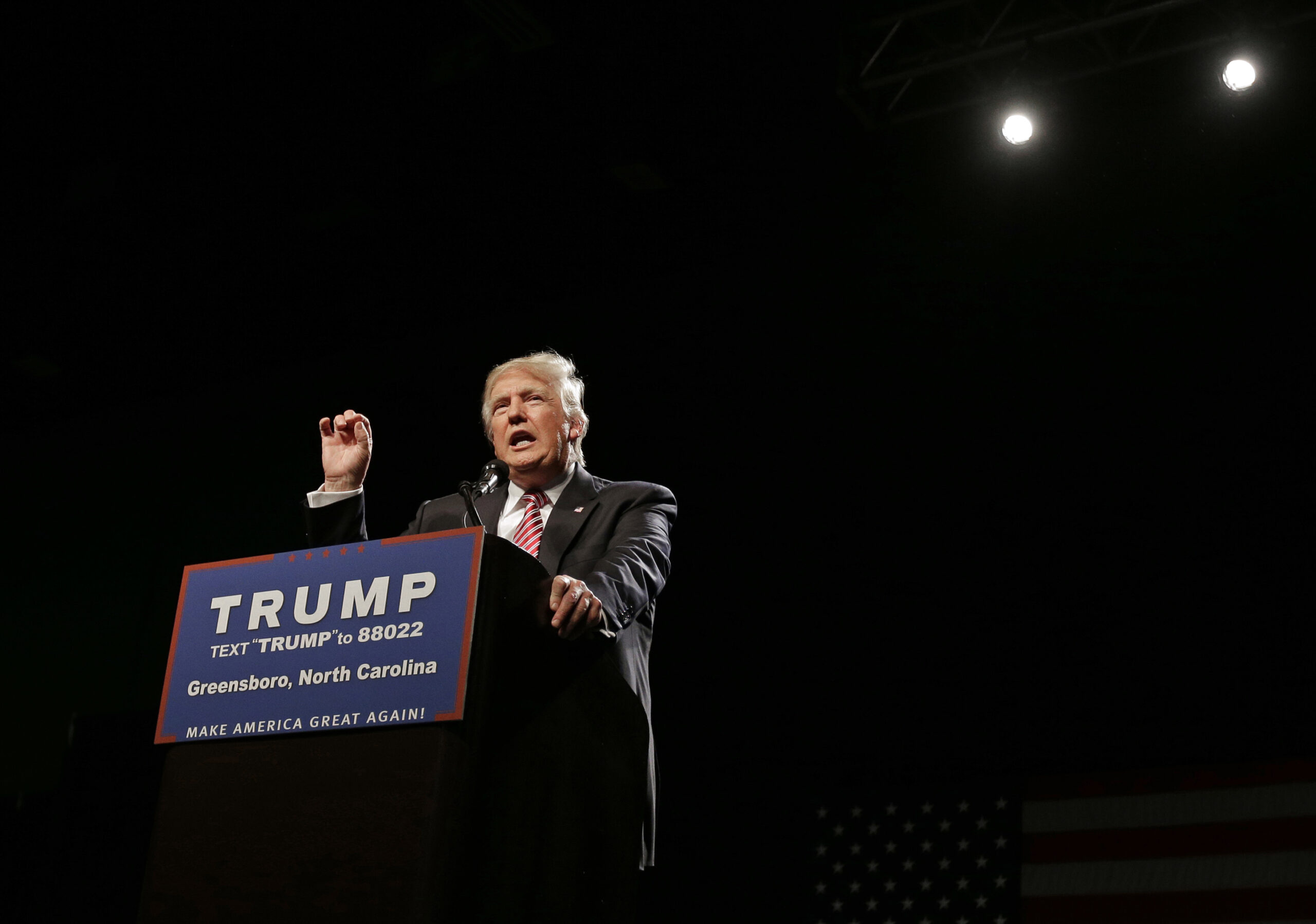
Donald Trump is going to pour on the populism the next time he talks about energy policy, said a top spokesman for the Republican Party.
That means not getting bogged down in the wonkiness that is typical among Washington’s think tanks, said Sean Spicer, spokesman for the Republican National Committee at a forum in Washington on Tuesday.
Recommended Stories
“He is more of a populist speaker than getting to give wonky speeches at Brookings or Heritage,” Spicer said. “That’s just not his thing. I think you might see a discussion of the issues, but it’s not going to be in the standard forums we’ve seen.”
Spicer said to expect more on energy policy from Trump in the weeks leading up the Republican National Convention in Cleveland next month.
“I think you might see briefings and policy papers and things put on websites, but I’m not sure that a lot of the discourse is going to delve into deep policy issues,” Spicer said at the event hosted by the American Petroleum Institute.
Trump has shied away from diving too deep into policy throughout his campaign. He launched his first strike on energy policy last month in giving a major address in North Dakota.
GOP strategists say it’s not necessarily a bad thing that Trump is not delving too deep into some of the policies. How he shapes the narrative is more important than getting wonky. Some strategists believe the Republican Party has done a terrible job conveying to average voters why they should care about the host of government regulations they oppose.
Mike McKenna, a GOP strategist on energy policy, says Trump showed some signs in his speech in North Dakota that he understands the need to make energy policy appealing to the average voter.
Especially when it comes to opposing regulations, Trump has begun to demonstrate arguments that are “much more solid rhetorically.” Instead of talking about “government overreach,” which no one understands, Trump framed the issue as “bad for workers and consumers,” McKenna said. “I would never say the word regulation.”
Spicer suggested that North Dakota was not the entirety of Trump’s energy platform and will likely be adding more detail to his environmental positions.
“I think Trump is going to lay out a lot more about where he wants to go with the environment,” Spicer said. “But that’s for him go into more with.”
Spicer said Trump could discuss ways to reduce emissions through clean energy without supporting the science of climate change or endorsing a greenhouse gas emission reduction strategy.
“I think you can do responsible things. There are things that we could be doing with clean technology that’s just good for business,” Spicer said. “And so we don’t necessarily need to debate the science piece of it.”
