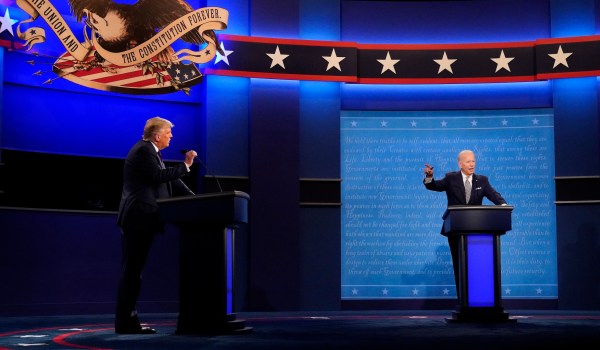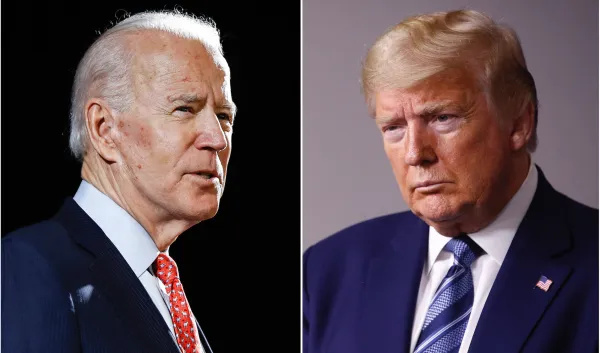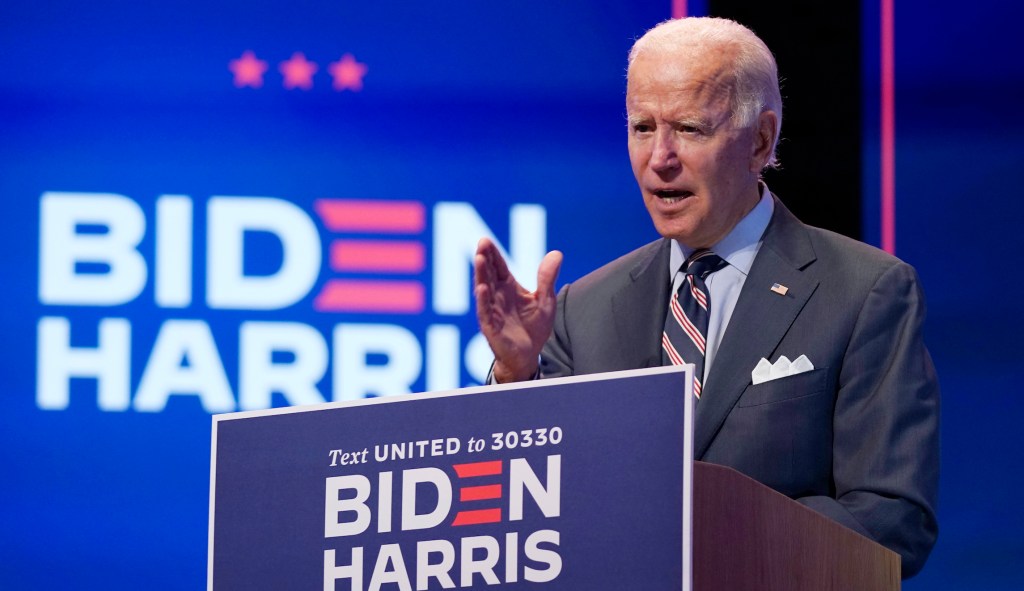
(Updated Oct. 19, 2020) President Trump and Democratic presidential nominee Joe Biden were scheduled to hold three debates, and Vice President Mike Pence and California Sen. Kamala Harris, the Democratic vice presidential nominee, had one scheduled debate.
But controversy about the Commission on Presidential Debates attempting to move the second Trump-Biden debate to a virtual format, sparked by the president contracting the coronavirus, resulted in the cancellation of the second debate. Instead, the candidates hosted dueling town hall events on ABC and NBC.
The last scheduled presidential debate is set to go on as scheduled.
Final presidential debate between Trump and Biden
Date: Thursday, Oct. 22
Moderator: Kristen Welker, co-anchor of Weekend TODAY and White House correspondent at NBC News
Location: Belmont University in Nashville, Tennessee
Time: 9:00 p.m.-10:30 p.m. EDT, without commercial breaks, broadcast on all major networks.
Format: There will be six segments of approximately 15 minutes each on major topics. Welker will open each segment with a question, and Trump and Biden will each have two minutes to respond. After that, Trump and Biden can respond to each other, while Wallace will balance time between the two for the remaining discussion time about the topic.
Welker chose the topics for the matchup, and the debate commission announced them on Oct. 16:
- American families.
- Climate change.
- Fighting COVID-19.
- Leadership.
- National security.
- Race in America.
Trump’s campaign on Monday sent a letter to the Commission on Presidential Debates objecting to the debate topics, noting that the final presidential debate traditionally had a focus on foreign policy.
Below is information on the previous debates, controversies surrounding them, and relevant background:
The second presidential debate between Trump and Biden was scheduled to take place on Oct. 15.
Moderator: Steve Scully, senior executive producer and political editor at C-SPAN Networks, was set to host a town hall-style format with questions from voters for the candidates at the Adrienne Arsht Center for the Performing Arts in Miami, Florida, with Frank Newport, a public opinion expert at Gallup, supervising the selection of the voters who pose questions.
But the debate never happened.
Following Trump testing positive for the coronavirus and being hospitalized with the illness, the Commission on Presidential Debates announced the morning of Oct. 8 that it would change the scheduled town hall debate to a virtual format, “in which the candidates would participate from separate remote locations.” About a half-hour later, Trump, in a 55-minute Fox Business interview, declared that he was “not going to waste my time on a virtual debate.”
Around the same time, the Biden campaign had accepted the format change. But in response to Trump rejecting the debate change, the Biden campaign, hoping to showcase the former vice president connecting with voters in an expected contrast to Trump, proposed that the town hall-style debate format be pushed back a week to Oct. 22 if Trump refuses to participate in an Oct. 15 virtual version.
That would conflict, though, with the third and final scheduled debate on Oct. 22, a planned one-on-one event. Trump’s campaign suggested postponing both remaining debates a week: Move the Oct. 15 debate to Oct. 22 and the Oct. 22 one to Oct. 29.
Biden’s team, though, rejected that proposal. “Trump’s erratic behavior does not allow him to rewrite the calendar, and pick new dates of his choosing,” top Biden aide Kate Bedingfield said in a statement. “Donald Trump can show up, or he can decline again. That’s his choice.”
By Thursday afternoon, ABC News announced that it would host a single-candidate town hall with Biden on Oct. 15, the day of the scheduled virtual debate. Trump scheduled a competing town hall event on NBC.
The debate commission officially announced that it canceled the second debate on Oct. 9.
More details about the campaigns’ back-and-forth about the next two debates can be found here.
Steve Scully false hacking claim
Trump’s campaign also accused Scully, the scheduled debate moderator, of being a biased moderator, pointing to the fact that he interned for Biden decades ago.
On Oct. 9, Scully sent a tweet tagging anti-Trump commentator and former White House communications director Anthony Scaramucci: “should I respond to trump.”
Scully quickly deleted the tweet, claiming that he had been hacked. Both the Commission on Presidential Debates and C-SPAN initially stood by Scully’s hacking claim.
But previous Scully tweets revealed that he had claimed his Twitter account was hacked, raising suspicion.
After the debate was canceled, Scully admitted that the claim of hacking was false, and C-SPAN announced that it would indefinitely suspend him.
“I falsely claimed that my Twitter account had been hacked,” he said, according to the Associated Press. “These were both errors in judgment for which I am totally responsible for. I apologize. I ask for their forgiveness as I try to move forward in a moment of reflection and disappointment in myself.”
The first presidential debate between Trump and Biden took place on Sept. 29.
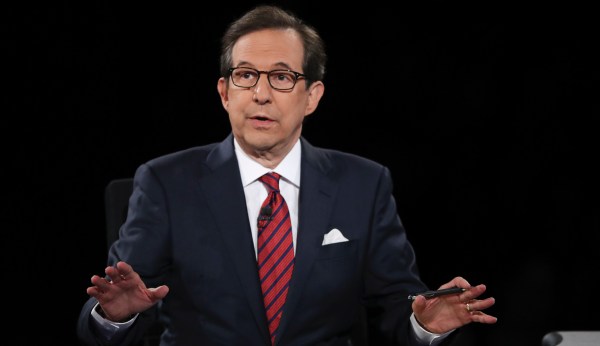
Moderator: Chris Wallace, anchor at Fox News Sunday
Location: Case Western Reserve University and Cleveland Clinic in Cleveland, Ohio
Time: 9 p.m-10:30 p.m. EDT, without commercial breaks
Format: Six segments of approximately 15 minutes each on major topics. Wallace opened each segment with a question, and Trump and Biden will each have two minutes to respond. After that, Trump and Biden can respond to each other, while Wallace will balance time between the two for the remaining discussion time about the topic.
Six planned topics for the debate, chosen by Wallace, were revealed a week before the debate. The topics are subject to change and will not necessarily be brought up in the following order: the Trump and Biden records, the Supreme Court, COVID-19, the economy, race and violence in American cities, and the integrity of the election.
The vice presidential debate between Pence and Harris took place on Oct. 7.
Moderator: Susan Page, Washington bureau chief at USA Today
Location: The University of Utah in Salt Lake City, Utah
Time: 9 p.m-10:30 p.m. EDT, without commercial breaks
Format: There will be nine segments of approximately 10 minutes each. The moderator, Page, will ask an opening question, and Pence and Harris will have two minutes to respond. After that, the candidates will be able to respond to each other, with Page balancing time between the two.
Trump’s coronavirus diagnosis the previous week, and the possibility that he may have exposed Biden to the virus, prompted some debate changes. The candidates sat 12 feet apart during the debate rather than 8 feet, and two plexiglass dividers separated the candidates.
Theories about Biden skipping debates
Despite repeated assurances from Biden and his campaign that he can “hardly wait” to debate Trump, there have been repeated pushes from Democrats and liberals for him to skip the debate, fueling conservative theories that gaffe and verbal stumble-prone Biden is looking for an excuse not to debate Trump.
Democratic House Speaker Nancy Pelosi said in August that she thinks Biden should skip the presidential debates.
“I don’t think there should be any debates,” Pelosi said in a press conference. “I do not think that the president of the United States has comported himself in the way that has any association with truth. Evidence, data, and facts. I wouldn’t legitimize a conversation with him, nor a debate in terms of the presidency of the United States.”
New York Times columnist Thomas Friedman suggested in June that Biden should not debate Trump unless the president agrees to terms such as live fact-checking. Clinton administration press secretary Joe Lockhart said recently that Biden should skip the debates because of Trump’s lies. Journalist Elizabeth Drew wrote in the New York Times in August that the debates should be scrapped altogether.
Last winter, Trump was the one who was thinking of skipping presidential debates, according to the New York Times, because of his disagreements with the commission on how the 2016 debates against Hillary Clinton were handled. During the 2016 Republican primary cycle, Trump skipped one presidential debate when he was polling ahead of the rest of the crowded primary field.
Trump campaign pushed for more debates and specific moderators
In an August letter from Trump lawyer and former New York Mayor Rudy Giuliani, Trump’s campaign requested that the Commission on Presidential Debates add a fourth debate to its schedule, to take place before early and absentee voting started in September. The commission denied that request.
Trump’s campaign also released a list of two dozen recommended debate moderators, which included many conservative commentators and Fox News personalities.
Location changes due to the coronavirus pandemic
The University of Notre Dame and the University of Michigan were originally scheduled to host the first and second debates between Trump and Biden, but the schools withdrew from hosting debates earlier this summer, citing concerns related to the coronavirus pandemic.
In light of those changes, the Trump campaign called on the debate commission to release backup plans in the case that the current debate locations withdraw from hosting the debates.
Who is in charge of the debates?
The Commission on Presidential Debates is a nonprofit 501(c)(3) organization that has sponsored and produced all presidential and vice presidential debates since 1987. It was created by the Republican and Democratic parties in order to “institutionalize” the debate and strengthen the role of the parties in the election. Before the commission was created, the League of Women Voters hosted televised presidential debates in 1976, 1980, and 1984.
Exclusion of third-party candidates from the debate stage has been a criticism of the commission since its founding. The commission requires candidates to meet a 15% threshold in national polls — a standard that the Libertarian and Green parties unsuccessfully challenged in court this year.