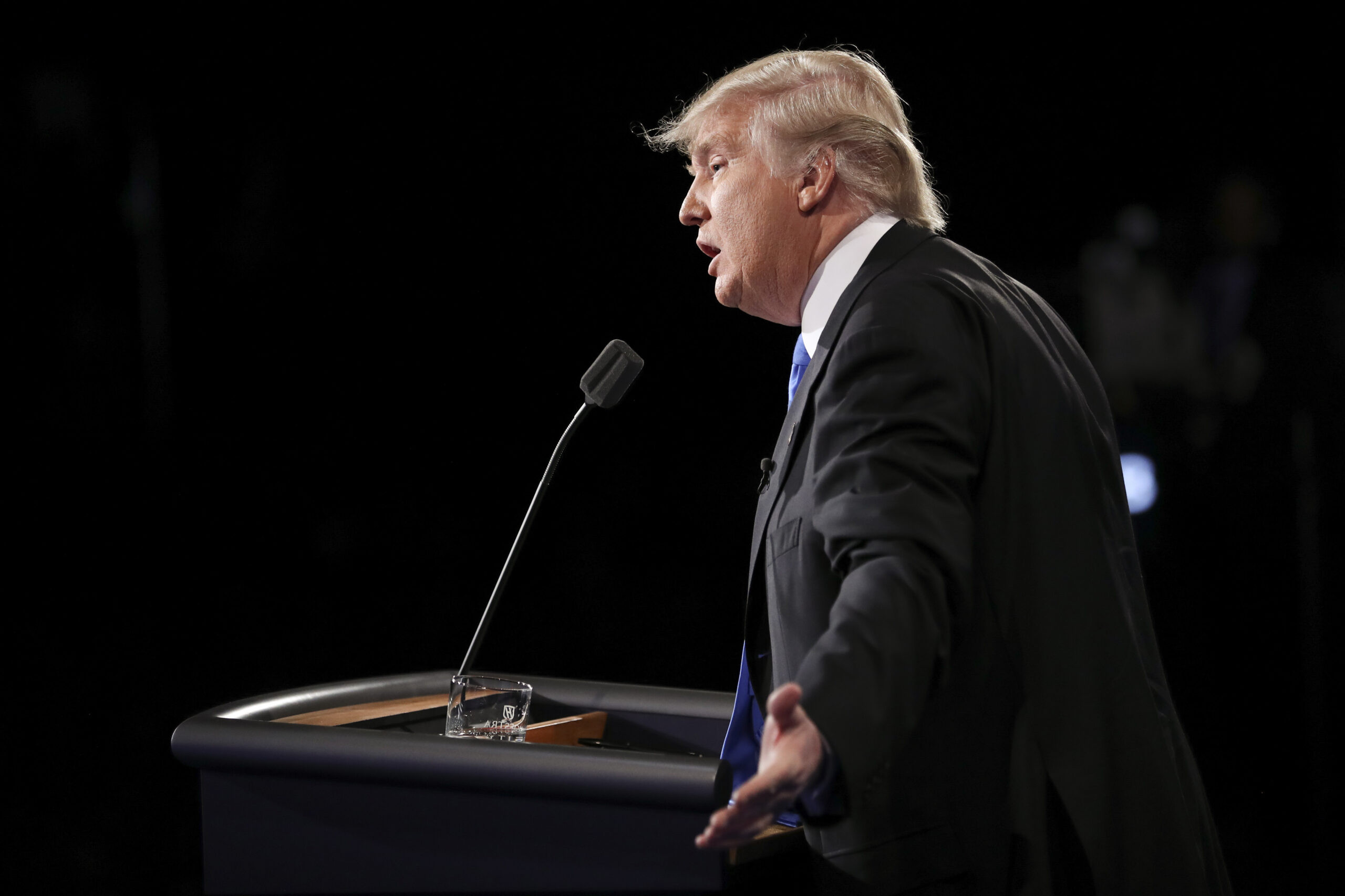
Why Donald Trump is not as combative a debater as you think

Donald Trump is commonly viewed as one of the most combative debaters in politics. But amid all the name-calling, interruptions and macho talk, Trump employs a rhetorical device that, if you notice it, can make him seem like the picture of conciliation, concession and compromise.

Several times when making an argument Monday night, Trump threw in a qualifying statement, tried to find common ground with Hillary Clinton, or otherwise made a concession to an argument she had made or a position she had taken.

On paid family leave, Trump said, “As far as child care is concerned and so many other things, I think Hillary and I agree on that.” On blacks’ relationship with the police, he said, “You need better relationships.

I agree with Secretary Clinton on this. You need better relationships between the communities and the police, because in some cases, it’s not good.” He told Clinton, “I agree with you,” about prohibiting people on “watch lists” and “no-fly” lists from owning guns.

At one point, Trump acknowledged that Clinton had apologized for calling young black criminals “super-predators.” And at another he began a point with, “But in all fairness to Secretary Clinton … ”

Trump even found common ground between Democrats and Republicans, once saying, “And here’s the thing. Republicans and Democrats agree that this should be done, $2.5 trillion,” because of burdensome taxes and overregulation that drive businesses overseas.

Trump engaged in this sort of conciliatory language in the primaries too, though, there again, it was lost in the midst of all his combative language and personal attacks.

Clinton didn’t return the favor on Monday. Not once did she attempt to find common ground with Trump or make any attempt at conciliatory language. In fact, Hillary did her best to create distance between herself and Trump, saying things like, “I think we come at it from somewhat different perspectives,” (in this case, she was talking about how to fix the economy).

This is consistent with the idea that the purpose of debate is to highlight differences between one’s own positions and those of one’s opponent.

So why does Trump, no one’s idea of a post-partisan compromise candidate, employ such language?

It’s difficult to say. Trump may not even know that he is doing this, or why. But I think the effect is a positive one. Finding common ground with one’s opponent or using conciliatory language can make a debater seem reasonable and credible. It might make him less easy to demonize, dismiss or caricaturize. And let’s be honest: These are all areas where Donald Trump needs help.

Daniel Allott is deputy commentary editor for the Washington Examiner

Related Content
