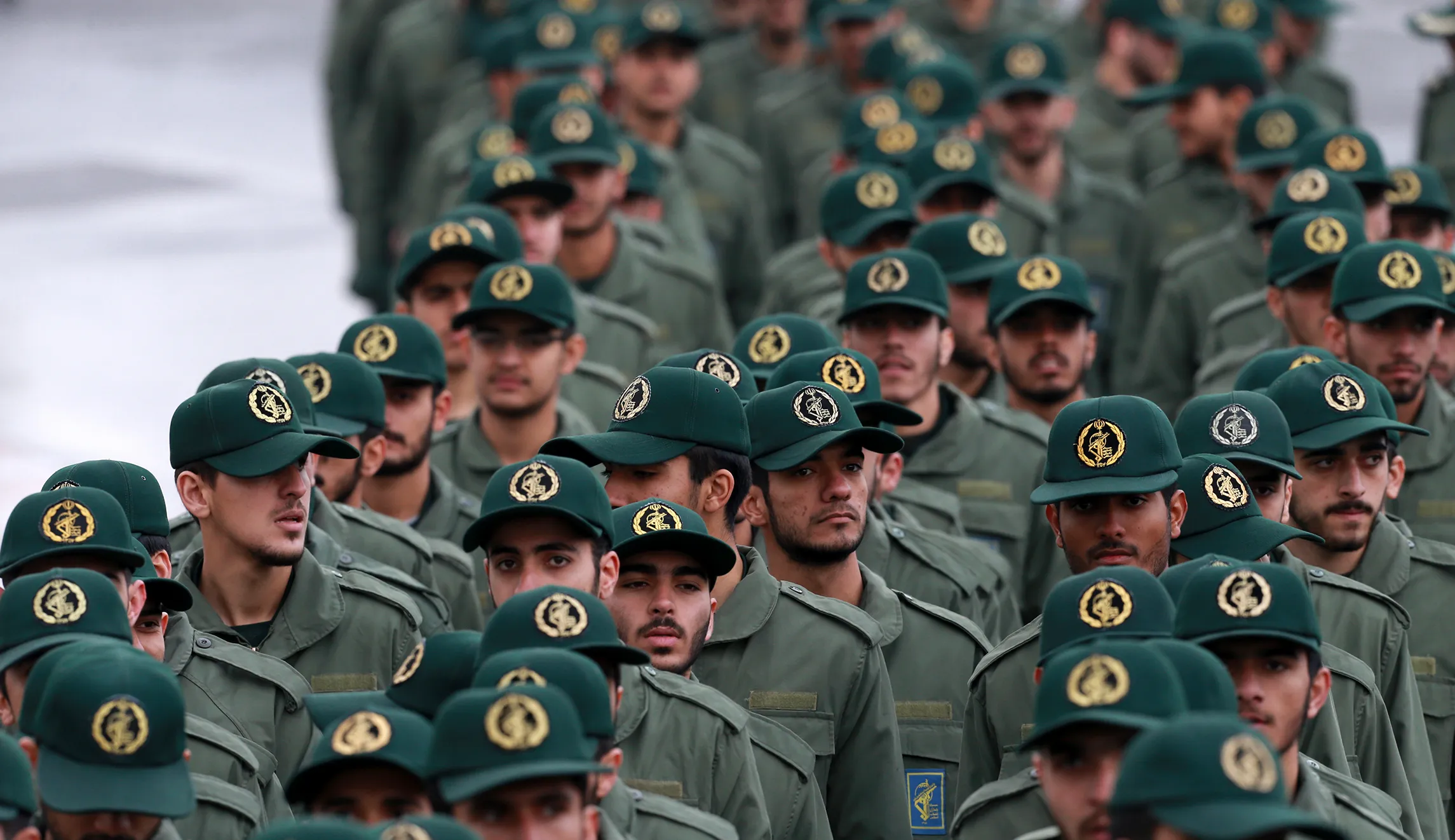
For the first time, the United States is targeting a branch of a foreign government’s military as terrorists no better than al Qaeda or the Islamic State. President Trump and Secretary of State Mike Pompeo have designated Iran’s Islamic Revolutionary Guard Corps as “a foreign terrorist organization.”
The Trump administration, stuffed like sardines with Iran hawks who never waste a moment of each day figuring out how to further squeeze the ayatollahs’ finances, is popping the champagne and congratulating themselves about the resoluteness of their actions. The policy, driven internally by national security adviser John Bolton and Secretary of State Mike Pompeo, is a vintage feel-good moment — an action that tickles us with excitement and tough-guy bravado but one that will have little if any impact on our objective of forcing Tehran to change its behavior.
The upsides of the decision are purely emotional. Who, after all, doesn’t like punishing those military men under the command of Qassem Soleimani, Iran’s most legendary general and tactical strategist? This is a man whose IRGC-Quds Force is responsible for the deaths of more than 600 U.S. troops during the 2003-2011 Iraq War. Cracking down on Tehran’s finances and blocking IRGC assets around the world is a natural response to a military entity with a significant stake in the Iranian economy.
Yet designating the IRGC won’t do much of anything to force Soleimani and company to stop propping up Bashar Assad’s regime, supporting Shia militias in Iraq, funneling weapons to the Houthis in Yemen, maintaining a strategic relationship with Hezbollah, or continuing to develop and refine their ballistic missile program. The reason is simple: Iran’s political and military leadership firmly believe that every point on that list is integral to its foreign policy in the region. Unless Tehran’s strategic mindset changes (and there is no evidence leading in that direction) all of the financial penalties Washington can muster won’t be enough to compel a re-evaluation.
As the most powerful country on the planet, the United States is used to getting what it wants. It’s not a sentiment exclusive to the U.S. — strong states, empires, or city-states throughout history succumb to the hubristic temptation that it can wield military, political, or economic power over weaker adversaries and get them to do what we want. Sometimes it works (the classic contemporary case is Libya’s Moammar Gadhafi delivering his weapons of mass destruction programs to Washington and London on a silver platter in exchange for a rapprochement of sorts with the West. The deal didn’t work out well for Gadhafi; seven years later, he was caught, sodomized, and executed by Libyan rebels supported by NATO air power).
But many times, it doesn’t. Slobodan Milosevic was resistant to a diplomacy resolution in Bosnia and Kosovo until the U.S., Britain, and NATO started started dropping bombs on Belgrade. Saddam Hussein refused to leave Iraq per President George W. Bush’s 48-hour ultimatum. The Kim regime has produced nuclear weapons despite all kinds of intricately written sanctions measures on their exports, imports, and banking activity. And despite this latest designation, Iran will remain adamantly opposed to accepting Pompeo’s list of 12 demands, which requires a wholesale transformation in Iranian foreign policy.
Economic sanctions are supposed to be a tool used for a reasonable end-state. In Washington, however, sanctions are an end in themselves — the goal is not to pave the way for a compromise that would meet our bottom-line but rather to inflict maximum economic damage on an adversary and keep it in a permanent box until the regime either capitulates or collapses.
Good luck with that.
Daniel DePetris (@DanDePetris) is a contributor to the Washington Examiner’s Beltway Confidential blog. His opinions are his own.
