

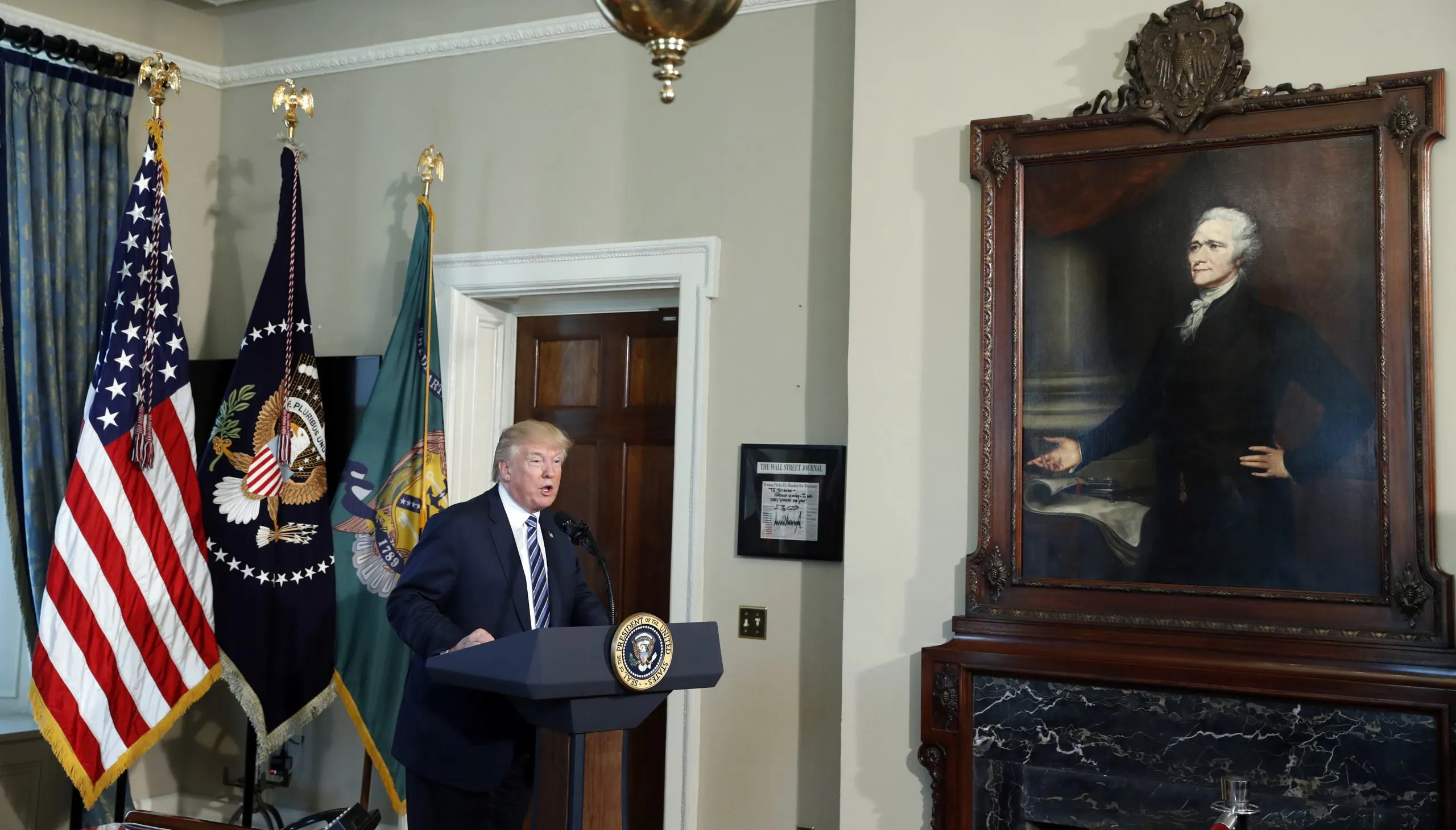
President Trump’s assertion of supposed emergency powers to appropriate military money for a border wall runs directly afoul of the spirit and intended design of the Constitution.
This is important. Others like David French have convincingly and eloquently argued that Trump’s re-appropriation of taxpayer dollars runs afoul of specific provisions within the interplay between existing statutes and the Constitution. They are absolutely correct, but I’m making a different point.
Recommended Stories


Sometimes, political actors can get so caught up in legal technicalities, so insistent on parsing statutory exceptions, that they miss the importance of long-recognized, bedrock concepts of how our constitutional system is supposed to work. This is surely the case right now with Trump and his defenders.
The larger question to ask isn’t whether the president can find a way to “get away with it,” so to speak, but rather whether his actions are within the intended scope of presidential powers bequeathed to us by founders who were rightly skeptical of king-like authority. In this situation, the words of even the most monarchy-friendly of the founders, Alexander Hamilton, are worth considering.
In various parts of the Federalist Papers, Hamilton repeatedly returned to the importance of one particular restriction on the use of military funds, namely the requirement that, concerning the power to “raise and support armies,… no appropriation of money to that use should be for a longer term than two years.”
Hamilton most clearly explained why this is important in Federalist 26 (with Hamilton’s original emphasis):
“The legislature of the United States will be obliged, by this provision, once at least in every two years, to deliberate upon the propriety of keeping a military force on foot; to come to a new resolution on the point; and to declare their sense of the matter, by a formal vote in the face of their constituents. They are not at liberty to vest in the executive department permanent funds for the support of an army, if they were even incautious enough to be willing to repose in it so improper a confidence.”
Note in particular three key parts of that passage. First, Hamilton emphasizes the importance of direct and deliberative congressional oversight of military funds. Second, he unambiguously asserts that Congress is not even “at liberty” to pawn off such decisions to the president. Third, even if they want to do so, those desires would be not only “incautious” but an exercise of “improper confidence” in the executive’s role.
All three parts of this Hamiltonian passage argue against the president’s re-allocation of military funds for purposes not expressly approved by Congress, and especially not for what isn’t a military purpose at all, but one of domestic law enforcement. For all those who claim the National Emergencies Act and its closely related offspring somehow give the president the power to redirect military funds arbitrarily, Hamilton shoots them down. Congress, he says, is not even at liberty, under the terms of the Constitution, to provide such floating authority to the president.
Precisely because Congress must deliberate and vote on matters of such grave importance, it and only it may so appropriate funds for the armed services. Because a chief executive could so readily abuse his power as commander in chief, it would be “improper” for Congress to vest in him the only effective power Congress possesses regarding military oversight.
Constitutional lawyers can parse the National Emergencies Act all they want. They may somehow find a loophole that will supposedly allow Trump to exercise such powers. Still, that’s not how our system was crafted to work, and the White House darn well knows it.
