

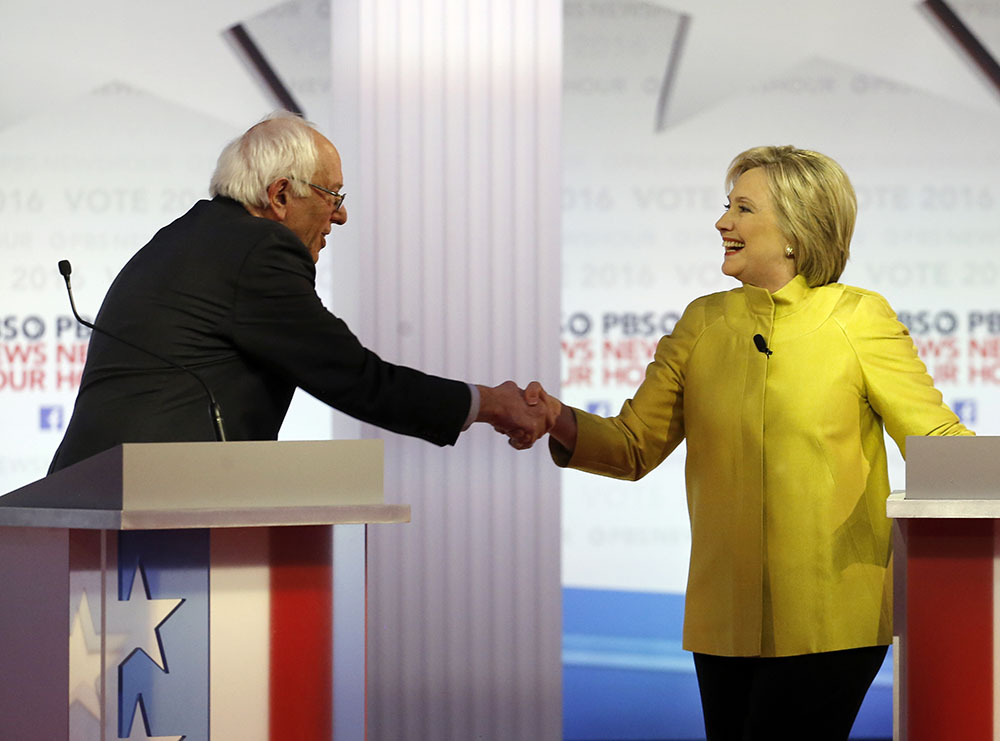
In their February 4 debate at the University of New Hampshire, Hillary Clinton and Bernie Sanders jostled to get to each other’s left, fighting for the socialist hearts of progressive voters in an all-white New England state. It was a battle Clinton could not win.
But in their debate Thursday night, things were different. The focus of the Democratic primary election has moved to South Carolina, where black voters may cast the majority of the votes up for grabs. They are not insistent on left-liberal purity, but display a near lock-step loyalty to President Obama, whom they feel he has been badly treated as the first black president.
Recommended Stories


So the debate became a contest to see who could give the president the biggest kiss, and this is a fight Clinton can win. In doing so, she could afford to disparage Sanders’ progressive purity as a form of infidelity to Obama’s legacy. This would have been suicidal when seeking support from gentry liberals further north, but now it’s the winning tactic.
For example, Sanders’ support for single-payer health care was not a great asset to him during this most recent debate because, as Clinton put it, with such a system “you no longer have the Affordable Care Act.” Sanders’ plan would undo “President Obama’s principal accomplishment.”
Progressivism was similarly framed as the enemy of Obamaism each time Sanders offered his grim Marxist analysis of an economy that he claims has become even less fair in the Obama era. Clinton had only to step in and defend Obama’s economic legacy.
Obama’s stamp of approval was enough for Clinton to make even her support from SuperPACs seem palatable, so long as the SuperPAC in question “was set up to support President Obama, that has now decided that they want to support me.”
Clinton’s Wall Street cash? Obama, she pointed out, “was the recipient of the largest number of Wall Street donations of anybody running on the Democratic side ever.” But “when it mattered, he stood up and took on Wall Street.” Presto, an attack on Clinton’s coziness with Wall Street is suddenly an attack on Obama.
This may help Clinton regain some momentum after her brutal and unexpectedly large loss in New Hampshire. But she has a long-term problem, because a lot of voters shudder at the thought of a third Obama term.
It’s not just that his approval ratings are slightly negative now. The more important point might be that his support has not proven transferrable in general elections.
Obama has won whenever he has been on the ballot. But Republicans have found they can beat him badly every time he isn’t. In the last two midterm elections, a Democratic candidate’s coziness with Obama became a kiss of death, inspiring more passion among opposing voters than among supportive ones. This is why Democrats are at or near modern lows in their control of governorships, state legislatures, and U.S. House and Senate.
Obama’s legacy is golden with the voters Clinton is courting in the next two weeks, but not with the ones she must win over this fall. For many voters, and not just the ones attracted to pessimistic populist messages of Sanders and Donald Trump, the Obama era has been one of economic stagnation.
The share of 25 to 54-year-olds who have jobs today is far from recovering its pre-crash levels. It is lower this month than it was at any point during the presidencies of George H.W. Bush or Bill Clinton. And the ones who are working have not seen their wages rise.
Obamacare receives mixed reviews from those people it was supposed to benefit, and still inspires hot anger among those who already had health insurance and have had to settle instead for something worse or more expensive, or both. Health care costs are beginning to rise more quickly and deficits are also rising.
These are all reasons why Clinton’s hearty embrace of Obama now could come back to haunt her in the fall.
