

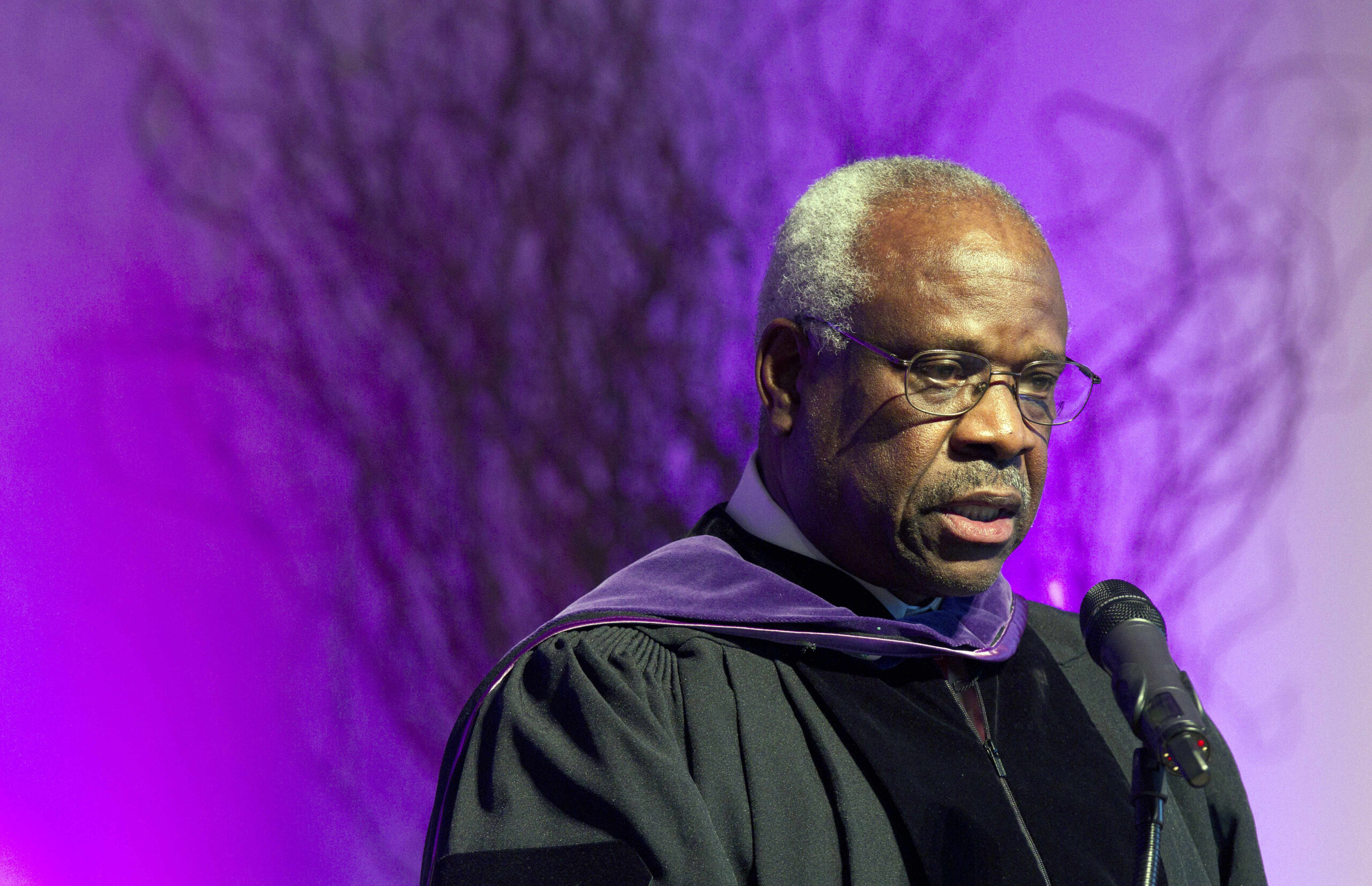
Not surprisingly, the U.S. Supreme Court’s landmark 5-4 ruling that the Constitution guarantees a right to same-sex marriage has generated a lot of reaction. What is surprising, however, is that, as far as I can tell, no one has commented on how prominent a role the Declaration of Independence played in Justice Clarence Thomas’s dissenting opinion in the case. Never before has a Supreme Court justice cited the Declaration so frequently, and it is important to understand the reason Thomas did so, especially as the nation celebrates the anniversary of our founding document on the Fourth of July.
Justice Thomas opened and closed his opinion by invoking the Declaration, and the bulk of his dissent was devoted to explaining why: Because, in his judgment, “Our Constitution — like the Declaration of Independence before it — was predicated on a simple truth: One’s liberty, not to mention one’s dignity, was something to be shielded from — not provided by — the State. Today’s decision casts that truth aside.”
Stay informed.Stay ahead.
Join Washington Examiner for unlimited access to the news, analysis, and commentary that matter most.
Already a member? Log in
