

There is only one thing on the mind of Reince Priebus, chairman of the Republican National Committee, and that is to make the GOP a party that competes properly for the White House.
Amid his second presidential election, Priebus knows the RNC needs regularly to achieve something that fell increasingly into doubt as Democrats won four of the past five presidential elections — win at the highest level.
Recommended Stories


Related Story: http://www.washingtonexaminer.com/article/2574118/
The stakes in November 2016 are higher than ever, and Priebus says the party will be “cooked” if it loses to a Democrat for a third straight cycle.
In a wide-ranging interview with the Washington Examiner, the RNC chairman talked about debates, the nomination battle, the RNC’s relative strength against the Democratic National Committee, the turmoil in the House of Representatives and Donald Trump.
He’s looking at it all from the perspective of Election Day, now just 12 months ahead.
WASHINGTON EXAMINER: Would the party be just as happy with Donald Trump or Ben Carson as the nominee as it would if you nominated Jeb Bush or Marco Rubio or someone from the establishment?
PRIEBUS: Our job is to accept whoever the eventual nominee is, and it’s never been the RNC’s job to determine the nominee. We know that’s up to the Republican primary voters. Our job is to put the tools in place to allow our eventual nominee to actually win the general election, and the one thing I’d say about that is it’s a totally unifying message. There’s no controversy in making sure that we’ve got a national party that has its act together.
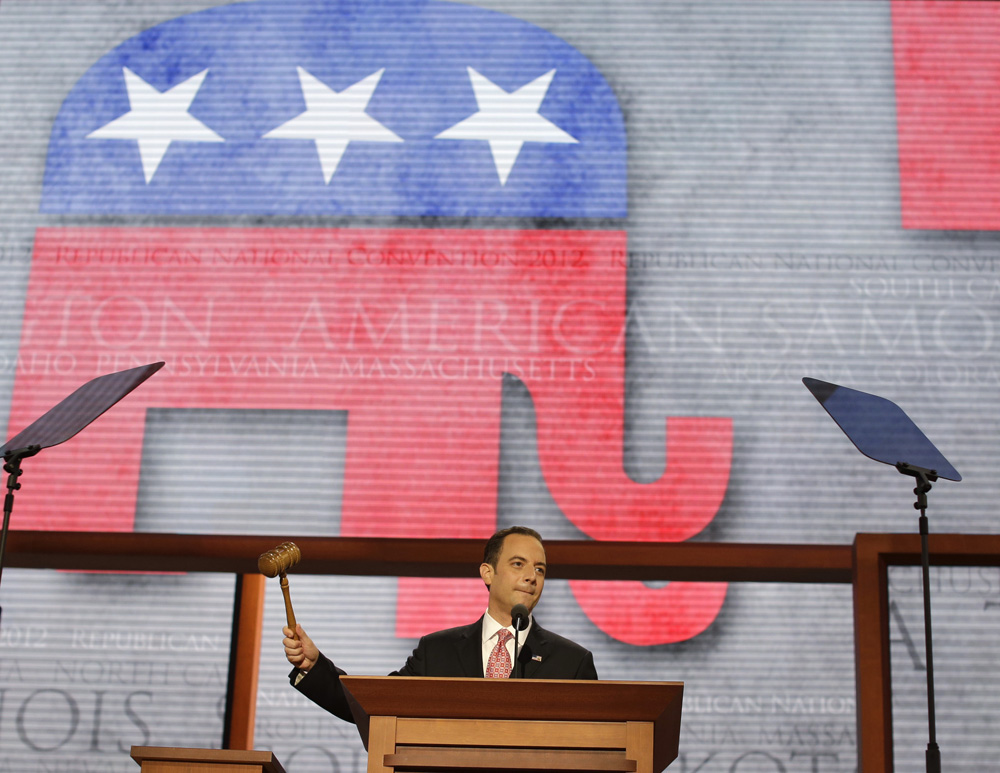
“Our job is to accept whoever the eventual nominee is, and it’s never been the RNC’s job to determine the nominee,” Priebus said. (AP Photo)
It doesn’t matter who the nominee is, they are going to need a Republican National Committee that’s better prepared than it’s ever been before, and everyone should support that and be in agreement of that. One thing I can promise is that we’ll be a whole world better this time around than we were four and eight years ago.
EXAMINER: Setting aside who the nominee will be, how important is it that you have a nominee chosen swiftly, as opposed to a dragged-out primary season? And how important is it for the debates to highlight both the strengths and weaknesses of the candidates so people have a clearer idea sooner?
PRIEBUS: Yeah, I think it’s important that our debates highlight the positives and not the negatives. I think it’s important that our candidates consider and think about Reagan’s 11th commandment, which is to not speak ill of a fellow Republican and to do everything you can to be as positive and also focused on what your plans would be for the future of our country as opposed to tearing into each other. So I think that’s really important.
As far as your first question on the speed or the length of the primary season, you know, it’s hard to tell. My guess is that we’re going to have a nominee, or a good understanding of who the nominee will be — you’ll never have a nominee until the convention — but we’ll have a good understanding of who the nominee will be by the first week of April. But, what we did was significant in that we moved the convention from Labor Day to mid-July. That cuts out about five or six weeks, and that’s where you see the compression start on the back end.
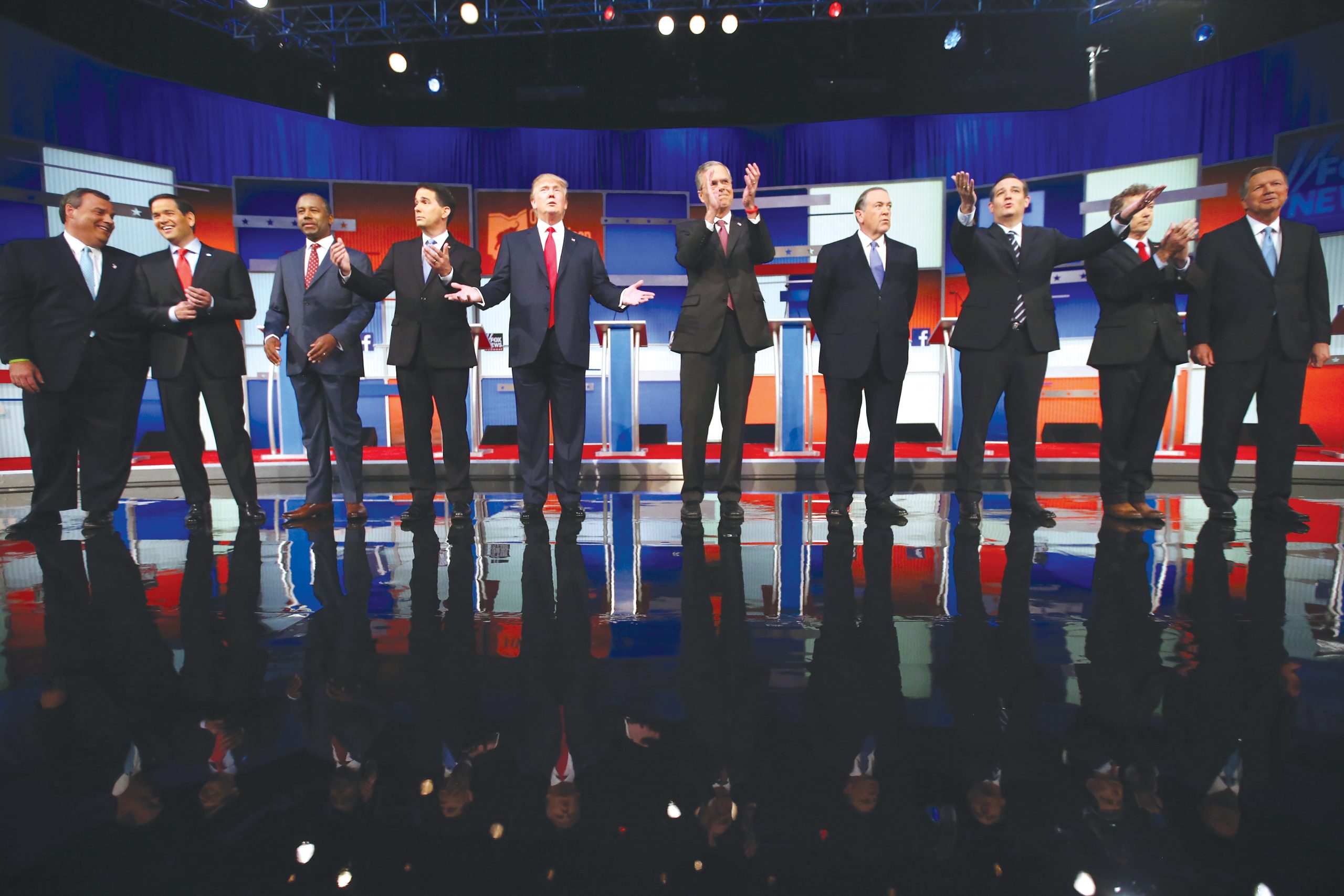
“I think it’s important that our debates highlight the positives and not the negatives. I think it’s important that our candidates consider and think about Reagan’s 11th commandment, which is to not speak ill of a fellow Republican … and focus on what your plans would be for the future of our country as opposed to tearing into each other,” Priebus said. (AP Photo)
EXAMINER: And that’s when you can use general election funding, too.
PRIEBUS: And that’s just the key. One of the benefits of moving your convention up is that if you have a nominee in April, mid-April, wherever, they’re probably not going to have a ton of primary money left. And so the reason why you don’t want to wait until Labor Day is that you can’t get the general election money until you actually get nominated at the convention. So all the analysis out there about the calendar, no one can deny the fact that we can’t wait until Labor Day for us to start accessing general election money.
So there’s a practical reason for making the convention not a Labor Day convention, but a mid-July convention. And you saw the Democrats, although they criticized it initially, they followed suit and jumped in right after us. So for all of their criticism, they’re following everything we’re doing.
EXAMINER: You’ve been a big proponent of the tightened debate calendar. Given the ratings though that the first couple got, do you regret not having more considering the eyeballs you’re getting?
PRIEBUS: I don’t think people understand how many debates we’re having. I mean, we’ve got nine debates scheduled through February and we have three on hold in March. I don’t think that anyone can make the case that 12 debates isn’t enough. I mean, we had 23 before. And so, I think when people comment on the debates, they’re commenting about the nine that are scheduled through February. They forget about the three that are being held in March.
EXAMINER: With the tightened nominating calendar, do you worry about the sheer intensity of the calendar and that it could lead to more of the party infighting?
PRIEBUS: I don’t know. I always worry about candidates that wouldn’t want to adhere to Reagan’s 11th commandment. I always try to remind people that this is about winning in November, and I understand that candidates have to differentiate themselves. I get that there’s jabs and punches every once in a while, obviously, as long as they’re not below the belt, I think it’s to be expected.
But the calendar, as it sits now, to me, is just a huge improvement over where we were in 2012. We had four weeks of proportionality in 2012, meaning mandated proportionality in March. Now we cut that back to the first 14 days. Keep in mind, when we did that calendar, we didn’t include that second Tuesday, which made a big deal on a winner-take-all stand point that that Tuesday, and then the next three — the 15th and the next two are all in March on Tuesday, which made a big difference.
EXAMINER: Are you concerned about the one-on-one battles for delegates that are going to be free agents after the first vote?
PRIEBUS: You know, I’m not that worried about a contested convention.
EXAMINER: Say you have someone who wins Iowa, and their delegates are free agents and can latch on anywhere. Are you worried about that?
PRIEBUS: Not particularly. This is the same thing that happens every four years. Think back — we’ve always had difficult primaries in our party, which I don’t think is a bad thing. Look at even in 1992. Pat Buchanan actually won New Hampshire against a sitting president that was at 80 percent popularity. So this is not like some sort of [uncharted] territory. So I’m not that worried about it. I think it always ends up working out. I think it’ll work out this time around as well.
And the other thing is, OK, if there is something that goes on at the convention, at least we’re doing it in the middle of July and not over Labor Day. However it shakes out, we’re going to come out in good shape with a unified party.
EXAMINER: At the first Democratic debate they took a lot of swings, as they have in the past, at the party, and focused on Donald Trump and tried to use him as the embodiment of the party right now. How do you try to counteract that, especially given some of the statements he’s made?
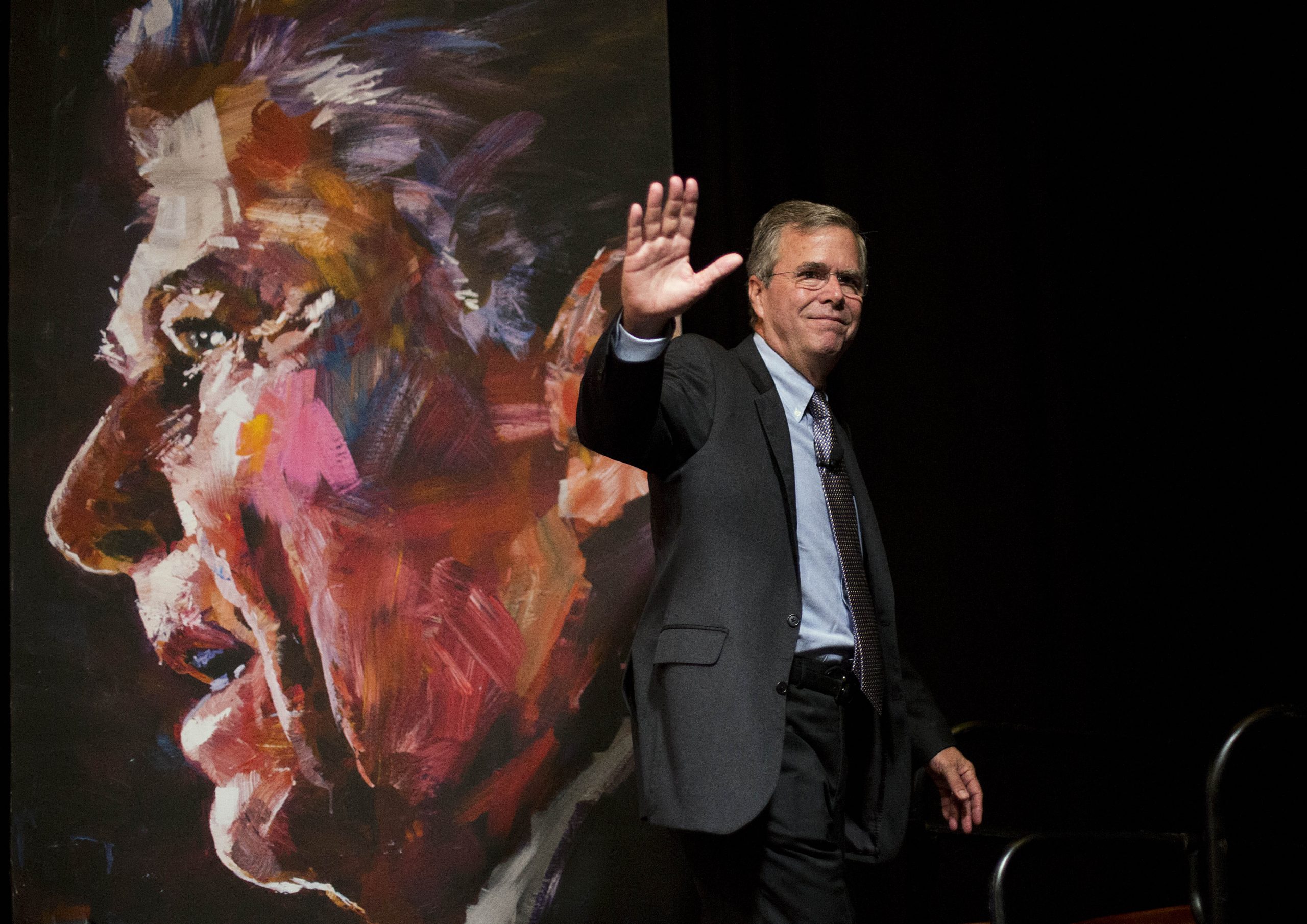
When asked if the GOP would be just as happy with Donald Trump or Ben Carson as the nominee as it would if you nominated Jeb Bush or Marco Rubio or someone from the establishment, Priebus said it is the RNC’s job “to accept whoever the eventual nominee is, and it’s never been the RNC’s job to determine the nominee.” (AP Photo)
PRIEBUS: Well, you work with the networks. You learn as you go too, and you try to make improvements so that as every debate passes, you try to make the next debate better, and you work with the networks. You work with the candidates and you try to improve the things that you don’t think were great when you went through it the first time.
For our next debate, I know that CNBC is working on an algorithm to make sure that candidates are getting close to equal time or the appropriate amount of time as possible, and that you say, listen, you know, the room was too hot or the debate lasted too long or whatever the issue is that needs to be addressed, you move into it trying to kind of make sure that you rectify the problems as you go so that you’re always trying to make it a little better.
Keep in mind, four years ago, we had zero role at all — nothing. I went to four debates, or five debates out of the 20-some debates that were there. We’re not a part of this process, which I think is a good thing because if candidates have problems or they get upset about something or something’s not fair, then we can be the pushback to the networks.
EXAMINER: You talk a lot of how the DNC and RNC aren’t on a level playing field for the most part; how you have usurped that territory, and how your main challenger would be Organizing for Action. How big of an advantage is it that there isn’t a group like OFA this go around? Correct The Record is still kind of in their infancy in a sense, and the DNC, obviously, isn’t up to where OFA was.
PRIEBUS: I think it’s a huge advantage. I mean, for us, we kind of look at it as if you look at the RNC and where we were four years ago and where we are today, we’re in a different stratosphere today as a national party. We have a full-blown field operation right now. We have spent over $100 million in our data and digital operation over the last couple of years, few years, and these are things we weren’t doing in 2011. So if you look at 2011, you have an RNC that was basically paying off $26 million in debt, and that’s net dollars by the way, so that’s a lot of gross dollars that are out the door in just debt payments.
So when Mitt Romney came in, although I think we did a very good job of turning the RNC around, it wasn’t an RNC that had the type of infrastructure and operations prepared for a nominee on day one. The DNC is not our competition. I mean, it’s a disaster over there and everyone knows it.
EXAMINER: Contrast the role that Debbie Wasserman Schultz is playing with the DNC and the debates and the role that you’re playing on the Republican side. Outside of the debate structure, what can the RNC be doing or is doing to ensure that the party has the best nominee and then win the White House?
PRIEBUS: Well, for one thing, we’re financially solvent — and not just that, we’re flourishing. So when you look at the differences between the RNC and the DNC, we have built out a very large, capable ground operation, digital operation, and we’ve been paying for it since immediately after 2012, which helped us make a good year in 2014 a great year.
So I think that fundamentally, when you analyze the mechanics, the fundraising, the actual operations of a national party, the RNC’s in a whole different galaxy than the DNC and I think most people understand that. I think people understand it so much, they don’t even talk about the DNC in that regard anymore.
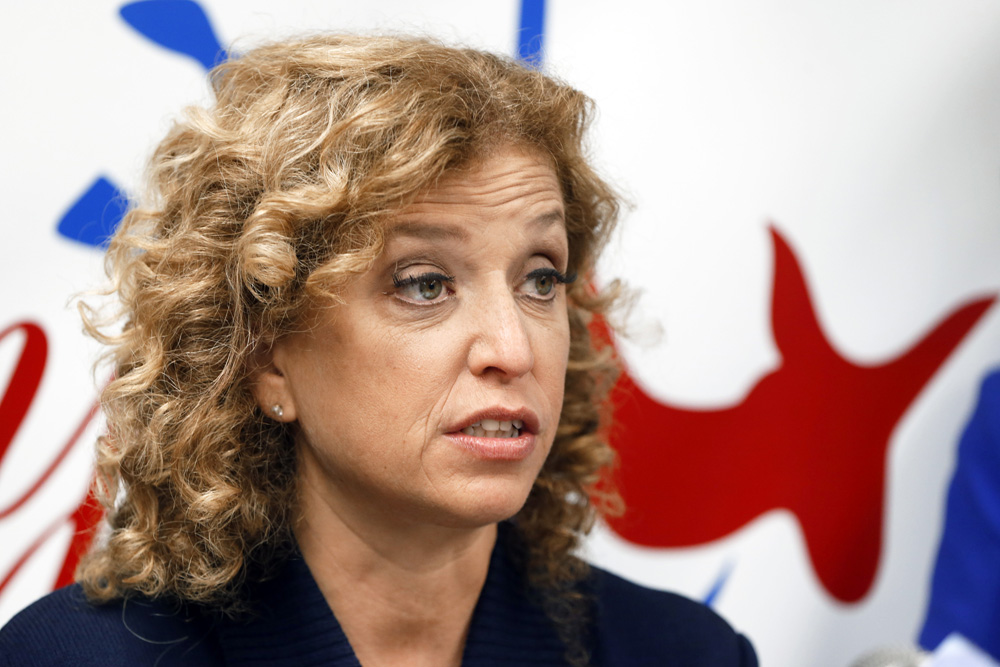
DNC Chairwoman Debbie Wasserman Schultz. “When you look at the differences between the RNC and the DNC, we have built out a very large, capable ground operation, digital operation, and we’ve been paying for it since immediately after 2012, which helped us make a good year in 2014 a great year,” Priebus said. (AP Photo)
EXAMINER: Besides the presidential race, you have Senate and House races on which to focus. How do you try to balance that?
PRIEBUS: Our job as a national party is to elect Republicans, and it generally means House, Senate, presidential. We’re viewed at in a presidential year as the presidential committee that is responsible for helping elect the president, but at the same time, we have a responsibility to help pay for the ground operation in every targeted U.S. Senate race and the targeted congressional races as well, so it is our job to do all three.
However, I think that we have become, unfortunately, a midterm party that doesn’t lose and a presidential party that’s had a really hard time winning. We’re seeing more and more that if you don’t hold the White House, it’s very difficult to govern in this country, especially in Washington, D.C.
I do think that we’re cooked for quite a while as a party if we don’t win in 2016. So I think that it’s going to be hard to dig out of something like that. I don’t anticipate that. I think … history is on our side. I think that the fact that we are vastly improved at the RNC is on our side. The fact that Hillary Clinton is already at a place where 60 percent of the people who don’t find her trustworthy is on our side. And so, I look at the whole big picture here and I think it feels really good for us to be victorious in 2016.
EXAMINER: What’s your reaction to Vice President Biden’s announcement that he isn’t running for president?
PRIEBUS: We’ve said, and I said, months ago that I thought that Joe Biden would be a tougher general election opponent for us to have, and part of the reason is he’s someone people want to have a beer with. He’s a likable guy. Well, in a big national election, if you’re likable and the type of person you want to have a beer with, hey, that’s a tough guy to beat.
Hillary’s not likable. She’s got all kinds of problems, and her polling is upside down. If you’re running a national party, and you had to choose which candidate you wanted to run against, everyone would choose Hillary Clinton, not Joe Biden. For us, it’s better. And let’s face it, we’ve spent all of our time and all of our resources preparing for Hillary Clinton, so it’s sort of like game on.
EXAMINER: Are you breathing a sigh of relief?
PRIEBUS: I think this makes it simpler. It makes it easier to prepare, but it’s also what we want, which is Hillary Clinton.
EXAMINER: Conservatives have been going after Paul Ryan with all the buzz surrounding him about the speaker race, and he is one of the few people to take on issues like entitlements and major issues in the party lately. He was on the 2012 ticket. What does it say about the party if Paul Ryan can’t get the support of a majority of House Republicans to become speaker?
PRIEBUS: He’s one of the smartest, most pure of heart people I know in politics, and one thing about Paul Ryan is his ego is almost non-existent. He’s not one bit selfish, and he’s very pure in his thinking. It’s a matter of his family. It’s a matter of what’s best for the country, his constituents, and he puts himself dead last in that equation. I’ve got nothing but respect and admiration for him.
EXAMINER: Have you heard from any donors who have been complaining about the party’s image due to the fracture in the House?
PRIEBUS: Surprisingly not a whole lot. I’ve been doing this for almost six years. I’ve sold a product, and the product I sell is infrastructure, ground game and a data operation that has its act together. I know that’s not the most exciting thing in the world, but it is what we need to do to be a competent national party. I also think this is a unifying message for our party as well.
So you hear people say, “Oh the RNC this,” or “the RNC that.” Here’s the deal: No matter who the nominee is, no matter who your choice is, there’s nothing controversial about having a national party that has its act together when it comes to a ground game and a data operation. So whoever the nominee is, they’re going to have something that’s 10 times better than what it was four years ago, and that is something every person in our party should hope is done successfully, and that’s what we do.
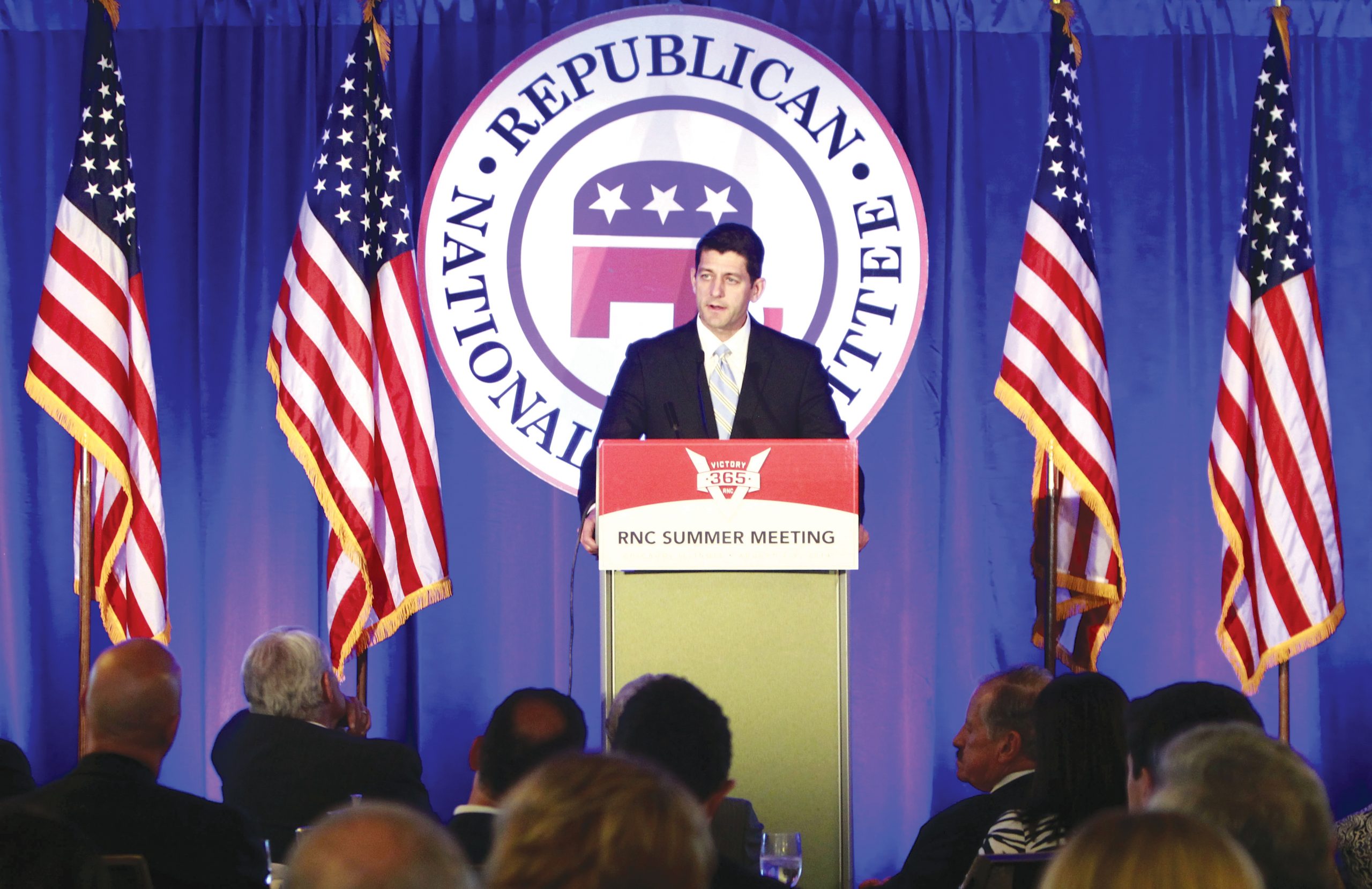
When asked about Paul Ryan, Priebus said: “He’s one of the smartest, most pure of heart people I know in politics, and one thing about [him] is his ego is almost non-existent.” (AP Photo)
EXAMINER: The RNC did the 2012 autopsy and talked about doing a lot of heavy lifting with minorities, but Donald Trump is the front-runner and talking openly about deporting 12 million illegal immigrants. Is your effort complicated by some of the candidates and some of the things they say?
PRIEBUS: I’m not going to get into each candidate’s comments, but I think it is important that everyone watch their tone and be, obviously, a party that’s welcoming to everyone. That’s without question. But our issue is we have to have a ground operation that actually goes to the Hispanic church festival on Sunday in a party that’s, on a daily basis, in Cleveland and Cincinnati talking to black families, Hispanic families, Asian families. And if we’re not, no matter what you do, no matter what comes out of your mouth, you’re not going to make any headway into those communities.
EXAMINER: But do you think those efforts are undermined by some of these statements?
PRIEBUS: You know, I think everyone has to be judged individually. But I can tell you this, if you don’t go, I think your chances are zero. If you look at what we did in 2014, we fully saturated Hispanic communities in Colorado. We almost won the Hispanic vote in Colorado. It does show you that if you engage in a community and you have a product that also engages in the community, and it’s done some good work too, you can make a big difference. I think if you don’t go into communities that you don’t represent, then everything gets exacerbated by the words that come out of people’s mouths. I think you have to have both.
EXAMINER: How did you feel about Scott Walker dropping out?
PRIEBUS: Well, obviously, personally, you always feel bad for a good friend that goes through something like that. But, you know, it’s amazing about Scott, and we talked that night. He honestly had no regrets, and he was totally at peace with dropping out, and he moved on the next day to being governor. He’s got a great gig, he’s the governor of an awesome state. Went to the [University of Wisconsin] Badgers game Saturday, and I think he even went to the Monday night game at Lambeau Field.
He’s a blessed person and he knows it, and he’s grateful for the blessings he’s had and because of the maturity and reacting to difficult situations, it makes it easier for his friends to not feel bad.
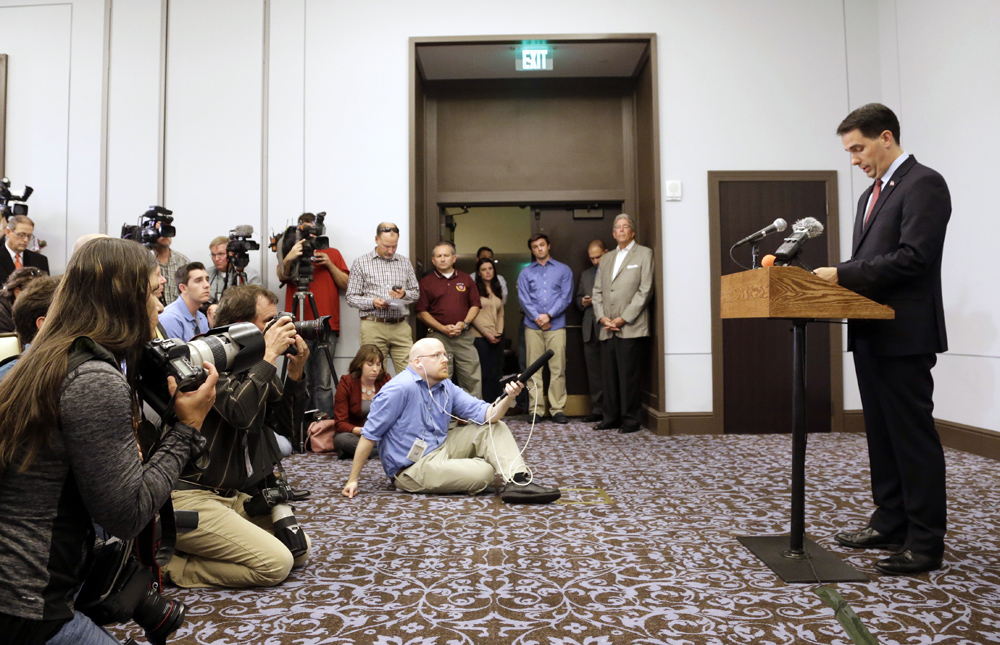
Wisconsin Gov. Scott Walker speaks at a news conference Monday, Sept. 21, 2015, in Madison, Wis., where he announced that he is suspending his Republican presidential campaign. (AP Photo)
EXAMINER: You made some news a couple of weeks ago when you said Iowa and New Hampshire aren’t sacred cows. Why bring that up now, especially a couple of months before voting starts?
PRIEBUS: Because I was asked about it at length. I was asked about things that might be going on in the future, and it was a very non-controversial statement. Here’s what I said: I said that this is a subject that comes up every four years at the convention. I’ve been personally involved in this subject at every convention, at least since it blew up in 2008. If you recall, there was a rule that was passed that brought the issue back to the RNC. I was general counsel of the RNC during that time and rewriting the rule. Then it came up in a vote in ’09.
Then it came up, obviously, for the first two years of my chairmanship to deal with, and it will come up again at the convention. There’s nothing controversial about that, and I also then said that I was a person that always supported the early states as general counsel and chairman, but everyone has to understand that there’s no sacred cows.
Now, what controversy can be sparked from that is beyond me. I mean, it’s just basic common sense. It’s always an issue, I have supported early states, and there’s never any sacred cows. Everyone always has to work for their special place in the calendar. That, to me, is something that every person in this party would agree to.

On immigration and inflammatory rhetoric, Priebus explained that the GOP must have a ground operation that goes to Hispanic, black and Asian families and is welcoming to everyone. (AP Photo)
EXAMINER: You say that you’re not going to run for a fourth term as chairman. Are you looking at all past 2016 and your future, politically?
PRIEBUS: You know, I’m not. Honestly, I don’t even know what that would look like. I’m not just saying that either for political speak. I just, honestly, I don’t know. What I do know is that if you win, obviously, you’ve accomplished the goal. Obviously, we had a good midterm and it was historic and that was great, but winning the presidential is what we need to do as a national party to finish the job. And if you don’t finish the job, then it’s time for someone else to give it a shot. So, I mean, that’s why I said what I said. It’s just natural.
EXAMINER: You talk about the advancement in the areas of digital and the ground game. Do you worry if the next chairman comes in and ditches those?
PRIEBUS: I think it has to be permanent. I think that the idea of a national party that shows up once every four years, three months before an election is a total losing strategy. So the only way we can win a presidential is by having a year-round operation with as close to saturation on the ground as we can, and the best digital and data effort that our candidates can use.
The reality is no third party is capable, legally, of replicating what we can do. People can talk that they want to do it, but they can’t legally because only hard money can build hard money product for a hard money candidate. So there’s no logical way for us to get around the fact that having an RNC that’s built on a daily basis and is running on a daily basis is the way we have to go today and in the future.
