


America’s newest wave of immigrants are coming from Asian, Muslim and Central and South American nations, significantly ending Mexico’s long-standing reign as the nation’s top supplier.
Recommended Stories



New figures from U.S. Census offices show explosive growth in legal and illegal immigration from Cuba, Vietnam and China, all communist-controlled nations.
Among the biggest growth is from Muslim South Asian countries such as Pakistan, India and Afghanistan. That has more than doubled in five years, surging from 271,000 in the 2010-2011 period to to 550,000 in 2014-2015, according to Census data.
A 17-page analysis of the numbers from the Center for Immigration Studies showed that newly arrived immigrants in 2014-15 from several areas reached record highs: East Asia, including China, Vietnam, hit 583,000, and the Caribbean, including Cuba, was 307,000.
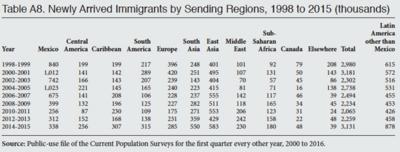
The report also revealed that those from Latin American nations other than Mexico nearly doubled since 2013, jumping from 458,000 in the 2012-13 period to 878,000 in the following two years.
The number of immigrants from Mexico, meanwhile, increased slightly to 338,000 in 2014-15, but that is about one-third of those who arrived legally and illegally just 10 years ago. That drop-off had led many policy makers to predict that overall immigration would slow, but it never happened.
“Mexican immigration has rebounded significantly from the lows of 2010 and 2011, but it is still nowhere near the level it was a decade earlier,” wrote CIS research director Steven A. Camarota.
“Nonetheless, as we have seen, the long-term fall-off in Mexican immigration has not prevented the overall level of immigration from reaching levels not seen for more than a decade because an increase in immigration from other countries has offset the Mexican decline.”
Legal immigration makes up about two-thirds of the overall growth to 1.5 million new immigrants a year. Typically, they are family members arriving to join their relatives, a trend that spirals bigger with more arrivals, Camarota said.
But while that may be a positive message of American openness, he said it raises significant questions about how communities can absorb new immigrants, especially in schools and jobs, and how much it costs taxpayers.
He also dismissed suggestions from some experts that the latest 15-year immigration peak is a fluke.
“I think we can assume that it will remain high,” Camarota said of immigration, legal and illegal, to the United States. “Will it remain that high? Maybe not, but is it likely to fall down to the level of 2010 and 2011? No.”
Paul Bedard, the Washington Examiner’s “Washington Secrets” columnist, can be contacted at [email protected]
