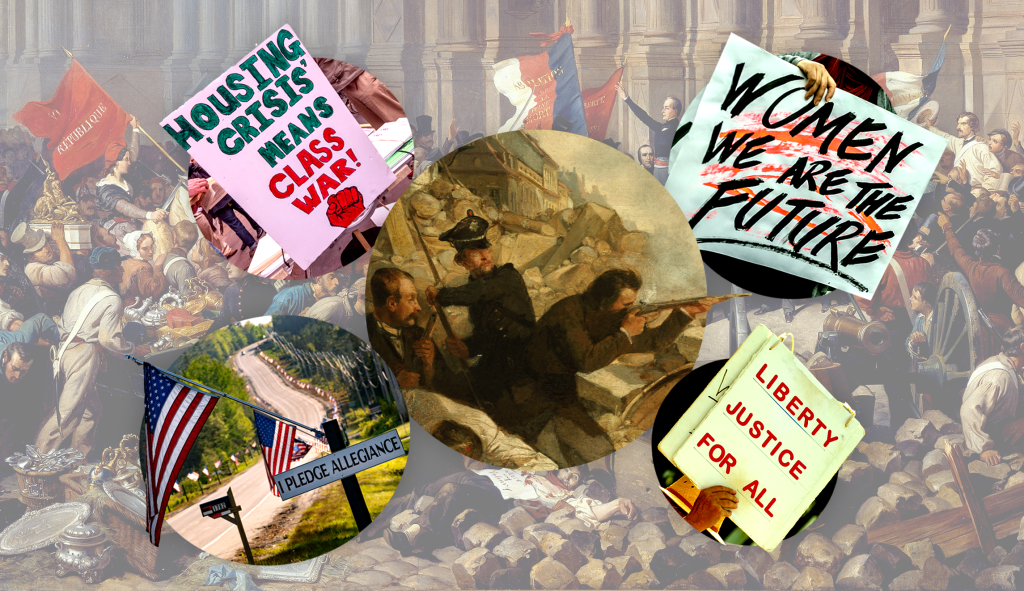
In the middle of the 19th century, ideas unleashed by the Enlightenment and the French Revolution inspired revolutions across Europe. It does not take much imagination to connect the 1848 Revolutions of Italy, France, Germany, and the then-vast Austrian Empire with the present day. From do-gooding liberals to revolutionary socialists, the characters and ideologies that shaped this era are instantly recognizable to modern readers. So, too, is the grand ideological sweep of the period, from the initial burst of revolutionary enthusiasm to disillusionment and factionalism among the rebels to the inevitable counterrevolutionary backlash.

It may be difficult to see ourselves as Pharaohs or Caesars, but the enduring (and romantic) image of long-haired radicals storming the barricades is very familiar. The ideological battle lines of 1848 are also recognizable because we’re still having the same arguments. Revolutionary socialists called for the abolition of private property. Pioneering feminists called for the abolition of the family. Moderate liberals tried to chart a middle course between reactionaries and radicals. Conservatism transformed from a disposition into an emergent political ideology. And Revolutionary Spring, an excellent new history of the era from Cambridge professor Christopher Clark, charts how it happened.