

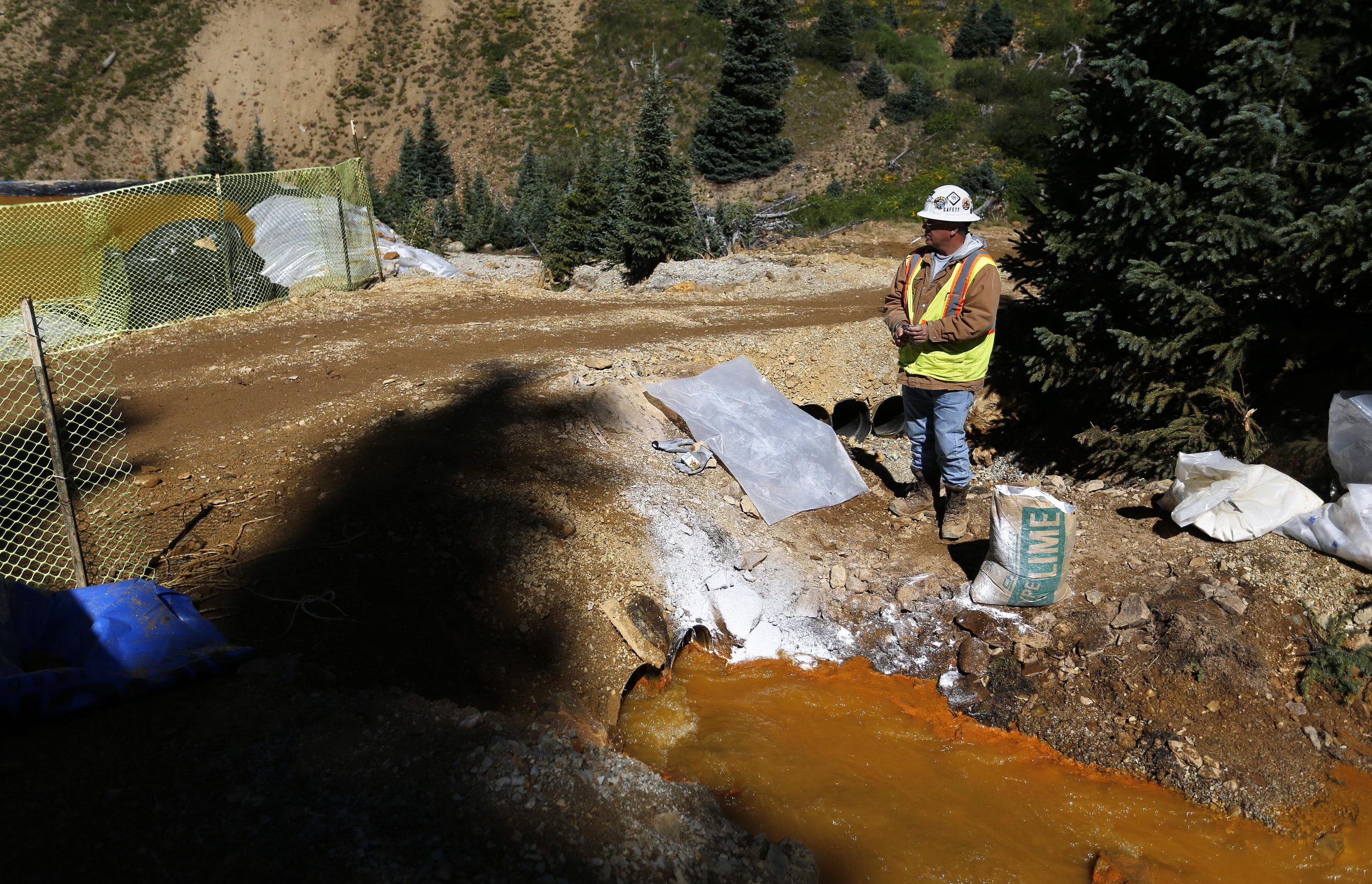
The Environmental Protection Agency did not take the steps necessary to avoid the risk of a “blowout,” even though it was warned, when it inspected a Colorado mine earlier this month that resulted in a massive toxic spill that contaminated the waterways of three states.
The EPA released an internal report Wednesday that said the agency was warned about the abandoned gold mine’s historic instability and potential for a blowout. But in assessing the risk at the site itself, the agency found no reason to check if the pressure levels existed to cause the Aug. 5 spill of three million gallons of contaminated wastewater.
Recommended Stories


“We want to get to the bottom of what happened to ensure that it doesn’t happen again,” EPA Deputy Administrator Stan Meiburg said on a call with reporters. He emphasized that the recommendations made in the report will go into effect immediately, and its findings will add to investigations underway by the agency’s inspector general and the Department of Interior.
Documents released over the weekend by the agency showed that an EPA contractor warned the agency of a very real threat of a massive blowout because of the mine’s instability.
But EPA officials on the call said a team of contractors and EPA officials who were inspecting the site on the day it burst concluded that pressure levels were likely not high enough to cause a massive blowout.
The officials said the mine team did not find it necessary to employ a common drilling method used to check the pressure of mines to verify what they observed to be a low-pressure mine. What followed was a huge blowout that sent a yellow plume of toxic metals into the Animas River and into the waterways of New Mexico and Utah.
Reporters on the call asked repeatedly if EPA officials can reconcile being warned of a blowout and then not taking the steps necessary to check if conditions were ripe for one.
EPA Assistant Administrator Mathy Stanislaus said a “work plan” for the mine determined blowout conditions, but once contractors and EPA got on the ground they found low pressurization. There were “no seeps” coming from the top of the mine, which usually indicates higher pressure. Stanislaus also said the contractors observed that “the mine was draining,” indicating low pressure. And at a lower mine they found no evidence of pressurization.
Stanislaus also said there were “real difficulties in determining the pressures before the blowout occurred,” and it is “unknown” if using a drilling technique to test for high pressure would have helped.
“Despite the available information suggesting low water pressure behind the debris at the [entrance of the mine], there was, in fact, sufficiently high pressure to cause the blowout,” the report says.
“Because the pressure of the water in the [entrance] was higher than anticipated, the precautions that were part of the work plan turned out to be insufficient,” it reads. The inability of the team to take additional pressure readings behind the shallow opening of the mine “seems to be a primary issue at this particular site.”
“If the pressure information was obtained, other steps could have been considered” to prevent the blowout. But the report tries to avoid saying if any measures could have prevented the blowout.
The “team cannot determine whether any such steps would have been effective, or could have been implemented prior to a blowout,” it says.
