
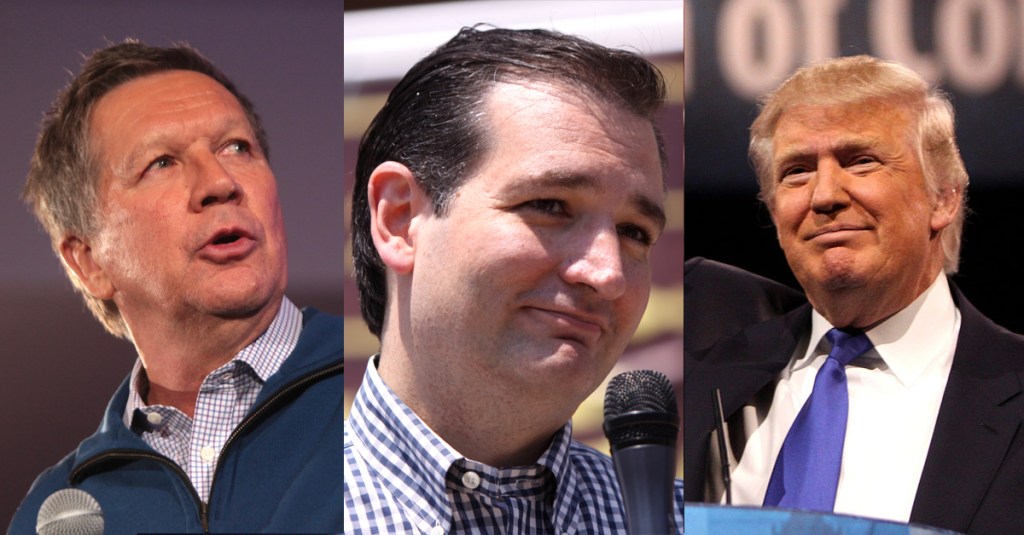
The GOP Delegate Race After Tonight

Donald Trump is expected to win all five northeastern states holding GOP primaries today, likely taking close to 110 of the 118 bound delegates up for grabs. His total delegate haul could drop to 95 or so if he unexpectedly fails to win 50 percent of the statewide vote in Connecticut and if he loses two or three congressional districts in Maryland.

But the real race to watch is Pennsylvania, where an additional 54 unbound delegates are up for grabs. These delegates are elected directly on the ballot, but the ballot does not say which presidential candidates they support. The Republican National Committee rules allow unbound delegates to vote for whichever presidential candidate they prefer, but some delegate candidates have already announced which candidates they back, while others have said they’ll back or at least consider backing the candidate who wins the popular vote in their district. Some have declined to say how they’ll vote.

If Trump runs away with the statewide vote–he leads Cruz by 21.8 points in the Pennsylvania polling average–then it seems he will likely run up the score among unbound delegates. Some percentage of Trump voters will take the time to figure out which delegates publicly back Trump. But there’s really no way to know right now whether Trump ends up with half the unbound delegates or close to all of them.

Pennsylvania appears to be the only state where Trump can get a substantial number of unbound delegates. (See this comprehensive document on unbound delegates compiled by Daniel Nichanian.) Almost all of the unbound delegates from North Dakota, Colorado, Wyoming, Oklahoma, Minnesota, and Louisiana seem unlikely to back Trump. Only two unbound delegates have publicly voiced support for Trump, while two more are leaning toward Trump. So it matters a lot whether Trump grabs 50 unbound delegates from Pennsylvania or closer to 30.

But as Scott Rasmussen points out in this video, Indiana and California still appear to be the two most important states still left to vote in the GOP race. Trump leads Cruz by 6.3 points in the Indiana polling average, but those polls were conducted before John Kasich’s campaign announced that it was pulling out of the state. If undecided voters and some Kasich voters break toward Cruz, the Texas senator could take Indiana and the vast majority of the state’s delegates. Thirty Indiana delegates go to the statewide vote winner, and the remaining 27 delegates are divvied up on a winner-take-all basis by congressional district.

As for California, the two latest polls look pretty ugly for Ted Cruz, who trails Trump by double digits in the polling average. There will be an entire month between the Indiana primary and the California primary, but if those polls aren’t outliers Cruz will need to seriously shake up the race if he hopes to win enough California delegates to deny Trump the nomination. Perhaps the Cruz-Kasich non-aggression pact will need to become a Cruz-Kasich unity ticket.

Related Content