
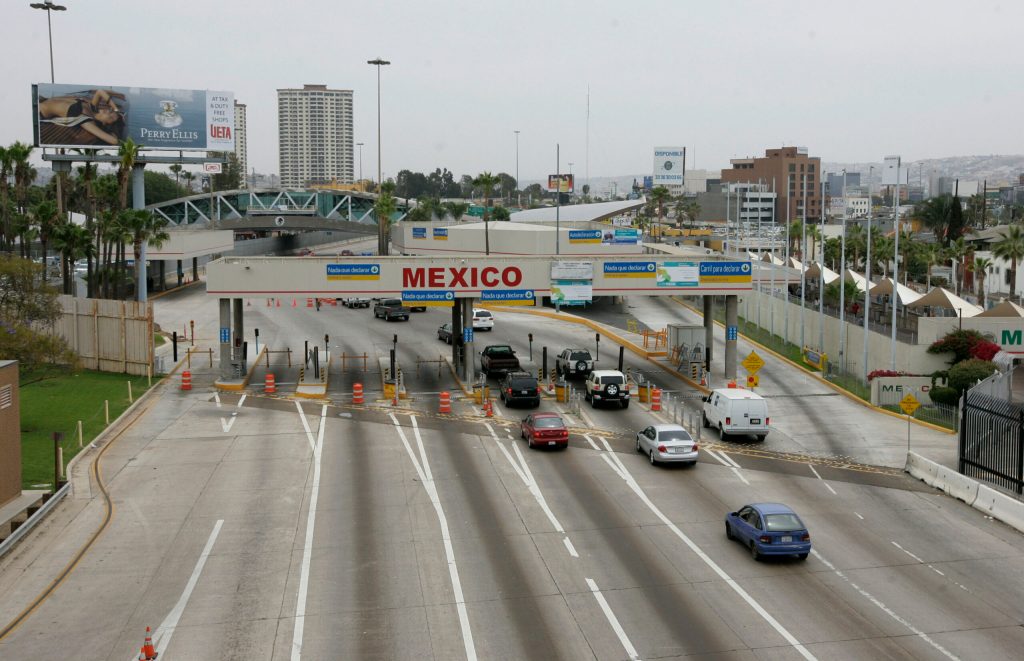
Believe it or not, there is a group of free market economists arguing for open borders — no restrictions on immigration to the United States at all (or nothing beyond public health restrictions, like those enforced on Ellis Island). Their idea is that the only way to reduce global economic inequality is to allow people to migrate in unlimited numbers to countries with more advanced economies. Of course that would reduce economic inequality globally. But what would it do to the United States?
Answers of an unsettling sort come from Open Borders advocate Nathan Smith, an assistant professor of economics at Fresno Pacific University. He says that such large immigration would result in “certain American ideals” dying — equality of opportunity, the social safety net, one-person-one-vote and bans on discrimination in employment. Non-immigrant Americans would limit voting so they’d remain a majority and could “vote themselves increasing handouts from a burgeoning Treasury.” People would increasingly segregate themselves in gated communities and ethnic ghettoes. “We would see some modern latifundia, worked not by slaves this time [as in the Roman Empire] but by voluntary immigrants, working for pay rates that would strike native-born Americans as a form of slave labor.”
Real journalism.Trusted by millions.
Unlimited access to in-depth reporting, expert analysis, and the stories that shape our country.
Already a member? Log in