

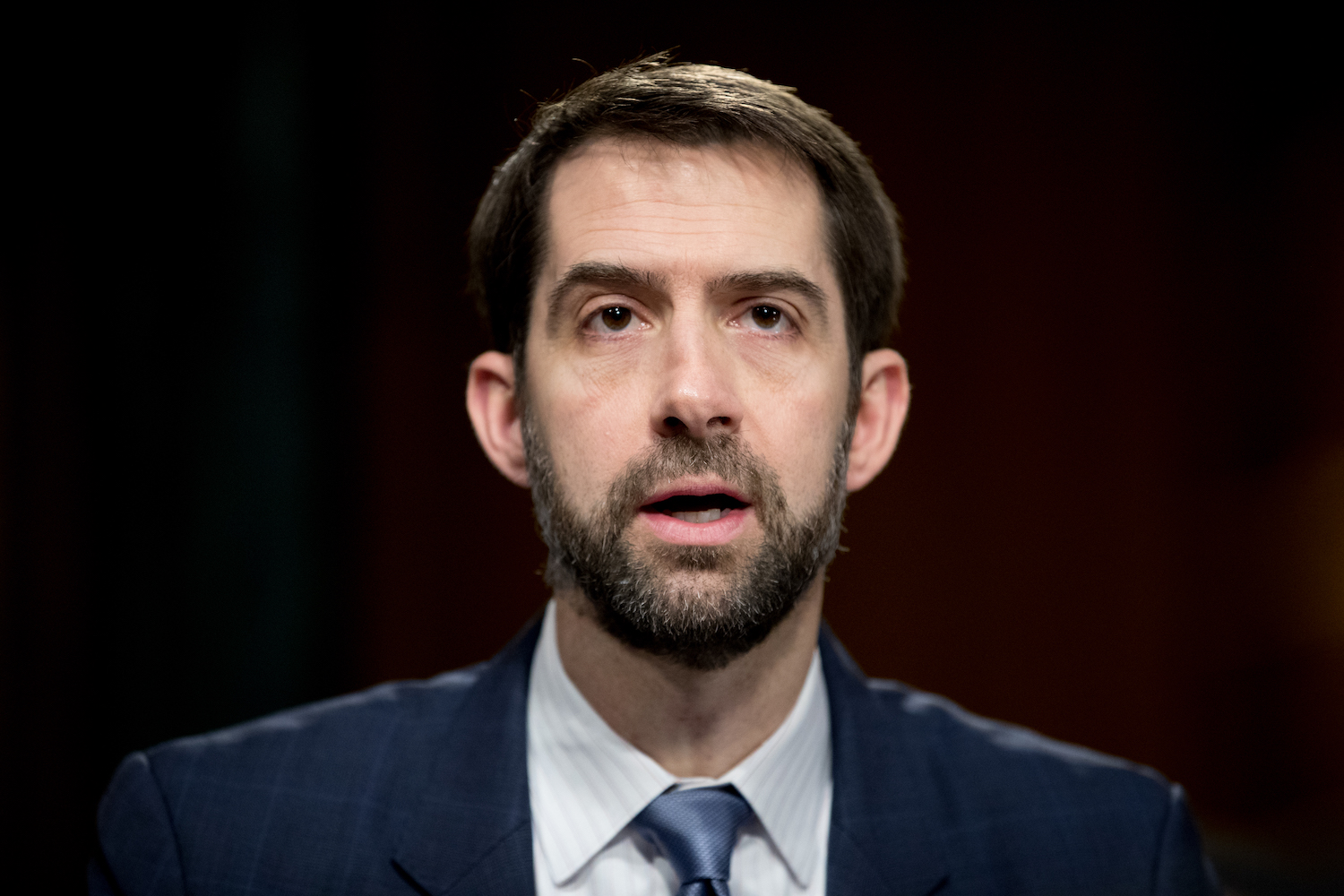
Tom Cotton revealed himself Wednesday as an obstacle in the Senate to the House Republican plan to border-adjust corporate taxes.
The Arkansas Republican took to the Senate floor Wednesday afternoon to express “grave concerns” about the idea, portraying it as a tax increase on consumers at Walmart, the massive retailer headquartered in his home state that has opposed the proposal.
Recommended Stories


However, Cotton also said, in text prepared for his speech, that he would withhold judgment until he saw a bill. Nevertheless, his criticism means that at least two Republicans in the upper chamber oppose the border adjustment, along with several others who have expressed skepticism. Sen. David Perdue of Georgia has tried to rally colleagues against it.
Finance Committee Chairman Orrin Hatch of Utah, who would be responsible for shepherding tax reform through the Senate, can afford to lose only two Republican votes at most if legislation is passed along partisan lines, as he has suggested it would have to be.
At issue is the House Republican proposal to tax imports as part of a broader corporate rate-cutting reform that would tax goods based on where they are sold. In the plan, companies would no longer be allowed to deduct the cost of imported goods and services, but would no longer pay any taxes on revenues from exports. In today’s system, U.S. companies are taxed on all profits, whether they are earned in the U.S. or abroad. The House GOP claims that the change would encourage more manufacturing within the U.S. and discourage companies from moving production overseas.
But Cotton, in his prepared speech, compared the term “border-adjustment” to Orwell’s newspeak. It would raise taxes on “working Americans who’ve been struggling for decades while the rich keep getting richer.”
“Why would we make their stuff at Walmart more expensive?” he asked rhetorically.
While advocates of the border adjustment feature have argued that the dollar would appreciate in response, leaving importers no worse off, Cotton expressed doubt. “This is a theory wrapped in speculation inside a guess,” he argued.
